


Killing someone is harder than it looks. So is killing someone with the full backing of the state.
On September 30, Tennessee tried to execute Christa Pike, convicted of the 1995 torture and murder of Colleen Slemmer. Officials administered two doses of the drug intended to kill her. She survived. Governor Bill Lee ordered an independent review.
Slemmer’s murder was horrific. Nothing about the failure to execute her killer changes that. But the failure does put Tennessee in some very old company.
Human beings have had centuries to practice this. We’ve used axes, ropes, electricity, gas, and drugs. The machinery has gotten better, but the results have sometimes been appalling.
Thomas Cromwell would have understood.
Henry VIII’s chief minister had helped reshape England, dismantle monasteries, and manage the king’s marital problems. Then he became one of the king’s problems. On July 28, 1540, Cromwell lost his head on Tower Hill, the same day Henry married Catherine Howard.
Some people send their former associates a wedding announcement. Henry announced his marriages differently.
The Tudor chronicler Edward Hall described Cromwell’s executioner as “ragged and butcherly” and said he performed his work “very ungoodly.” (Those Tudor English had a way with words.) Historic Royal Palaces gives the number of axe blows as three.
There’s also a story that Cromwell’s enemies got the executioner drunk to make sure the condemned man suffered. It’s a memorable detail, and television has helped it along, especially the wonderful Wolf Hall limited series. Unfortunately, the evidence doesn’t back it up. Historians also disagree over how much Hall’s account tells us about the execution itself.
So Cromwell belongs in this history with an asterisk. The drunken executioner makes a better scene than a securely documented fact.
Either way, it wasn’t a good day for Cromwell.
For a less disputed disaster, we jump ahead to 1685 and James Scott, Duke of Monmouth.
Monmouth was Charles II’s illegitimate son. After his father died, he led a rebellion against his uncle, James II. It failed, and Monmouth ended up on Tower Hill in the care of Jack Ketch.
Ketch’s name became a byword for the executioner. This particular performance helps explain why.
Accounts describe repeated blows before Monmouth’s head finally came off, commonly giving the number as five. Some add that Ketch finished the job with a knife. The details vary, but the central fact is clear enough: what should have been a swift death became a prolonged, bloody ordeal.
A royal pedigree could get you an axe instead of a rope — an axe was comparatively merciful, as it was supposed to provide a quicker death. It could not guarantee a competent man holding it.
Eventually, we decided machinery might do better.
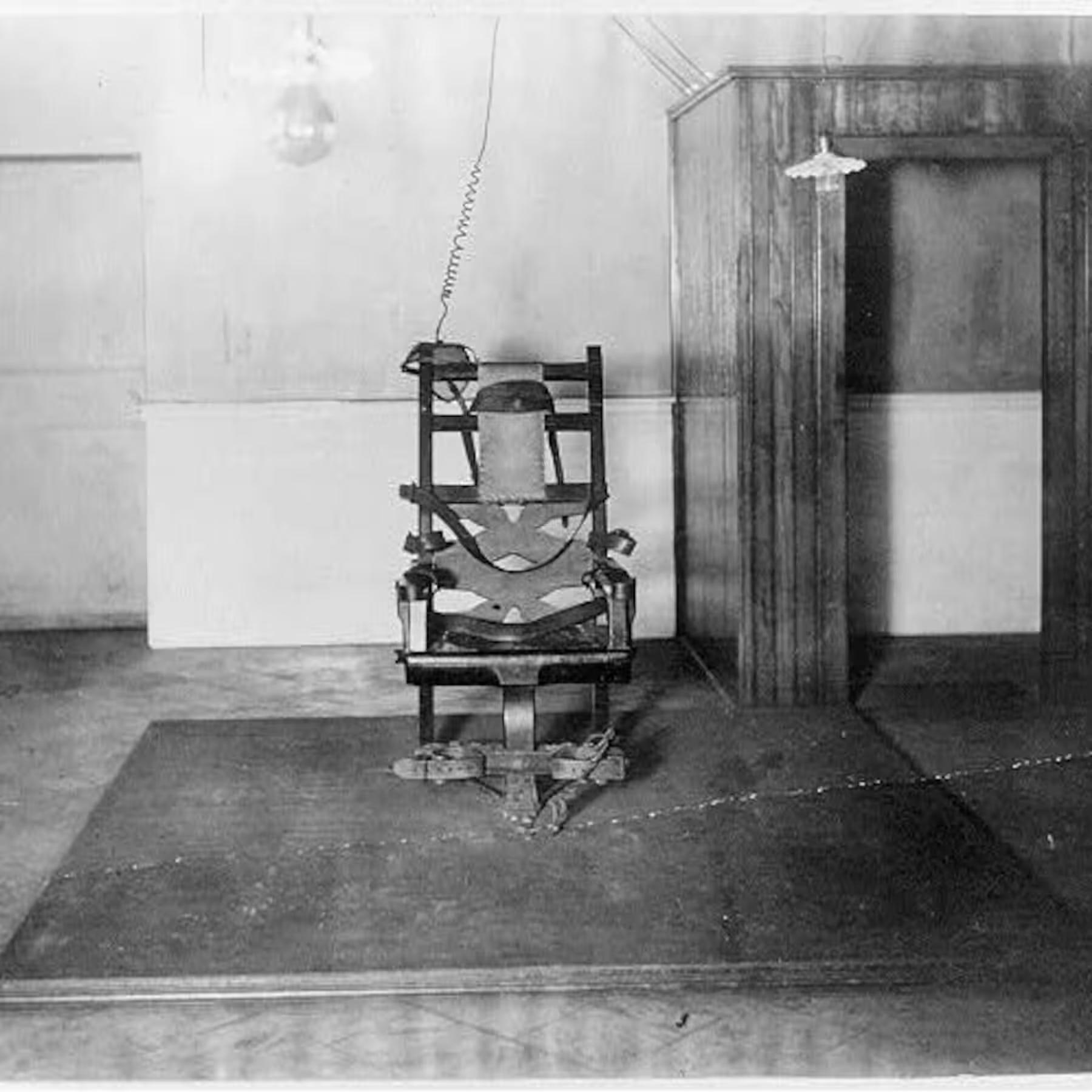
In 1890, New York introduced the electric chair, developed as a more humane alternative to hanging. Its first subject was William Kemmler, convicted of killing his common-law wife with a hatchet.
On August 6, at Auburn State Prison, officials sent an electrical current through his body for about 17 seconds. He was declared dead.
Then witnesses noticed he was still breathing. Which one isn’t supposed to do after one is dead. Generally.
But the debut of this kinder, gentler execution method wasn’t finished. They applied another current, at a higher voltage. Witnesses reported the smell of burning flesh and singed hair.
The modern age had arrived, and it smelled awful.
The chair nevertheless became a major American method of execution. And in 1946, it produced a case with an especially uncomfortable connection to Pike’s: a prisoner who survived.
Willie Francis was 17 when Louisiana strapped him into its electric chair on May 3. The equipment malfunctioned, and the attempt failed to kill him.
That left a question no execution protocol could answer by itself. Could the state try again?
His lawyers argued that a second attempt would violate constitutional protections. The case reached the U.S. Supreme Court, which allowed Louisiana to proceed. The justices divided five to four.
On May 9, 1947, Louisiana executed Francis, this time with the intended outcome. He was 18.
Surviving an execution had bought him another year, a Supreme Court case, and a return engagement with electricity.
Nor were electrical failures confined to the chair’s early years. In Georgia, on December 12, 1984, the first electrical charge failed to kill Alpha Otis Stephens. He continued breathing during the interval before a second charge completed the execution.
By then, lethal injection was offering another answer. An IV line, a drug, a room that could almost pass for a medical setting. No axe. No electrical current. Supposedly, a more humane way to go.
But the drugs still had to get into the right place.
In Oklahoma in 2014, an improperly placed IV helped turn Clayton Lockett’s execution into another disaster. The state’s investigation identified problems with the IV’s insertion and with keeping the insertion site hidden and unmonitored.
These cases aren’t a complete history. They’re a few stops along a long road, and the word “botched” itself covers different things: an execution that takes longer than intended, one that causes unexpected suffering, or one that fails to kill the prisoner at all.
But there’s a familiar confidence that the next method will solve the problem. A machine will remove the executioner’s shaky hand. A drug will remove the machine’s violence. A revised protocol will remove the drug’s uncertainty.
Sometimes a new method solves an old problem. Sometimes it introduces a new one.
You don’t have to settle the entire argument over capital punishment to recognize the limits of that confidence. A sentence can be precise. Carrying it out is a physical act, performed by fallible people, with tools that don’t always work.
History has no shortage of stories that make you wonder how we got here. That’s what I explore at Archer’s Line. If you’d like more, subscribe—and share this with someone who appreciates a little history with their dark tales.