

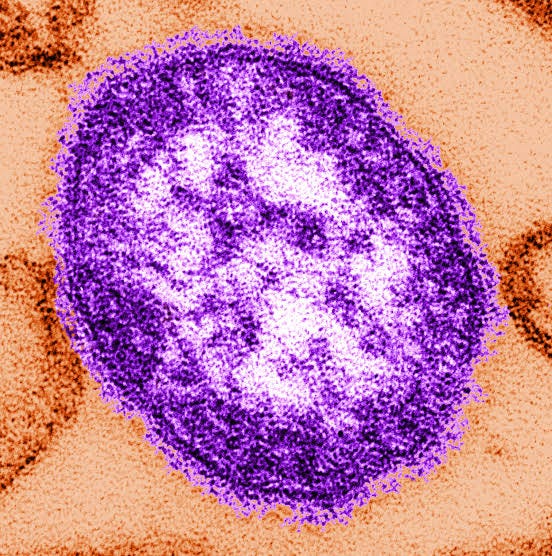
For a while, measles became something Americans mostly talked about in the past tense.
By the end of the 20th century, vaccination had pushed measles so far out of everyday American life that a generation of parents could raise children without ever seeing a case.
Now it’s back in the news.
Here in metro Atlanta, a measles outbreak linked to a daycare has grown to 10 cases. Georgia has reported 16 cases so far this year. Around the country, the CDC had confirmed more than 3,100 cases by early September, with cases reported across 47 jurisdictions. Pennsylvania is dealing with a particularly large outbreak, with hundreds of cases and more than 100 hospitalizations this year.
Where did measles come from in the first place?
The answer goes back a long way. A very long way.
Measles is closely related to rinderpest, a viral disease that once infected cattle. For years, scientists believed the two viruses separated sometime during the Middle Ages. More recent genetic work has pushed that date much farther back.
A 2020 study published in Science concluded that the ancestors of measles and rinderpest may have separated as early as the sixth century BCE — roughly 2,500 years ago.
That date is interesting because human civilization was changing. Large cities were appearing.
And measles needs people. Lots of them. Close together.
Unlike some infectious diseases that can linger in animals or the environment, measles survives by moving from one susceptible human being to another. A small isolated village eventually runs out of people to infect. A city provides a much better home.
So the rise of densely populated cities may have provided exactly what measles needed to become a permanent human disease.
The first clear written description came much later. In the ninth century, the Persian physician Muhammad ibn Zakariya al-Razi, known in Europe as Rhazes, wrote about measles and tried to distinguish it from smallpox.
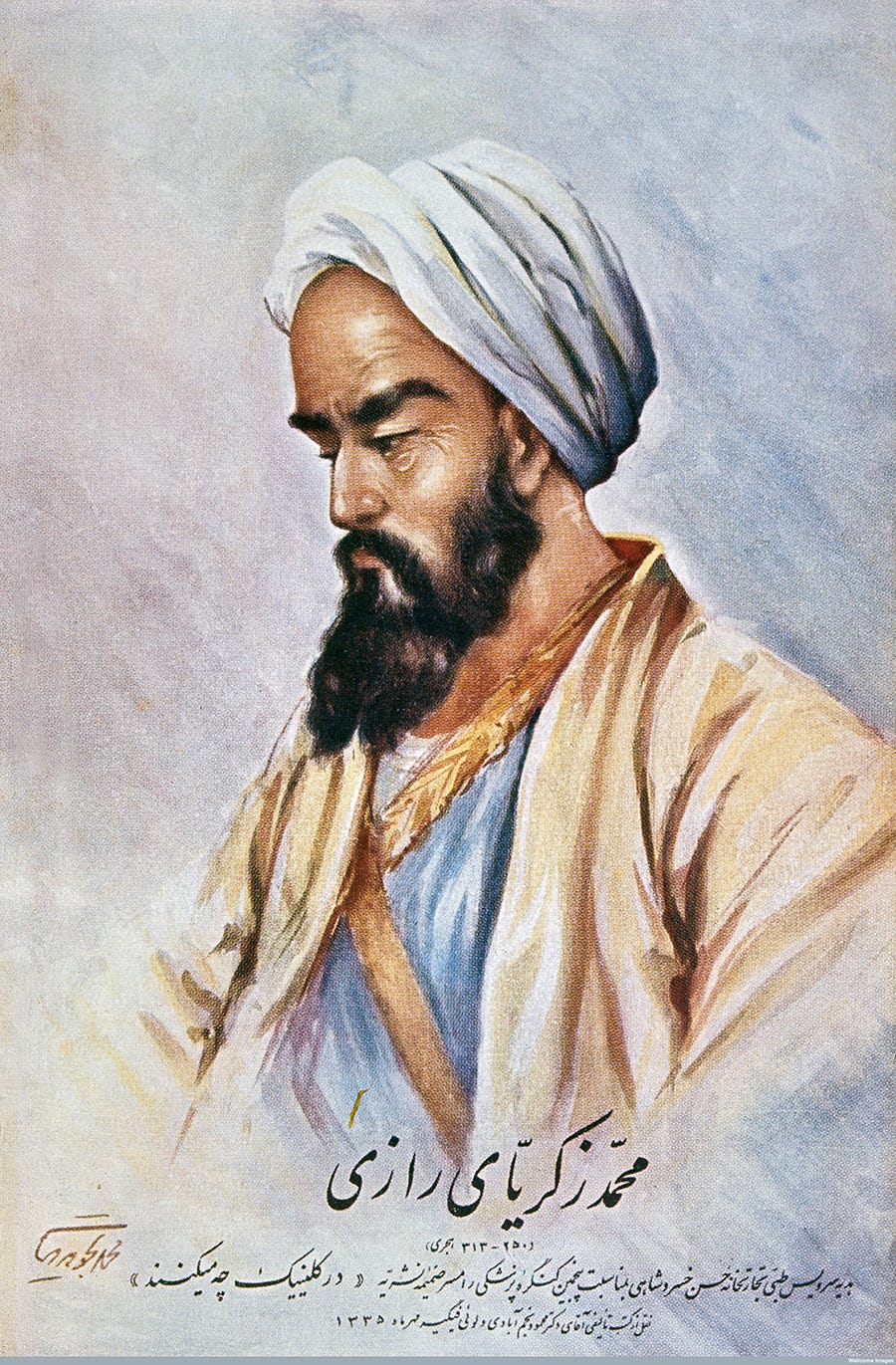
Both diseases could bring fever and rash, and for centuries physicians sometimes confused one with the other.
By the 1700s, doctors were beginning to understand that measles was its own infectious disease. In 1757, Scottish physician Francis Home demonstrated that whatever caused measles could be transmitted through the blood of an infected patient.
Nobody knew about viruses yet. They only knew that something was passing from one person to another.
Then came one of the great pieces of old-fashioned epidemiological detective work.
In 1846, a measles epidemic swept through the Faroe Islands in the North Atlantic. Danish physician Peter Panum studied it closely. He worked out the approximate incubation period, documented just how easily the disease spread, and noticed something else important.
People who had survived an earlier measles epidemic decades before generally didn’t get it again.
Measles appeared to produce lifelong immunity.
Unfortunately, getting that immunity the natural way meant getting measles. And measles was never quite the harmless childhood rite of passage it sometimes became in popular memory.
Before vaccination, nearly every American child eventually caught it. In the decade before the vaccine became available, an estimated three to four million Americans were infected every year. Roughly 48,000 were hospitalized annually. About 1,000 developed encephalitis, a potentially devastating swelling of the brain. Between 400 and 500 died.
For most children, measles meant high fever, cough, runny nose, red eyes, and eventually the familiar rash. For some, it meant pneumonia. For some, brain damage.
For some, death.
The disease was so common that until 1963, avoiding it for an entire childhood was unusual.
Then two researchers in Boston changed the story.
In 1954, during an outbreak at a school outside Boston, John Enders and Thomas Peebles began taking blood samples and throat swabs from sick students.
They managed to isolate the measles virus from a boy named David Edmonston. His name still lives inside the history of medicine because the strain of virus isolated from him became the foundation for the measles vaccines that followed.
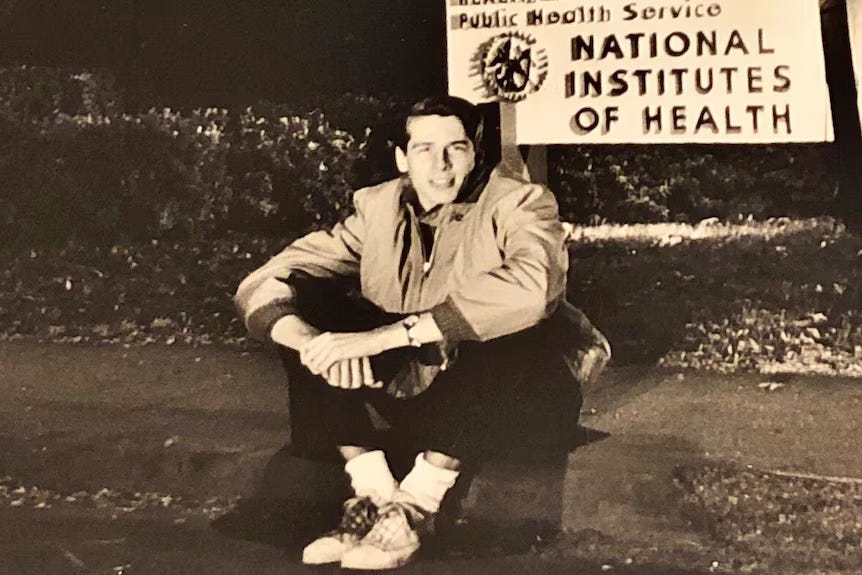
The first measles vaccine was licensed in the United States in 1963.
It worked, but researchers kept improving it. Maurice Hilleman and his colleagues developed a weaker version of the virus that produced fewer side effects. That version came into use in 1968.
Then, in 1971, Hilleman combined vaccines against three diseases into one shot: Measles, mumps, rubella. The MMR vaccine.
Measles cases collapsed.
Eventually doctors discovered that one dose was not quite enough to prevent every infection, and after outbreaks among schoolchildren in the late 1980s, a routine second dose was recommended.
Today, one dose of MMR is estimated to be about 93 percent effective at preventing measles. Two doses are about 97 percent effective.
By 2000, the United States declared measles eliminated.
But “eliminated” didn’t mean eradicated.
Smallpox has been eradicated. That virus now only exists in laboratory samples.
Measles remained all over the world. Travelers could still carry it into the United States. But for measles to be considered eliminated here, imported cases could not sustain continuous transmission for a year or longer.
Then came another chapter in the measles story.
In 1998, British physician Andrew Wakefield and colleagues published a paper in The Lancet involving just 12 children. The paper suggested a possible connection between the MMR vaccine and autism.
The idea exploded. Parents were frightened. Vaccination rates fell in some places. And the claim survived long after the evidence supporting it fell apart.
The paper was formally retracted by The Lancet in 2010 after investigations found serious problems with the research and its conduct. Larger studies involving vastly more children repeatedly failed to find a causal link between MMR vaccination and autism.
But once an idea gets loose in the world, killing it can be harder than disproving it. Kind of like a virus itself.
The MMR-autism claim became one of the foundations of the modern vaccine-skeptic movement.
Robert F. Kennedy Jr. became one of its most prominent public figures, spending years questioning the safety of vaccines, including MMR. Since becoming Secretary of Health and Human Services, his statements about measles vaccination have sometimes been complicated by that history.
But on the central point, he has now said it plainly: vaccination is the most effective way to prevent the spread of measles, and in August he urged American parents to have their children vaccinated as cases continued to rise.

Measles is extraordinarily contagious. If someone carrying the virus walks into a room full of people who have never had measles and have not been vaccinated, it can spread with remarkable efficiency. The virus can remain suspended in the air for as long as two hours after an infected person leaves.
Vaccination interrupts that chain, but it depends on enough people being vaccinated.
The CDC says MMR coverage among American kindergartners has fallen from 95.2 percent in the 2019–2020 school year to 92.4 percent in 2025–2026. That sounds like a small change.
For measles, it isn’t. Because measles spreads so easily, public health officials generally look for vaccination levels of around 95 percent to prevent sustained outbreaks.
Below that level, gaps begin to open. And measles is very good at finding gaps.
Human beings have probably been living with measles for more than two thousand years. We learned what it was. We learned how it spread. We isolated the virus. We developed a vaccine. We watched cases plunge. And in this country, we managed to stop continuous transmission for decades.
But now, in Atlanta and elsewhere around the country, measles is reminding us that an old disease doesn’t stay in the past just because we thought we'd beaten it.
Very interesting and informative. Thank you, Rob.