

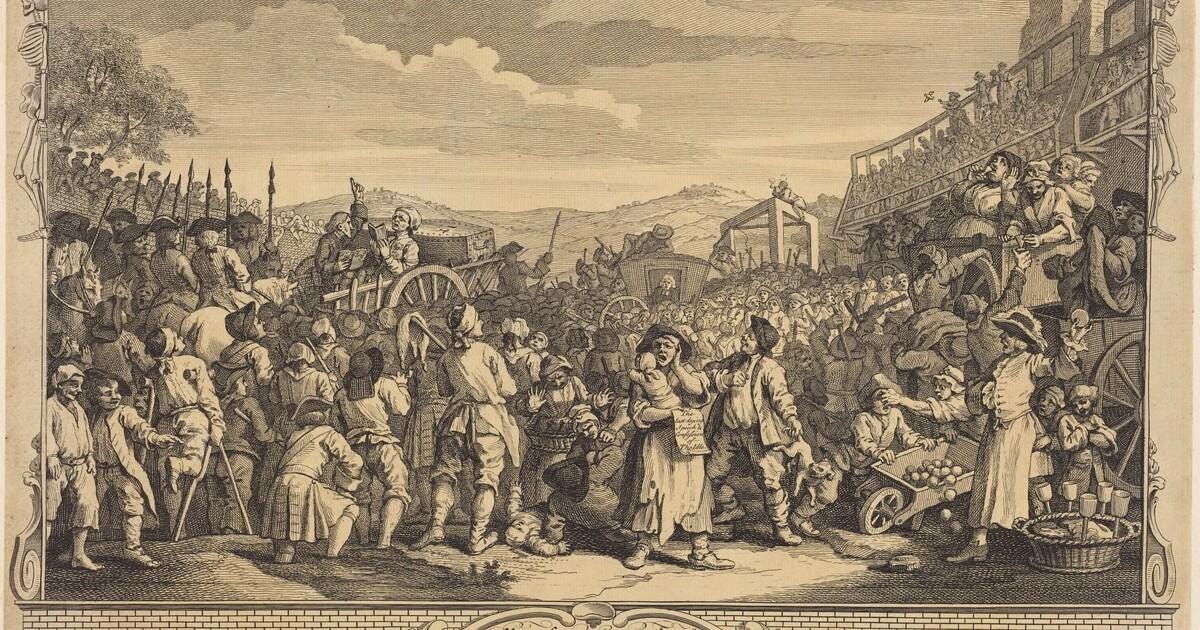
For thousands of years, people gathered to watch other people die. Sometimes they came to see justice carried out. Sometimes they wanted revenge. Sometimes they wanted entertainment.
Now the United States government is proposing to bring back public executions, with a technological upgrade. Americans may be able to watch someone being put to death from the comfort of their living rooms.
Defense Secretary Pete Hegseth said this week that the execution of Nidal Hasan, the former Army psychiatrist responsible for the 2009 Fort Hood massacre, would be public. A Pentagon official subsequently confirmed that it would be livestreamed.
Hasan killed 13 people and wounded 32 others. He was convicted in 2013, and his execution by firing squad is scheduled for December 3 at Fort Hood, the same military installation where he committed his crimes. President Trump has authorized the execution. It would be the first American military execution since 1961.
There is no ambiguity about what Hasan did. Nor is there any mystery about why the families of his victims want justice. But there’s a separate question here: Why does the government want the rest of us to watch?
To understand what a public execution means in 2026, we need to revisit a few thousand years of history. I know, I know. Bear with me.
When death was a spectator sport
The ancient Romans understood the political value of a public death. Crucifixion was public, humiliating, and prolonged. A crucified body beside a road was more effective than a thousand government proclamations.
Rome also turned violence into entertainment. Gladiators fought in arenas before enormous crowds. Condemned criminals could be executed as part of the proceedings. The audience took part in a demonstration of Roman authority.
There was a practical argument behind all this. Public executions supposedly discouraged people from breaking the law. If you saw what happened to criminals, perhaps you would think twice before becoming one.
Whether that actually worked was another matter.
The Roman philosopher Seneca had his doubts about what watching people die did to the spectators. In one of his letters, he described the brutality of the arena and warned that watching such violence could make people more cruel. The crowd wasn’t learning respect for human life. It was learning to enjoy the destruction of it.
Nearly two thousand years later, Republican Senator John Curtis of Utah invoked Seneca while urging Hegseth to reconsider the proposed livestream. Curtis warned that turning an execution into entertainment could damage society.
It’s an old argument. We still haven’t settled it.
The tradition continued in medieval and early modern Europe, often with theatrical flair. Executions were staged in public squares, outside city walls, and along busy roads. Crowds gathered to see criminals hanged, nobles beheaded, and heretics burned.
Sometimes the condemned delivered speeches. Religious authorities offered sermons. Vendors sold food and drink. Money was made. People brought their children.
In London, public hangings at Tyburn became major attractions. People came from miles around, and the crowds didn’t always behave with the solemnity the authorities wanted.
Historian Rosalind Crone of Britain’s Open University says that became one of the principal arguments for ending public executions. The crowds could be drunk, rowdy, and celebratory. And rather than discouraging crime, the executions sometimes appeared to have the opposite effect.
Charles Dickens witnessed a public hanging in 1846 and was disgusted by the behavior of the spectators. He later became an outspoken critic, describing crowds more interested in the spectacle than the supposed lesson.
This raises an interesting question. If you hold an execution to teach people to respect human life, what happens when the spectators turn it into a party?
The trouble with entertaining the crowd
By the 18th and 19th centuries, European attitudes toward public punishment were changing.
The Enlightenment brought greater scrutiny of torture, arbitrary punishment, and the power of governments to inflict suffering. Philosophers and reformers argued that punishment should serve a rational purpose rather than satisfy public bloodlust.
There were other concerns. Public executions could produce riots, sympathy for the condemned, or general disorder. Sometimes the spectacle appeared to brutalize the spectators rather than improve their behavior.
Britain ended public executions in 1868. Hangings continued, but they moved behind prison walls.
France took longer.
On June 17, 1939, Eugène Weidmann was guillotined outside a prison in Versailles. Crowds gathered, and the proceedings took on a carnival atmosphere. The spectacle caused such public outrage that the French government ended public executions.
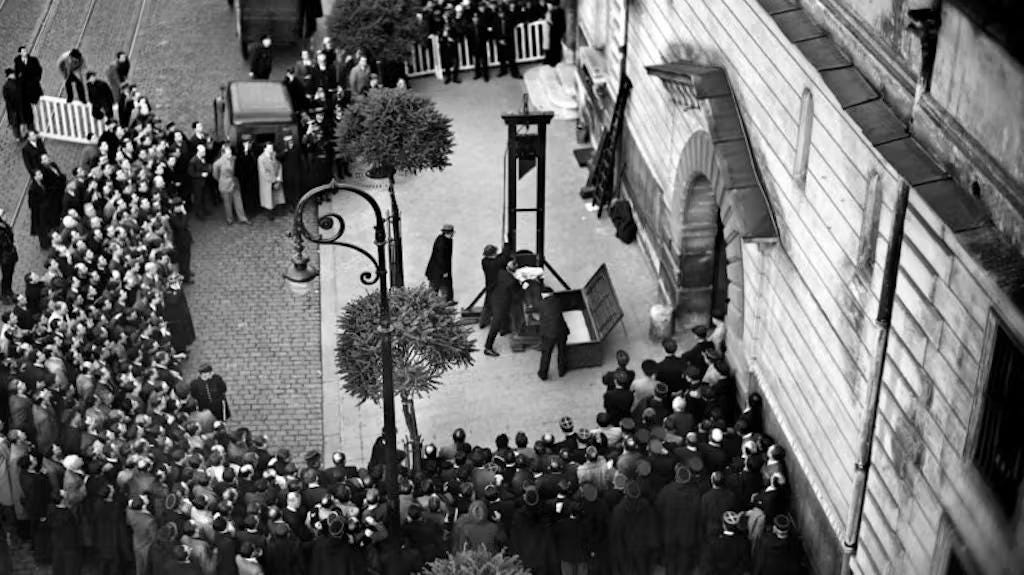
Among those who later said they had witnessed Weidmann’s death was a 17-year-old named Christopher Lee, who would go on to portray Dracula, Saruman, and Count Dooku.
There is something surreal about imagining the future Dracula watching a real execution before beginning a career in horror.
America followed a similar path, although public executions disappeared at different times in different states.
On August 14, 1936, thousands gathered in Owensboro, Kentucky, to witness the hanging of Rainey Bethea, convicted of rape and murder. It is generally recognized as the last public execution in American history, although accounts of later hangings complicate that distinction.
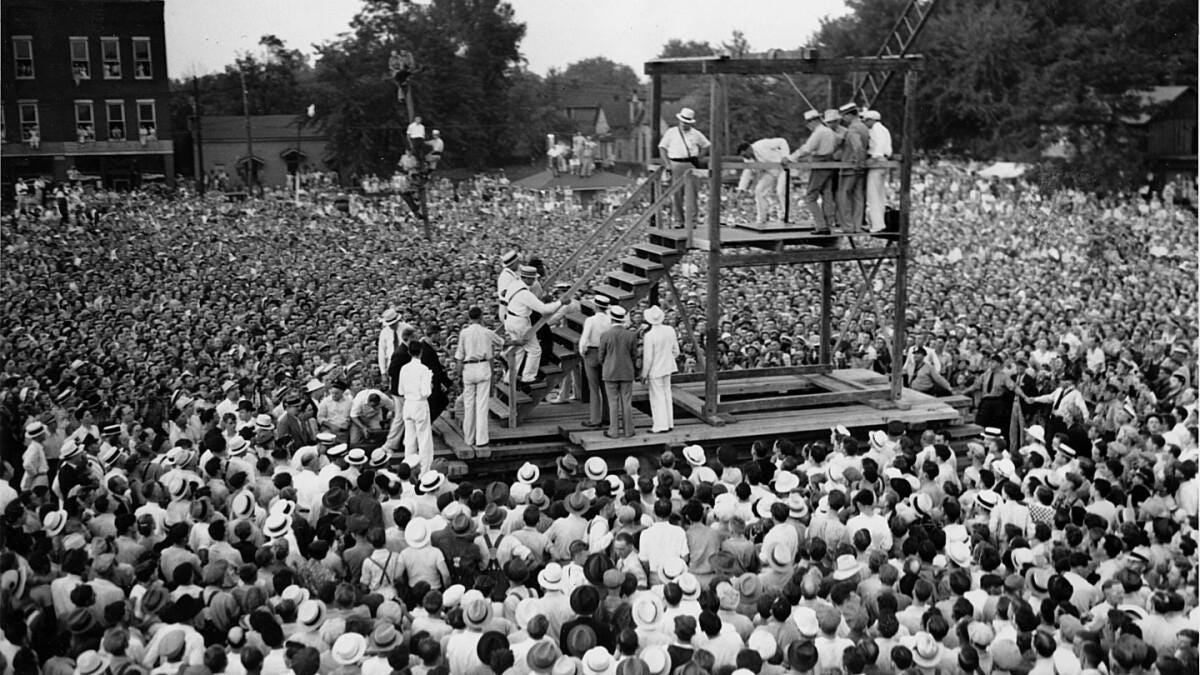
The spectacle attracted national attention and became another example of why many Americans thought executions belonged behind prison walls.
Capital punishment continued. The electric chair, gas chamber, lethal injection, and firing squad all remained part of the American justice system.
But something fundamental had changed. The government might still take your life, but it generally no longer invited the entire community to watch.
And the United States wasn’t alone. Public executions have become unusual internationally, although they continue in some countries, including Iran, Somalia, North Korea, and Afghanistan.
The camera changes everything
Television eventually complicated the distinction between public and private.
When Oklahoma City bomber Timothy McVeigh was executed in 2001, some victims and survivors were permitted to watch through a closed-circuit television system.
But the audience was limited. The transmission was protected, recording was forbidden, and there was no provision for broadcasting the execution to the general public.
The government wanted to accommodate people directly affected by McVeigh’s crime without turning his death into a national television event.
Elsewhere, executions were becoming part of the new global media environment, whether governments intended it or not.
Saddam Hussein was hanged in Iraq in 2006. Unauthorized cellphone footage of the execution quickly circulated worldwide. The images became part of the political story, raising questions about the conduct of those present and the dignity of the proceedings.
An execution that might once have been witnessed by a small group could now reach millions.
And then came ISIS.
Death goes viral
ISIS understood something that earlier executioners couldn’t have imagined. A public execution no longer required a public gathering.
A camera, an internet connection, and a social media platform could take a killing to audiences around the world.
Beginning in 2014, ISIS released elaborate execution videos. These were recorded and edited rather than broadcast live, but that didn’t diminish the impact.
The videos were propaganda, intended to terrify enemies, attract attention, project power, and influence potential recruits. Their producers understood the dynamics of modern media. A shocking image could dominate headlines, circulate through social networks, and spread far beyond the group’s territory.
There is an essential distinction here. ISIS was a terrorist organization murdering captives. An execution following a lawful trial and conviction is an entirely different legal and moral circumstance. We can’t equate the two.
But we can examine the way violent images are used to communicate authority without pretending the circumstances are identical.
In both cases, the spectacle is meant to send a message, and the message extends beyond the person being killed.
And that’s part of the concern raised by former counterterrorism officials, including Joe Kent, who once directed the National Counterterrorism Center. They warn that broadcasting Hasan’s death could hand extremist organizations new propaganda material, potentially encouraging recruitment or retaliation.
That doesn’t mean a broadcast would cause another terrorist attack. It means the audience watching an execution might include people looking for something quite different from justice.
The internet has also changed something else. Once an execution video is released, whoever made it may lose control of what happens next.
It can be copied, edited, repackaged, accompanied by jokes or political slogans, and passed from one platform to another. An execution intended to be solemn can become a meme before the body is cold.
And this brings us to a problem the Pentagon may not have worked out. Just where is it going to livestream Hasan’s execution?
The technology website The Verge contacted several major streaming services. TikTok pointed to its prohibition against graphic content showing someone’s death. Kick, a platform known for allowing more controversial material, said such a broadcast would violate its rules.
Meta has had a policy against livestreaming capital punishment since 2019. YouTube, Twitch, and X haven’t publicly committed to carrying the execution. As of this weekend, the Pentagon hasn’t announced where the broadcast would appear.
What does watching prove?
Hegseth says making Hasan’s execution public would demonstrate that serious crimes have serious consequences.
That’s a recognizable argument, and one that governments have made for centuries. It’s the same justification offered for displaying bodies along Roman roads or hanging condemned criminals before the crowds at Tyburn.
Dallas pastor Robert Jeffress, a longtime Trump supporter, has endorsed the broadcast. He argues that capital punishment demonstrates the sanctity of human life and that the more people who witness that lesson, the better.
It’s essentially the same argument made by defenders of public executions hundreds of years ago. The death is meant to teach the living.
But there’s a competing argument, one that helped convince Western societies to abandon public executions in the first place.
Perhaps watching people die doesn’t make society more respectful of law and order. Perhaps it makes violence more familiar, more acceptable, or more entertaining.
Sociologists and historians have spent decades looking at these questions. Norbert Elias described a long-term civilizing process in which European societies developed stronger restraints against displays of violence. Michel Foucault examined the transformation of punishment from public demonstrations of sovereign power into systems administered behind institutional walls.
Neither framework proves that modern societies have become nonviolent. Far from it. Governments still wage wars, and prisons still exercise extraordinary power over human beings.
But the public presentation of violence has changed. In the modern West, a government that stages executions as a public spectacle risks communicating something very different from the dignity and authority it intends.
There are also questions about what watching an execution might do to the people watching it.
Simon Duff, a forensic psychologist at the University of Nottingham, says research on the psychological effects of watching executions is limited. But studies involving people exposed to violent imagery suggest that viewing such material can produce traumatic reactions.
Neil Greenberg, a professor of defense mental health at King’s College London, has also warned about the potential psychological effects, particularly for vulnerable viewers.
And there’s another possibility. Executions don’t always go according to plan. We just saw that in Tennessee, where an attempt to execute Christa Pike by lethal injection failed. Imagine watching something like that unfold live, with no opportunity for an editor to cut away.
Supporters of broadcasting executions might argue that transparency is a good thing. The state should not be permitted to kill people in secret, shielded from public scrutiny. If executions are conducted in the people’s name, perhaps the people should be allowed to see them.
But transparency doesn’t necessarily require a livestream. Independent witnesses, journalists, public records, and judicial oversight can provide accountability without making the final moments of someone’s life available to everyone with a smartphone.
Consider the people most directly affected by Hasan’s crimes.
Former Army Sergeant Alonzo Lunsford was shot seven times during the Fort Hood massacre. He wants to witness Hasan’s execution in person. He wants to look the man who shot him in the eye. But Lunsford opposes making the execution an unrestricted public broadcast. He doesn’t want it turned into entertainment.
Another survivor, Dayna Ferguson Roscoe, has expressed uncertainty about the livestream. She recognizes the history of documenting violence through photographs and video but hasn’t decided whether broadcasting this execution is appropriate.
Even among survivors, there isn’t a single answer.
And a livestream introduces questions that no medieval executioner ever had to consider. Will the video be archived? Will clips spread across social media? Will children see it? Will people gather online to celebrate?
Will someone turn it into entertainment?
Back to the public square
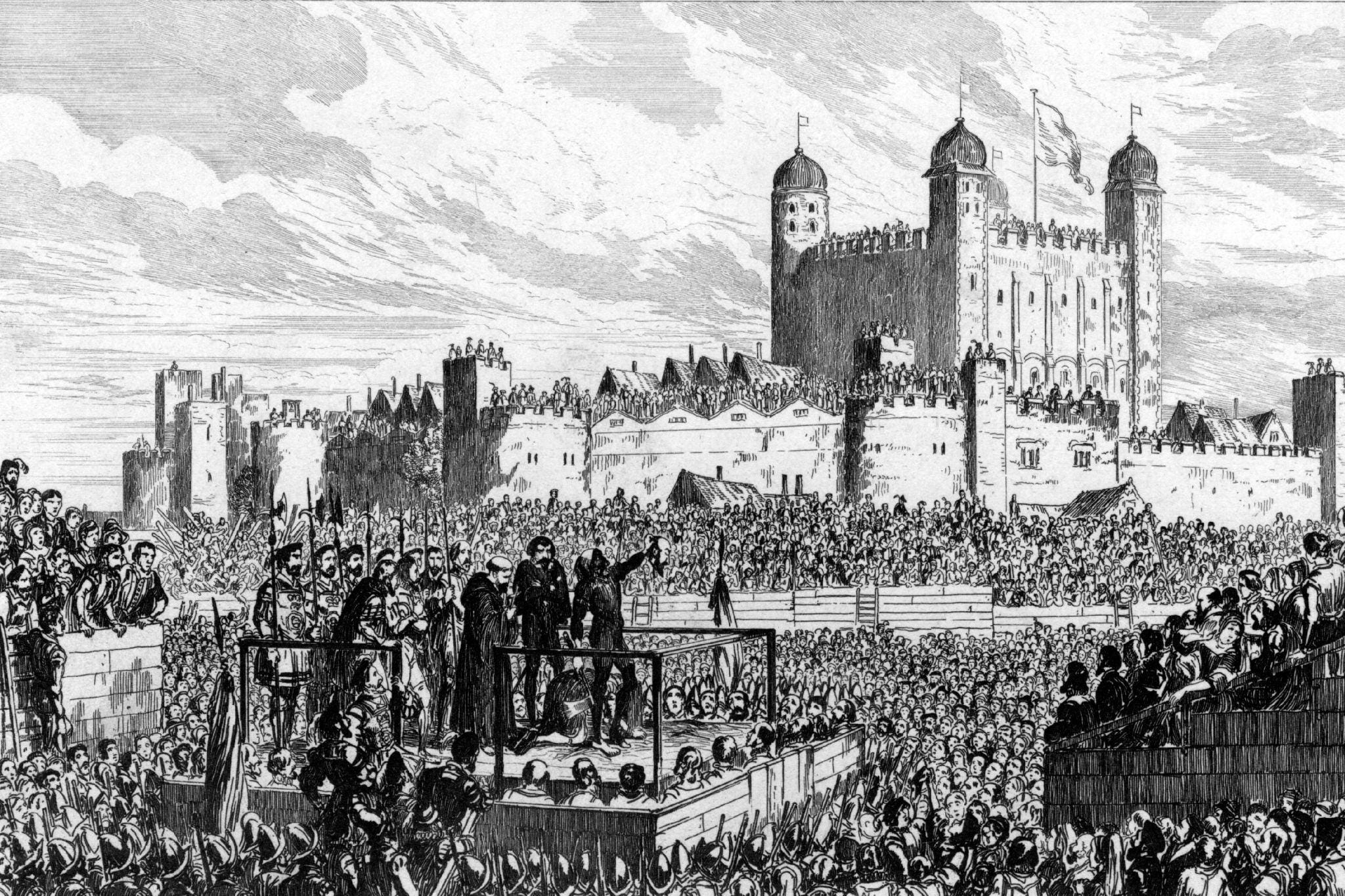
There is still a lot of uncertainty about whether Hasan’s execution will actually be livestreamed. Military rules, legal challenges, and technical questions could alter the plans before December 3.
For one thing, President Trump has made remarks that leave his final position on the broadcast unclear. He supports Hasan’s execution, but his statements about approving the livestream have not been consistent.
Vice President JD Vance has also questioned whether the broadcast will happen. He says that if it does, he won’t be watching.
There are legal complications, too. Federal prison regulations prohibit recording and broadcasting executions, but military executions are governed by different rules. The same prohibition doesn’t automatically apply.
Military regulations also prohibit anyone under 18 from witnessing an execution. Those rules were written before livestreaming became an option. Legal scholars now disagree over whether allowing children to watch an execution online would violate the intent of the regulations.
Hasan has exhausted his direct military appeals, but he can still seek review in the federal civilian courts. That could delay the execution.
A former attorney for Hasan, John Galligan, also says the Army failed to provide legal counsel when Hasan was notified that Trump had authorized his execution. The Army disputes that account, saying it made reasonable efforts to contact attorneys and has not prevented Hasan from communicating with counsel.
And according to ABC News, some Army officials were caught off guard by the decision to livestream the execution. Planning for a firing squad and a worldwide broadcast presents problems the military hasn’t had to solve before, including protecting the identities of the people carrying out the sentence.
None of that establishes that the livestream is illegal or that the execution will be stopped. But there are still questions to be answered.
Meanwhile, the proposal has drawn criticism from people who don’t necessarily agree about capital punishment itself.
Archbishop Paul Coakley, president of the U.S. Conference of Catholic Bishops, called the livestream plan barbaric. The Vatican’s secretary of state, Cardinal Pietro Parolin, condemned the idea of turning death into a spectacle. Pope Leo XIV has also reaffirmed the Catholic Church’s opposition to capital punishment.
The United Nations Human Rights Office has condemned the proposed broadcast, arguing that public executions are incompatible with international protections against torture and cruel treatment. That is a human rights assessment, not a ruling from an American court.
And there are people who support executing Hasan but oppose inviting the public to watch. Republican lawmakers have joined Democrats in criticizing the livestream. The debate crosses political and religious lines.
But the announcement itself deserves attention.
For more than a century, much of the Western world has moved away from the idea that an execution should be a public spectacle. The change wasn’t universal, immediate, or necessarily evidence of a more humane society. But the direction was unmistakable.
Now the Pentagon is proposing to reverse that tradition, using a technology that could reach more spectators than the Romans, the medieval executioners, and the crowds at Tyburn combined.
Hasan’s crimes were monstrous. The people he murdered are dead, their families have lived with the consequences for 17 years, and the government has the authority to carry out the sentence imposed by the military justice system, subject to any further court proceedings.
None of that settles the question of broadcasting his death.
I keep coming back to something simple. For centuries, governments used public executions to show people who was in charge. Eventually, many of those same governments decided the spectacle was an embarrassment, a demonstration of brutality rather than civilized justice.
Eventually, they stopped inviting everybody to watch.
Now we’re considering bringing the audience back.
Only this time, nobody has to leave the house. It’ll be right there on your phone, your laptop, or your 77-inch OLED TV.
If you enjoyed this article, please consider subscribing to Archer’s Line. It’s free, and you’ll get my latest essays on history, science, politics, and the strange ways we humans keep repeating ourselves. Paid subscriptions help keep the work going.
Sources and further reading
Associated Press — Legal questions surrounding the Pentagon’s proposed livestream.
Reuters — Federal and military execution rules and the legality of broadcasting.
The Guardian — Historians and psychologists on public executions and their effects on spectators.
The Verge — Streaming platforms’ policies on broadcasting executions.
Reuters — Uncertainty within the administration about proceeding with the broadcast.
Norbert Elias, The Civilizing Process — The historical development of social restraints against violence.
Michel Foucault, Discipline and Punish: The Birth of the Prison — The transition from public punishment to institutional control.
This article reflects reporting available as of October 10, 2026. The proposed livestream and execution arrangements remain subject to change.