

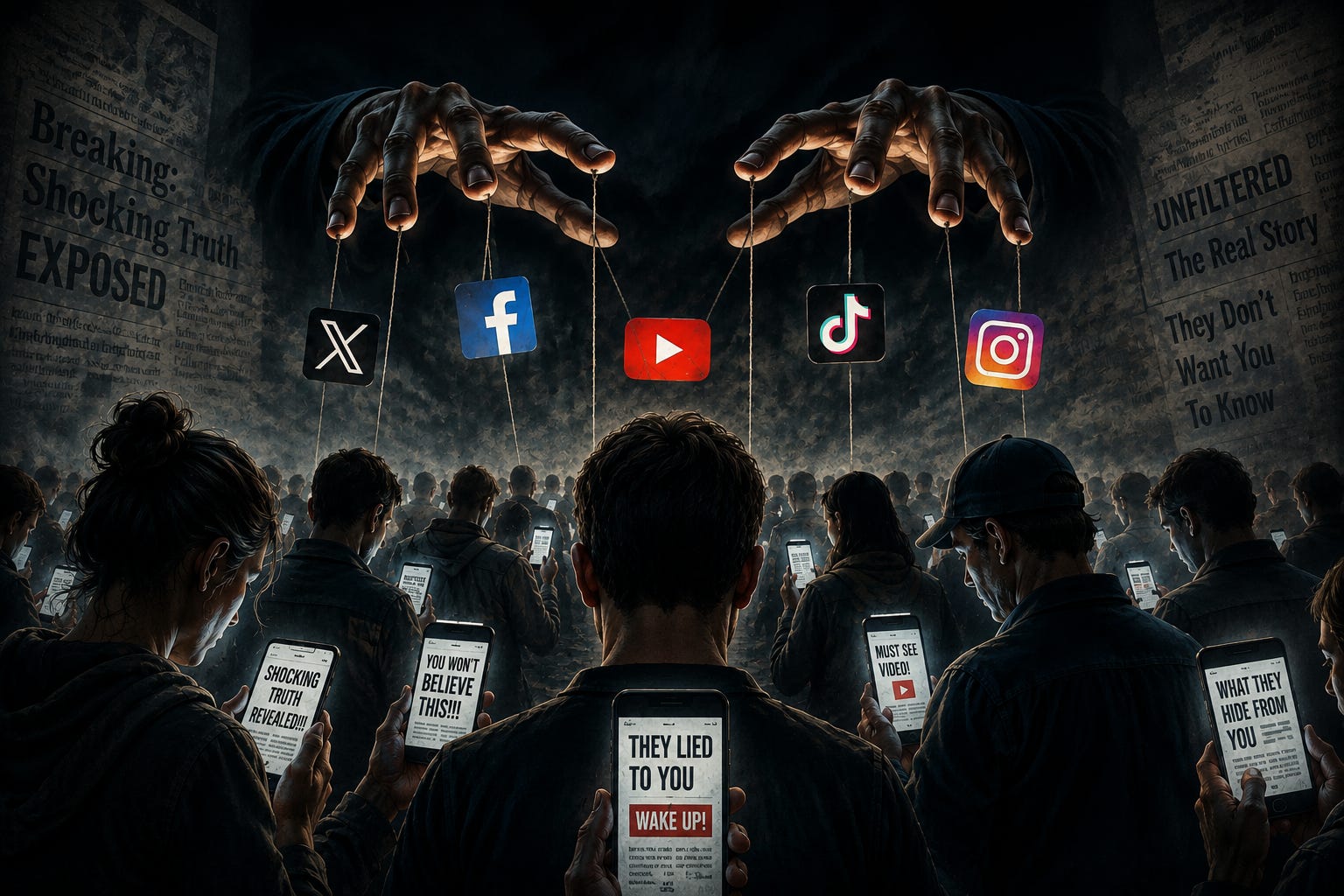
People say one thing and do another.
That’s especially true when it comes to where they get their news.
Consumers say they want impartial coverage. They say they value facts over opinion. They say they want reporters to keep advocacy out of the story.
Then they go looking for news that confirms what they already believe.
Anyone who’s spent time programming radio knows this cold.
I can’t count the audience music tests I’ve sat through where listeners complained about hearing the same songs over and over. They wanted variety. New music. Fewer repeats.
But every programmer knows what happens when you actually give them what they say they want. The ratings fall off a cliff.
No matter what they tell a survey, most listeners want familiarity. They want their favorite songs, and they want them often. The unfamiliar creates friction. Friction creates tune-out. And tune-out costs you your job.
News audiences aren’t different. They just pretend harder.
The latest Digital News Report from the Reuters Institute for the Study of Journalism documents the contradiction in black and white. Traditional news organizations still score far higher for accuracy and reliability than social media personalities and online “creators.” Yet audiences keep migrating toward social platforms, video networks, influencers, podcasts, and now AI chatbots.
Researcher Jim Egan puts it plainly: there’s “an apparent paradox between behavior and attitudes.”
The paradox isn’t subtle. For the first time in the United States, more people reported getting news from social and video networks than from television or news websites in the weeks surrounding the 2025 presidential inauguration. More than half of Americans under 35 now cite social and video platforms as their primary source of news.
Those same audiences also identify online personalities, influencers, and politicians as the largest sources of false and misleading information. More than 70 percent say they’re worried about their ability to separate fact from fiction online.
Go figure.
I’ve been saying that a lot lately.
The trust problem goes well beyond American contradictions. Across all markets Reuters surveyed, trust in news has fallen to 37 percent — the lowest level recorded in a decade of tracking. In the United States, only one in four people say they trust most news most of the time. Among right-leaning Americans, that drops to 15 percent. CBS News, Fox News, and CNN all saw significant declines in the past year alone.
Yet people still say they value journalism. They still want reporters investigating powerful institutions, verifying facts, and providing context. The support for what journalism does is real, even as the audience for it erodes.
The gap between what people value and what they consume has never been wider.
None of this is new. Humans have always preferred information that confirms what they already believe. What’s new is that technology has become extraordinarily good at giving us exactly what we want, exactly when we want it, with no friction at all.
Algorithms don’t care whether information is accurate. They care whether it keeps your attention.
Lincoln gets credit for the line: You can fool all the people some of the time, and some of the people all the time, but you cannot fool all the people all the time.
The authoritarians of the 21st century may have found a workaround.
They don’t need to fool everyone. They just need to keep enough people inside information systems that never disturb what they already believe and let the algorithms do the rest.
Uninformed people are easier to fool. Every con artist knows this.
That’s the real business model of the post-news world.
My son-in-law is an admitted conspiracy theorist and loves that he can go looking for “news” that fits what he believes and easily find it.
Annoys the heck out of me.
I've read these reports and don't even know what to say. Except maybe: unbelievable. Unbelievable.
Thank you Rob, as always.