

Annie Jacobsen picked a lousy year to publish a book about a plague escaping from a laboratory in Siberia.
Or a very good one.
Her latest book, Biological War: A Scenario, came out this summer. Like her earlier Nuclear War: A Scenario, it takes things that actually exist — weapons, laboratories, government plans, scientific research — and asks what happens if everything goes spectacularly wrong.
This time the nightmare begins in Siberia.
A biological agent escapes from a Russian laboratory. The pathogen is a genetically engineered form of pneumonic plague. It spreads. Governments scramble. People panic. Systems begin breaking down.
Jacobsen takes us from outbreak to anarchy in six days.
And now there is something happening in Siberia.
Nobody should say Jacobsen’s scenario is coming true. We don’t know that, and several important facts in the real story are very different from her book.
But the similarities are close enough to make the hair stand up on the back of your neck.
What happened in Russia
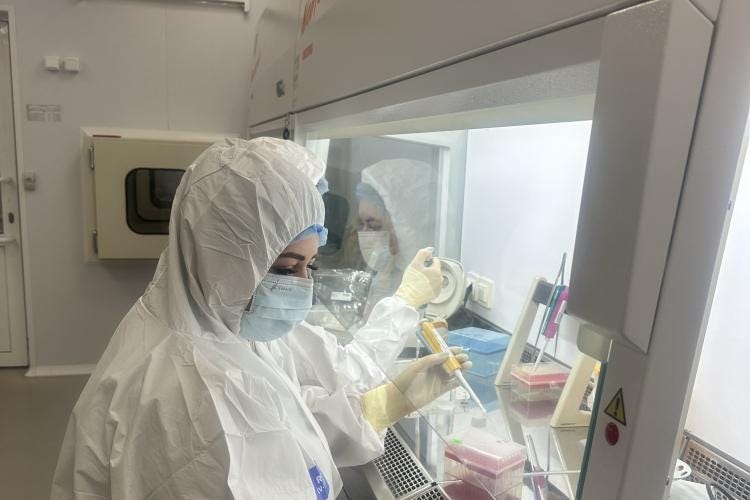
A 28-year-old laboratory worker named Darya Shipilova worked at the Irkutsk Anti-Plague Research Institute in Siberia. She developed severe pneumonia, was hospitalized September 29, and died a few days later.
What killed her is now the subject of a very strange international argument.
Early reports said Shipilova may have been exposed to Yersinia pestis — the bacterium that causes plague — after breaking a test tube at the institute. A regional Russian official initially said she had died of plague, then changed his statement to say she had possibly died from it.
Russian health authorities now say something different. They say Shipilova died from “pneumonia of unknown etiology,” which is doctor-speak for pneumonia and we don’t know what caused it. They say expanded testing found no microorganism connected with her work and no evidence of a laboratory accident.
Fair enough.
Except Russia’s response doesn’t exactly look like nothing happened.
Nearly 200 people have reportedly been placed under medical observation. Several hospitals have imposed quarantine restrictions. Workers at the anti-plague institute have reportedly been isolated. A nearby aluminum plant imposed a mask requirement. Some public events were canceled. And Anna Popova, Russia’s top public-health official, flew to Irkutsk and attended an emergency meeting of the regional anti-epidemic commission.
The United States is paying attention, too.
The State Department says it is monitoring the situation with the CDC and other federal agencies and has publicly asked Russia to share accurate information quickly. The White House has also been briefed and is reportedly “assessing options.”
As of Monday morning, there is no confirmed plague outbreak.
There are no confirmed secondary cases. There is no proof that we know Shipilova died of plague. There is no confirmed evidence that a test tube broke. And there is certainly no evidence that some genetically engineered super-plague has escaped from a Russian laboratory.
But there are enough unanswered questions that simply saying “nothing to see here” doesn’t quite work either.
Enter Annie Jacobsen

This is where the story gets weird.
In Biological War, Jacobsen imagines an accident at Vector, Russia’s real high-security biological research complex in Siberia. It is not the same laboratory involved in the current story.
In Jacobsen’s scenario, the organism that escapes is also not ordinary plague. It is a genetically engineered descendant of pneumonic plague, based on biological weapons research conducted by the Soviet Union during the Cold War.
The weapon has been modified to defeat the defenses that make plague considerably less frightening today than it was when the Black Death swept across Europe.
Because here’s the strange thing about plague in 2026: We can usually cure it.
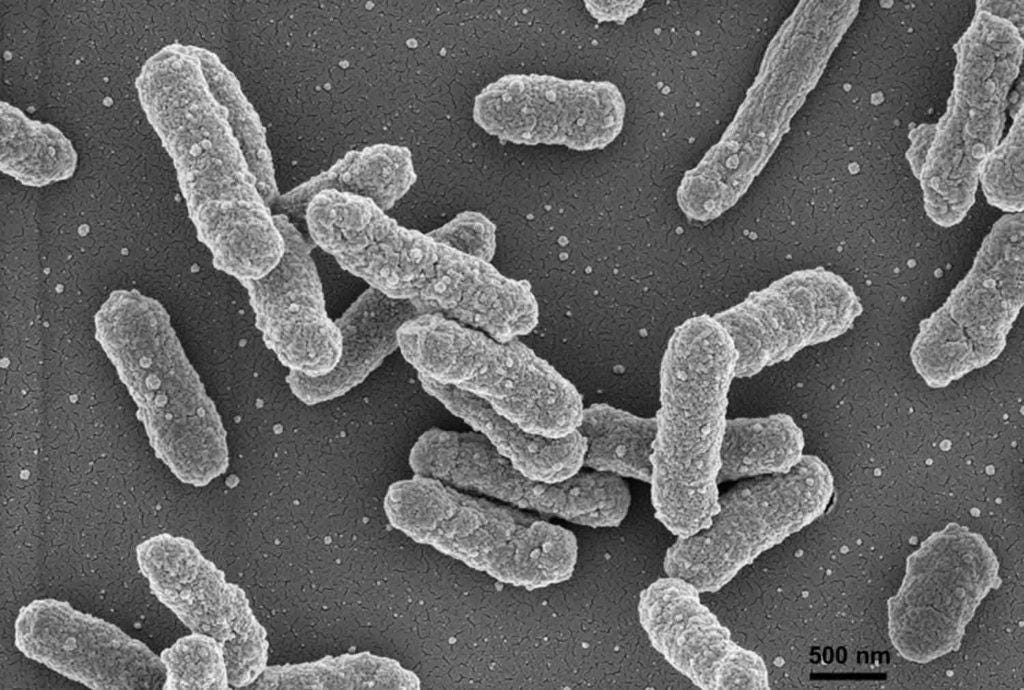
Yersinia pestis is still out there. It lives in animal populations in several parts of the world, including the American West. Human cases still happen.
Pneumonic plague is the dangerous version because it infects the lungs and can spread between people through respiratory droplets. Untreated, it can kill very quickly. But catch it early and antibiotics work.
Jacobsen removes that safety net.
Her fictional pathogen is based on documented Soviet attempts to create biological weapons that could overcome vaccines and antibiotics. Her scenario then asks what happens when such a thing gets loose in an age of international air travel.
Nothing good.
The first infected people don’t know they’re infected. They move around. They encounter other people. Those people encounter still more people.
By the time governments understand what they are dealing with, geography has stopped being much of a defense.
That’s the point of the book. A nuclear weapon destroys one place with enormous violence. A biological weapon can leave the buildings standing while the people carrying it board airplanes.
Jacobsen has been posting furiously about the Irkutsk story since it broke. She says she has spoken with senior U.S. military, intelligence, diplomatic, and homeland-security officials and that the federal government has “all eyes” on what is happening in Russia.
She has also pointed to something that deserves attention without requiring us to believe the worst: Russia’s official reassurances don’t fit comfortably with the scale of its response.
Maybe there’s an innocent explanation. But it’s a legitimate question.
Why are we screwing around with this stuff anyway?
Then we arrive at gain-of-function research.
The phrase became politically radioactive during the argument over the origins of COVID, which makes it difficult to discuss without everybody immediately choosing teams.
Strip away the politics and the idea is fairly simple.
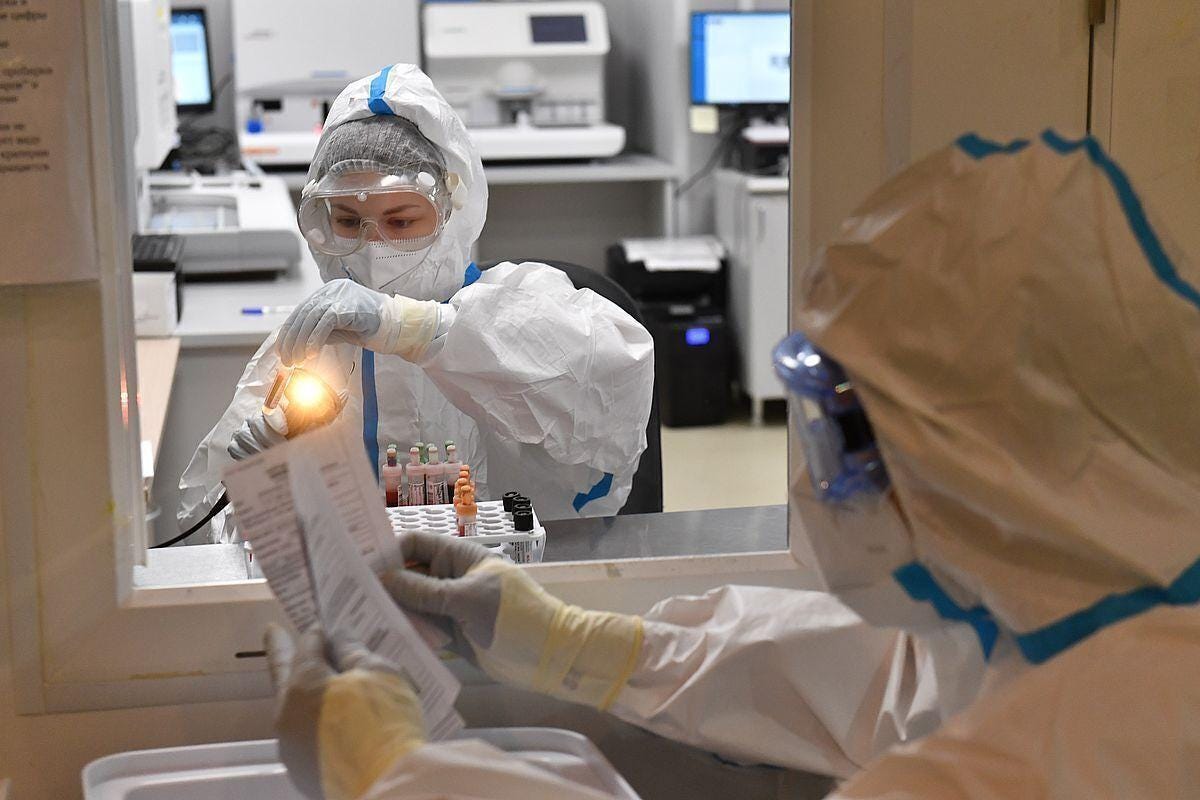
Scientists sometimes alter organisms to learn what particular genes or characteristics do. Give a pathogen a new capability, or enhance an existing one, and researchers may learn what makes it spread, what makes it dangerous, how the immune system responds to it, or what mutation might allow it to defeat a drug.
That knowledge can help scientists recognize dangerous mutations in nature. It can help develop treatments. It can help build vaccines. It can help governments prepare for the pathogen before the pathogen arrives.
That’s the argument for doing it.
The argument against it is also pretty easy to understand:
You just made the pathogen more dangerous.
The World Health Organization calls this a “dual-use” problem. Research intended to protect people can also produce knowledge or organisms capable of harming them. WHO specifically warns that gain-of-function research that increases the transmissibility or virulence of potential pandemic pathogens raises serious biosafety and biosecurity concerns.
There is no contradiction there.
A scientist can have a perfectly legitimate reason for trying to understand how a pathogen becomes more dangerous.
And that experiment can still be dangerous.
You can study how to make a bank vault harder to crack by figuring out how to crack bank vaults. The knowledge doesn’t change depending on whether the person holding it is a locksmith or a bank robber.
Biology has the same problem, except the lock can reproduce itself.
That is why countries keep doing this research. They want better surveillance, vaccines, antibiotics, treatments, and defenses against biological attack. They also don’t want another country to understand a weapon that they don’t understand themselves.
And there is the trap.
Everybody can say the research is defensive. Everybody may even be telling the truth. But defensive biological research and offensive biological research can involve some of the same knowledge.
That was one of the lessons of the Soviet program Jacobsen describes.
And now come the conspiracy theories
Naturally, social media has already skipped several chapters ahead. Some people are convinced Russia is hiding an outbreak. Others are talking about “another Wuhan.”
And because the United States is four weeks away from a midterm election, I’ve already seen speculation that somehow Vladimir Putin and Donald Trump could use a biological emergency to disrupt the election, postpone it, cancel it, or otherwise manipulate the result.
COVID seems to have taught everybody how to build a conspiracy theory.
Find several facts that are individually true. Put them next to each other. Draw a line between them. Then draw another line nobody has proved exists.
But there is no evidence that Russia released plague to help Donald Trump. There is no evidence that the Trump administration had anything to do with what happened in Irkutsk. There is no evidence that anyone engineered this event to disrupt the midterms.
And think it through: If Russia decided to leak a potentially civilization-ending plague just to “help Trump,” that sounds like detonating a nuke to distract from a burglary.
And a president cannot simply announce that Election Day has been canceled because there is an emergency. Federal election dates are established by law, elections are largely administered by the states, and House and Senate terms expire according to the Constitution whether an incumbent president finds that convenient or not.
Could a genuine pandemic disrupt an election? Of course.
We already watched COVID change how Americans voted in 2020. A serious public-health emergency could close polling places, create staffing problems, increase absentee voting, produce lawsuits, spread disinformation, and create political chaos. Those are reasonable things to worry about.
Jumping from there to “Putin released plague so Trump could cancel the midterms” requires evidence that does not exist.
Not everything is a conspiracy
There’s a tendency after COVID to divide everything into two camps. Either believe the official explanation immediately or you’re a conspiracy theorist. Either distrust the official explanation or you’re a sheep.
That’s a lousy way to understand the world.
Governments really do keep secrets.
The Soviet Union really did operate an enormous biological-weapons program while publicly promising not to.
And in 1979, after an anthrax accident at a Soviet military facility in Sverdlovsk killed dozens of people, Soviet authorities spent years insisting contaminated meat was responsible. It wasn’t.
Anthrax had escaped from a military biological facility. Which does not mean every suspected laboratory accident is Sverdlovsk.
It means governments sometimes lie, rumors sometimes turn out to be true, rumors often turn out to be nonsense, and the only useful response is to keep asking for evidence.
That’s where we are with Irkutsk.
Something happened. A young laboratory worker is dead. Russian authorities took extraordinary precautions. Their explanation has changed. The United States government is watching.
But here are several things that have not been confirmed: Plague. A laboratory accident. An engineered pathogen. A wider outbreak.
Maybe those things never will be. I certainly hope not.
Because two months ago Annie Jacobsen published a book showing us what happens when the worst possible biological accident occurs in Siberia.
At the time, it was a scenario.
I’d very much like it to stay that way.
Help keep Archer’s Line going
If you’re a paid subscriber, thank you. You’re helping me keep doing what I try to do here: look past the headline, dig into the history, and figure out how the hell we got from there to here.
If you’re a free subscriber and you find this kind of work worth reading — or listening to — please consider becoming a paid subscriber. It helps support the research, writing, and voice work that goes into Archer’s Line.
And whether you pay or not, please share this one. The more people who find Archer’s Line, the more of these I can keep doing.
Sources and further reading
Reuters — “Dozens quarantined in Siberia after plague institute lab worker dies”
The latest reporting on Darya Shipilova’s death, the Russian government’s response, quarantines, contact tracing, and Moscow’s denial that a laboratory accident occurred.
https://www.reuters.com/business/healthcare-pharmaceuticals/dozens-quarantined-siberia-after-plague-institute-lab-worker-dies-2026-10-05/
Associated Press — “Russia reports a worker at a Siberian plague institute got pneumonia from an unknown cause and died”
Detailed reporting on the Irkutsk Anti-Plague Research Institute, Shipilova’s death, testing of her contacts, Russian containment measures, and the U.S. response.
https://apnews.com/article/9ddc8e3e064637853407bfd24d8937f5
Axios — “Russia’s plague mystery: What we know about the suspected outbreak”
A useful rundown of what is known, what remains unconfirmed, and why the incident has drawn comparisons to Annie Jacobsen’s book.
https://www.axios.com/2026/10/05/russia-pneumonic-plague-outbreak-lab-us
The Guardian — “US closely monitoring case of lab worker who ‘possibly’ died of plague in Siberia, says Rubio”
Reporting on the U.S. response, Russian quarantine measures, and the conflicting accounts of Shipilova’s death.
https://www.theguardian.com/world/2026/oct/05/russia-lab-worker-possibly-dies-of-plague-siberia-quarantine-measures-irkutsk
World Health Organization — “What is dual-use research of concern?”
WHO’s plain-language explanation of biological research that can have legitimate scientific purposes while also creating organisms, techniques, or knowledge capable of being misused.
https://www.who.int/news-room/questions-and-answers/item/what-is-dual-use-research-of-concern
World Health Organization — Global guidance framework for the responsible use of the life sciences
Includes WHO’s definition of gain-of-function research and its warning that research expected to increase the transmissibility or virulence of potential pandemic pathogens can create significant biosafety, biosecurity, and dual-use risks.
https://iris.who.int/bitstream/handle/10665/362313/9789240056107-eng.pdf
CDC — About Plague
Background on Yersinia pestis, how plague spreads, where it still occurs naturally, and why prompt antibiotic treatment has changed the disease from the terror it once was.
https://www.cdc.gov/plague/about/index.html
CDC — Clinical Care of Plague
Current guidance on diagnosing and treating plague, including the importance of beginning antibiotic treatment immediately when plague is strongly suspected.
https://www.cdc.gov/plague/hcp/clinical-care/index.html
CDC — Guidance for Responding to a Plague Bioterrorism Event
CDC’s discussion of pneumonic plague as a potential biological weapon and the public-health response that an intentional release would require.
https://www.cdc.gov/plague/hcp/emergency-guidance/index.html
The Washington Post — “Annie Jacobsen’s ‘Biological War’ plausibly describes a catastrophe”
George Will’s July discussion of Jacobsen’s book, including its Siberian laboratory accident, engineered plague pathogen, gain-of-function research, and the collapse of public trust that follows.
https://www.washingtonpost.com/opinions/2026/07/29/annie-jacobsen-biological-war-plausibly-describes-catastrophe/
Penguin Random House — Biological War: A Scenario
Publisher material and an excerpt from Jacobsen’s book describing its central premise: a laboratory accident, biological attack, pandemic, and potential collapse of society.
https://penguinrandomhousehighereducation.com/2026/08/06/biological-war-excerpt/
Annie Jacobsen — Biological War: A Scenario
Jacobsen’s official site and information about the book.
https://www.anniejacobsen.com/