

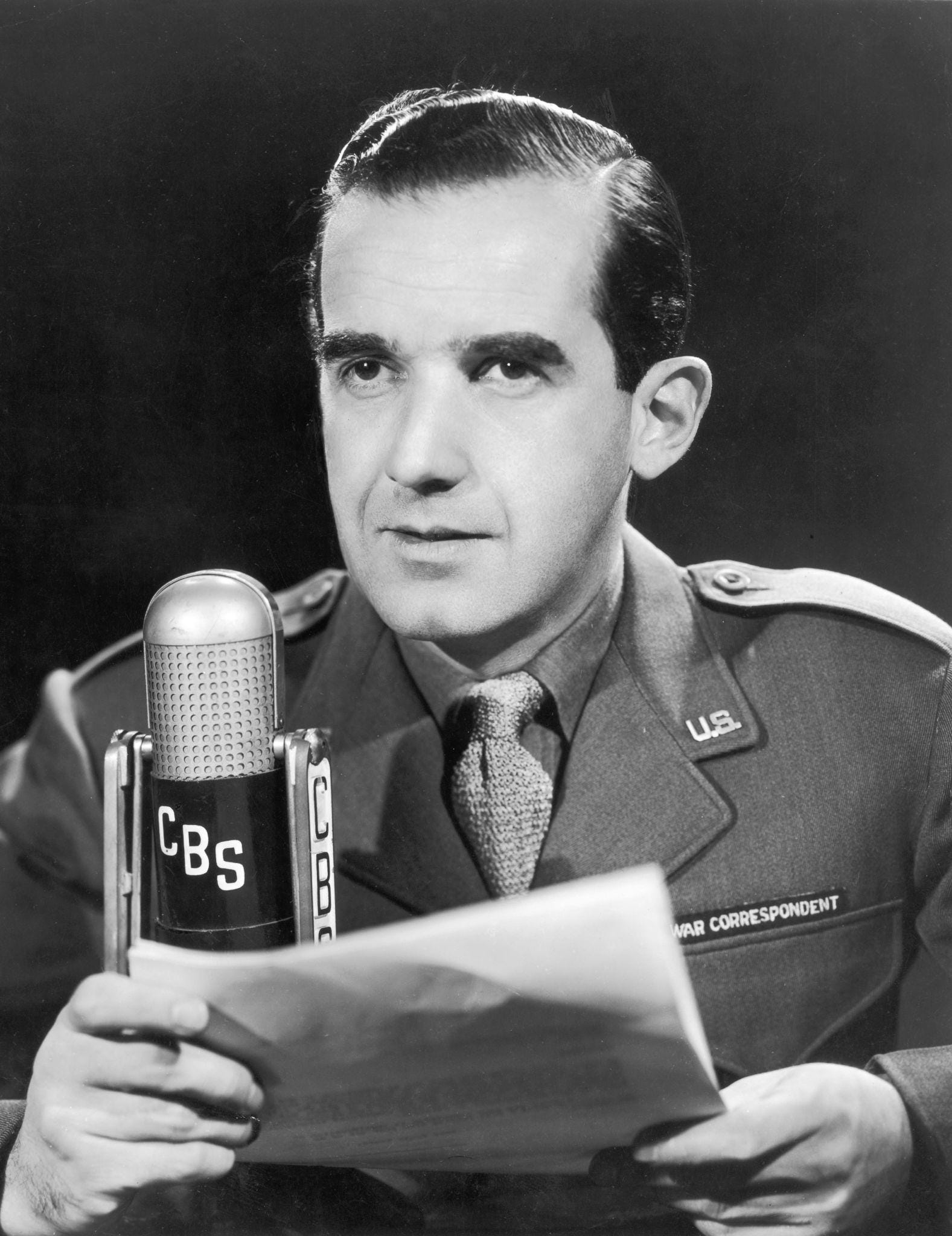
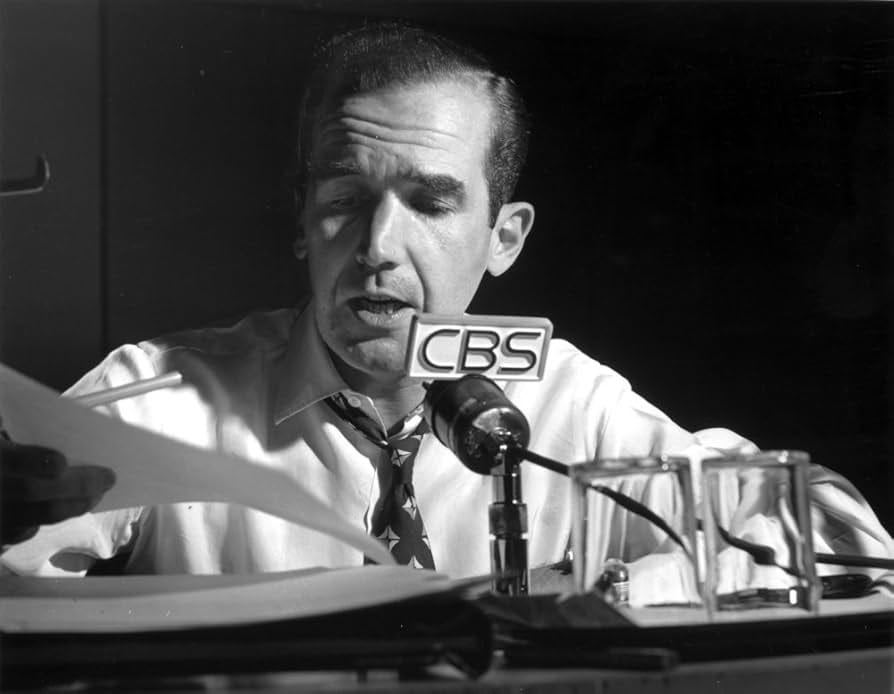
If you worked in radio news, you know it immediately. That CBS News Radio musical sting — brassy, authoritative, urgent — punching in at the top of every hour like a declaration. This is important. Pay attention. At KNX in Los Angeles, where I spent ten years of my life, that sting was as much a part of the station’s DNA as our own sounder. It told listeners they were connected to something larger than a local newsroom. They were plugged into a national news infrastructure that stretched back nearly a century, all the way to Edward R. Murrow crouching over a microphone in a bombed-out London building, bringing World War II into American living rooms in real time.
That sound goes silent on May 22nd.
CBS News announced today that it is shutting down CBS News Radio, eliminating all positions within the division and cutting off roughly 700 affiliated stations across the country. The closure comes alongside layoffs affecting about six percent of the entire CBS News workforce — the second round of cuts in six months — as new CBS News chief Bari Weiss and president Tom Cibrowski reposition the organization around streaming, digital, and what they diplomatically call “the video podcast ecosystem.” Not to mention being much more MAGA-friendly and pleasing to Donald Trump.
The memo to staff called it a “difficult day.” That’s one way to put it.
I’d call it the end of an idea — that a broadcast network had an obligation to reach people wherever they were, in whatever they were doing, and that “wherever” included the car, the job site, the kitchen radio, the dashboard of a truck on the 405 at 7 in the morning.
CBS News Radio traces its roots to 1927. Nearly a hundred years of unbroken service, of feeding local affiliates the kind of polished, sourced, network-quality reporting that small and mid-size stations could never produce on their own. Its flagship program, “World News Roundup,” is the longest-running newscast in American history. Think about that for a moment. It outlasted the Cold War, the moon landing, Watergate, 9/11, and a global pandemic. It survived the rise of television, the collapse of the Fairness Doctrine, the consolidation of terrestrial radio, and the invention of the internet. It did not survive David Ellison and Bari Weiss.

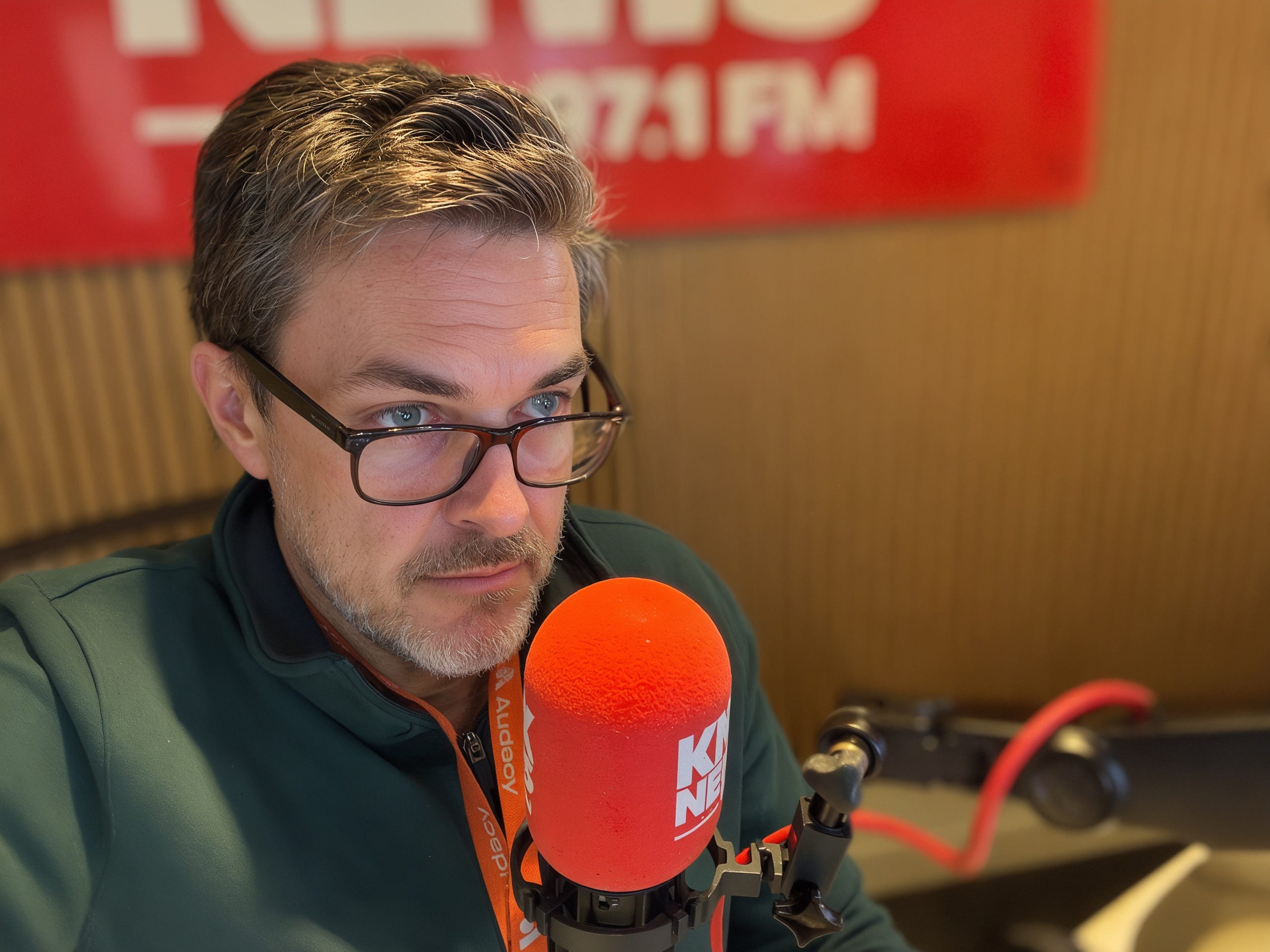
At KNX, the CBS News Radio relationship was structural, not decorative. The network fed us national and international content that gave our local all-news operation genuine scope. When something broke in Washington or overseas, we didn’t have to wing it or rip from the wires and hope. We had the sting, and behind the sting, we had reporters with credentials and access and institutional memory. The sting was a promise to the listener: we sent someone there.
There’s something worth sitting with about the particular way CBS News Radio is dying. It’s not being killed by a single catastrophic failure. There’s no scandal, no journalistic meltdown, no obvious moment of recklessness. It’s being killed by “challenging economic realities” and the seductive math of digital metrics — the idea that reach means nothing if it doesn’t generate a click, a stream, a subscription. That hundreds of radio stations and millions of listeners who’ve relied on this service for decades are simply, in the cold logic of platform pivots, the wrong kind of audience.
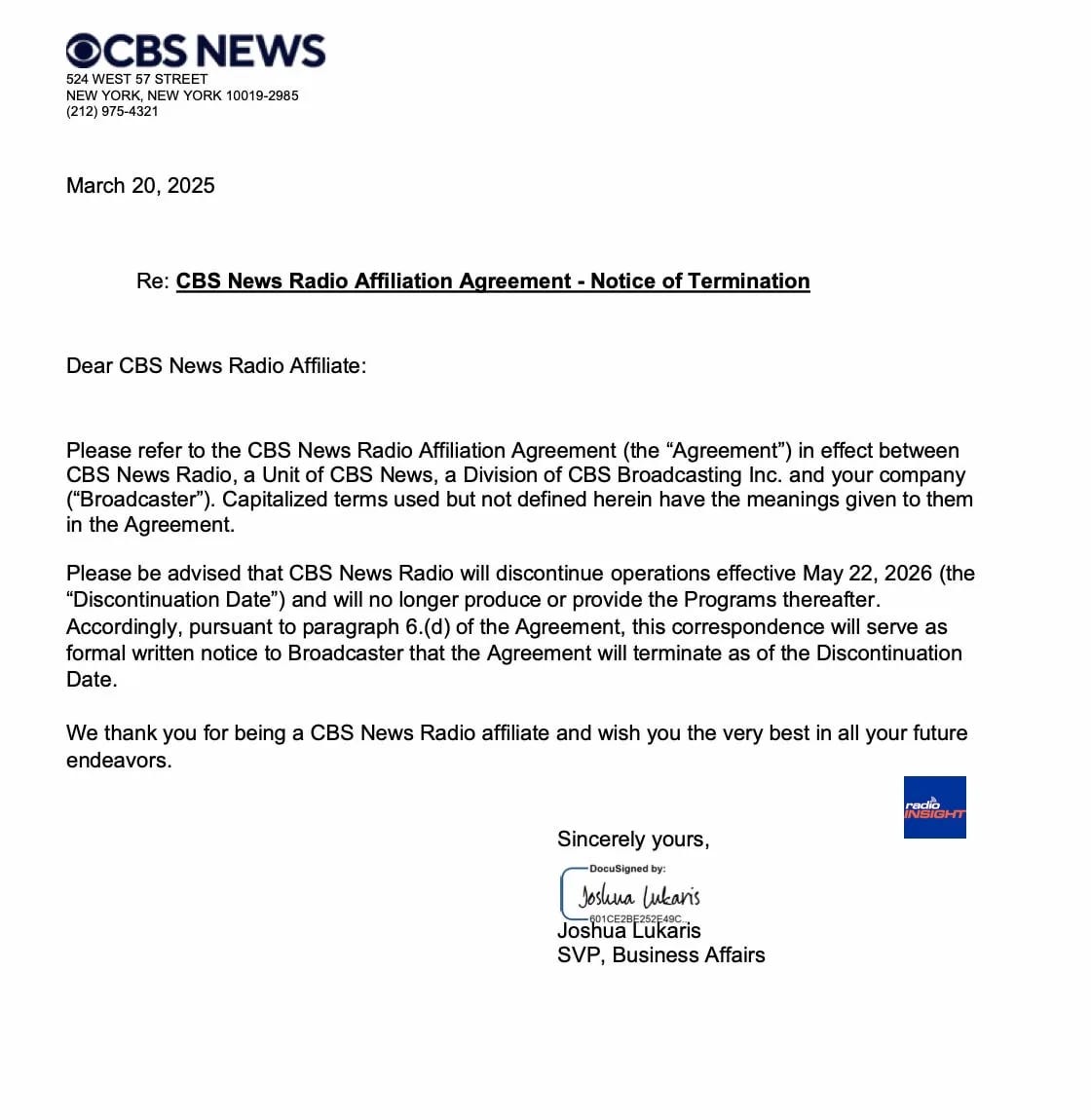
This is how institutional journalism ends now. Not with a bang but with a memo that uses the phrase “new places” six times and promises investment in “formats aligned with the video podcast ecosystem.” The people who built something real, who showed up every day and fed the machine, get a thanks-for-your-service note and sixty days’ notice.
There will be people who say this was inevitable. That radio has been dying for years. That younger audiences aren’t listening to AM/FM anymore, that the whole over-the-air apparatus is a legacy technology on life support. And look — some of that is true. The industry has real structural problems, a lot of which are due to big corporations taking on insupportable debt to buy up as many stations as they could, and then running them on the cheap. I’m not naive about that.
But CBS News Radio wasn’t just surviving. It was serving. There’s a difference. Hundreds of stations, many of them in markets that can’t afford their own Washington correspondents, were getting national news content that made them better. Listeners in those markets were more informed. The ecosystem worked. It wasn’t glamorous and it wasn’t generating the kind of engagement numbers that make venture capitalists salivate, but it was doing the thing journalism is supposed to do.
I keep coming back to the sting.
Those of us who worked in radio news have a strange relationship with sound. The right music cue does something to your nervous system. The KNX sounder made me feel the weight of the job every time it ran. The CBS sting made me feel connected to something bigger — to a tradition, to standards, to the idea that there were other journalists in other cities doing the same work at the same moment, all of us feeding the same public.
On May 22nd, when the clock ticks to the top of the hour on 700 radio stations across the country, that sting won’t be there.
Just not that sting. There will also be the absence of compelling, professional, award-winning national and world news reporting. And the absence of a connection for local markets to the bigger picture of what’s happening in the nation. A lesson in action of what our free press-loving founding fathers believed — that a democratic republic where the government governs with the consent of the people must have an informed populace.
I’ll miss it more than I can properly explain to people who weren’t there. But then, that’s always the problem with the end of something that mattered. A century of reporting replaced by a content strategy. The people who know exactly what’s been lost are the ones who were already inside it.
What do you think? Let me know in the comments below. Please share this article with your friends. The more Archer’s🏹Line grows, the more I can continue to do my work.
“ Those of us who worked in radio news have a strange relationship with sound. The right music cue does something to your nervous system. The KNX sounder made me feel the weight of the job every time it ran. The CBS sting made me feel connected to something bigger — to a tradition, to standards, to the idea that there were other journalists in other cities doing the same work at the same moment, all of us feeding the same public.”
This is exactly how I felt, even though I was working on the TV side of CBS News in New York through the decade of the 1990s. But I started in local radio news and was back in radio news at the network level when I retired two years ago. I even anchored a few overnight CBS Radio News hourlies during the first Gulf War while my full-time job was in TV news.
Those who weren’t a part of it will never truly understand. Colleagues I worked with elsewhere didn’t believe me when I told them how that connection to tradition and standards always came to mind when making journalistic decisions on a daily basis.
Modern content strategy and crushing corporate debt have largely destroyed radio (with television not far behind) and, with it, the communal experience that Americans have enjoyed since the birth of electronic media a century ago. It can’t be good for us as a nation when everyone is getting their news and information from tailored podcasts and social media feeds programmed by algorithms. I can go on… but I’ll spare you. Great piece, Rob.
Well said!