

Last week, CNN tried something new.
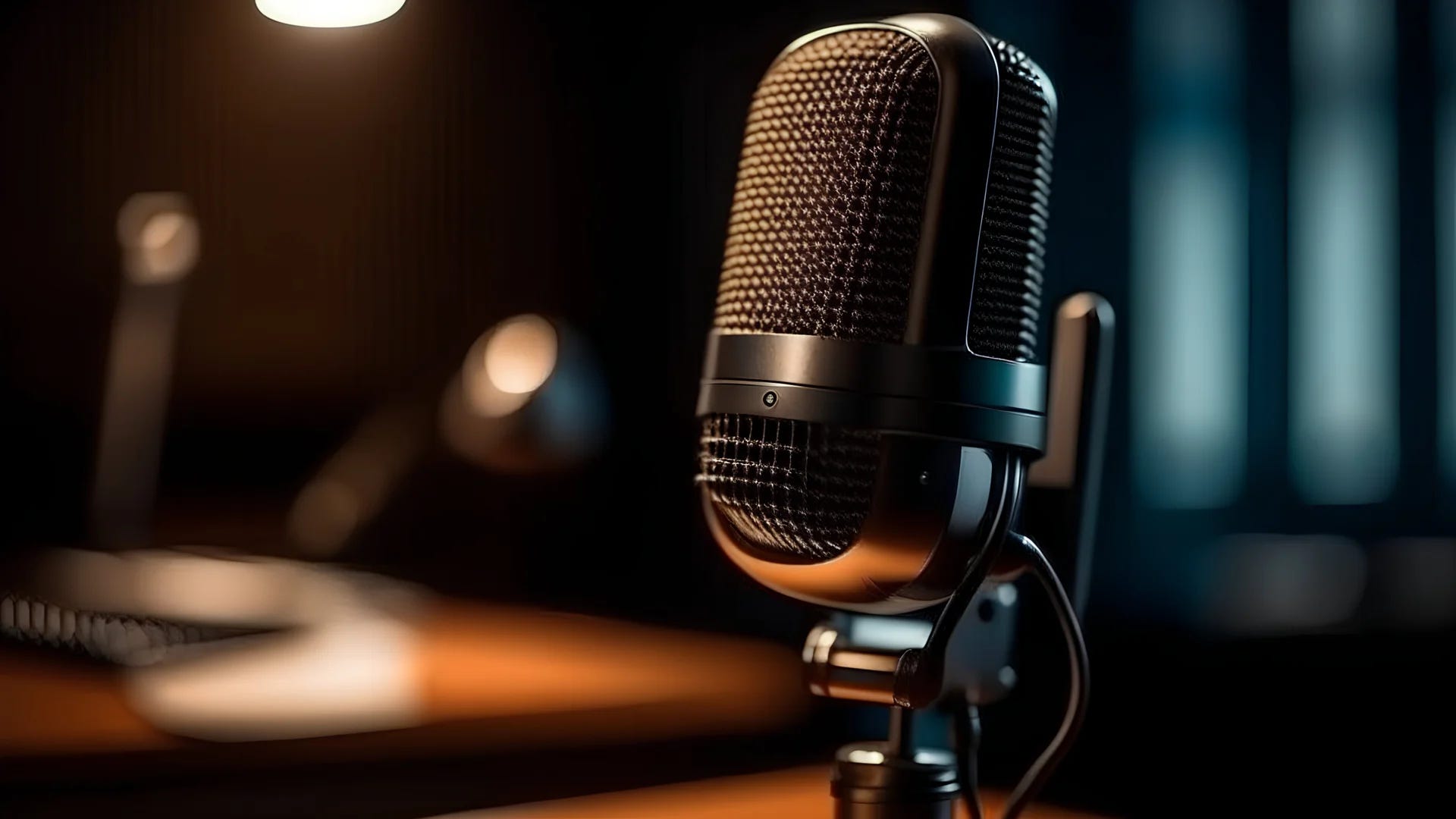
Jake Tapper ditched his studio and anchored The Lead from his office — campaign posters on the wall, big podcast mic on the desk, guests crammed onto a couch. Anderson Cooper broadcast AC360 from the middle of the newsroom, jacket off, sleeves rolled up, speaking into an oversized desk microphone.
The message CNN was apparently trying to send: we’re just like those cool indie podcasters you’ve been watching.
The internet responded with mockery. And frankly, it was deserved.
One independent YouTuber put it bluntly: “It’s kinda like rearranging furniture in a burning house. It shows they fundamentally don’t understand why audiences are leaving.”
Here’s the thing CNN seems to have missed: the aesthetic was never the point.
Joe Rogan didn’t build 30 million listeners because he sat in front of a microphone. He did it because he sat in front of a microphone and said what he actually thought for three hours. He wasn’t trying to pretend like he was a journalist.
You Can’t Art-Direct Authenticity
But here’s the real problem with this move, beyond the cringe factor: it makes CNN’s credibility problem worse, not better.
The podcast mic only works as a symbol when it means something real. When someone like me sits down in front of one, it signals no corporate handler, no PR layer, no executive telling me what I can and can’t say. The rougher the setup, the more the indie signal rings true.
The audience isn’t stupid. They understand the aesthetic is a byproduct of reality, not a substitute for it.
When CNN does the same thing, the symbol flips. Now it just means a major corporation is performing scrappiness. Slumming it.
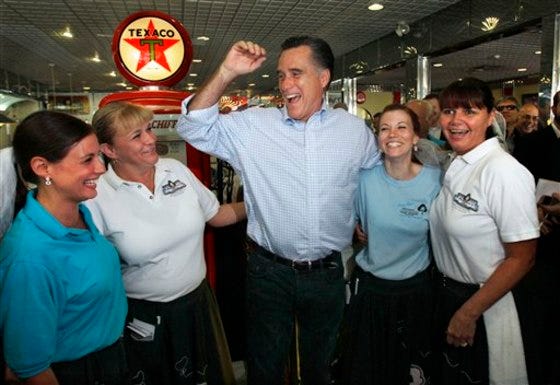
It’s the media equivalent of a politician showing up to a diner in a flannel shirt and ordering a beer for the cameras. Everyone sees it for what it is. And the moment they see it, whatever authenticity you were reaching for evaporates.
Putting a podcast mic on Jake Tapper doesn’t change what CNN is. It just signals that CNN is embarrassed about what it is — and that’s far more damaging than dumbing down the studio set.
Radio Didn’t Survive by Trying to Look Like TV
There’s a useful historical parallel here.
When television arrived in American living rooms in the late 1940s and 1950s, it didn’t just compete with radio — it threatened to wipe it out. TV had pictures, spectacle, and visual drama. Radio couldn’t replicate any of it.
For a while, it looked like radio might die.
But it didn’t. It survived by doing something CNN isn’t doing right now: it figured out what it was actually good at, doubled down, and stopped trying to be television.
Radio leaned into intimacy — the voice in your ear, in your car, in your kitchen. It leaned into portability. It leaned into local and niche programming that national TV ignored. It found its lane and owned it. And no matter what the naysayers may bray, it owns it still.
Today, radio — and its descendant, the podcast — thrives for exactly that reason. It committed to being itself instead of becoming a pale imitation of something else.
CNN is making the opposite bet.
Instead of asking, what can we do that podcasters can’t? they’re asking, how can we look more like podcasters?
The Funding Contradiction

Here’s what makes this genuinely maddening: CNN is trying to look indie at the exact moment it’s gutting the things that justify its existence.
During the same week of Tapper’s office experiment, viewers saw correspondents across the Middle East — from Tel Aviv to Doha — feeding live reports back to Cooper in real time.
That’s the thing no one in a spare bedroom can replicate.
And yet, in that same broadcast, the network apparently decided the priority was making the anchor desk look like a home studio.
Think about what CNN actually has: the ability to deploy reporters to a dozen countries at once. Crews on the ground within hours. Legal resources to fight for access. Relationships built over decades. Archives going back generations.
None of that is replicable. All of it is expensive. And all of it is quietly being cut.
CNN has lost 45% of its primetime audience since 2017. In the 25–54 demo, it averaged just 102,000 primetime viewers in 2025.
An independent YouTuber with a webcam can hit those numbers.
That collapse didn’t happen because the studios looked too polished. It happened because audiences stopped trusting the product and found alternatives. A different desk doesn’t fix that.
The honest version of CNN’s strategy looks like this: cut the expensive things that make us different, and use cheap aesthetics to pretend we’re something we’re not.
That’s just liquidation with better lighting.
Lean In, Don’t Hollow Out
I say all of this as someone doing exactly the kind of independent media CNN is trying to imitate.
I’m not against the podcast format — I’m in it. But I got into it because I am independent, not because I think it matters what kind of microphone I’m talking into.
The path forward for television news isn’t to look cheaper. It’s to be worth the cost.
Go where no one else can go. Spend the money to be in the room when history happens. Put reporters on the ground and keep them there. Do the six-month investigation no solo creator can finish. Show people things they literally cannot see anywhere else — and trust that those things are worth watching.
Sadly, I don’t think the corporate owners are willing to do that. The balance sheets and shareholder profit are more important. They’ll say to me, “If you’re so smart, you do it.” Baby, if I could, I would.
The audience that left isn’t coming back because Jake Tapper’s desk looks more casual. But they might come back if CNN reminds them that there are things only CNN can show them.
That’s a pitch worth making. The cosplay isn’t.
I’d love to know what you think about what CNN is doing — and about TV’s drive to be more like an inexpensive podcast. Leave a comment below. And please share the article with your friends — I need your help to make Archer’s Line grow.
@cnn this needs to be sent to all the shareholders, and the decision makers in the offices, making the financial and programming decisions for CNN. They need to be reminded how this Network was created and why. And how it grew and grew and grew because people started seeing how serious the news gathering was. How out there it was. How it grew up fast from being a fledgling cable (¿cable -really?!” ) limitation and was as good if not better, as the big older brothers of CNN, NBC, and ABC.
I read the news rather than watching it almost always so I completely missed this comedy. They could hire me for significantly less money and no experience and I promise I wouldn't screw up that badly.
Thank you Rob, always.