

If you thought FCC Chairman Brendan Carr was only putting pressure on television networks, think again.
The same FCC that’s been investigating network news divisions, questioning editorial decisions, and publicly sparring with major TV broadcasters is sending a message to radio as well: we’re watching you to make sure you’re serving the public interest.
And the most important question raised by that message is: who gets to define what the public interest is?
Last week, the FCC’s Media Bureau released a seven-page reminder of broadcasters’ public interest obligations. On its face, the document looks dry and bureaucratic. A refresher on licensing rules. Nothing new.
But that’s not how many broadcasters will read it.
The notice repeatedly reminds stations that they are temporary custodians of public spectrum. It emphasizes that licenses can be challenged. Transfers can be scrutinized. Renewals can become complicated. Enforcement actions can follow.
And it arrives at a moment when Carr has made it abundantly clear that he views broadcasters differently from other media companies.
His argument is straightforward: broadcasters receive access to public airwaves and therefore have obligations that newspapers, websites, podcasts, and streaming services do not.
That’s been part of communications law for decades.
What’s different is the tone.
The National Association of Broadcasters pushed back immediately, arguing that local broadcasters serve their communities because they want to, not because Washington tells them to.
Anyone who’s spent time inside local radio or television knows that’s true.
Broadcasters routinely cover school board meetings, local elections, weather emergencies, traffic disasters, charity drives, and community events that generate little revenue and even less national attention. They do it because that’s the job.
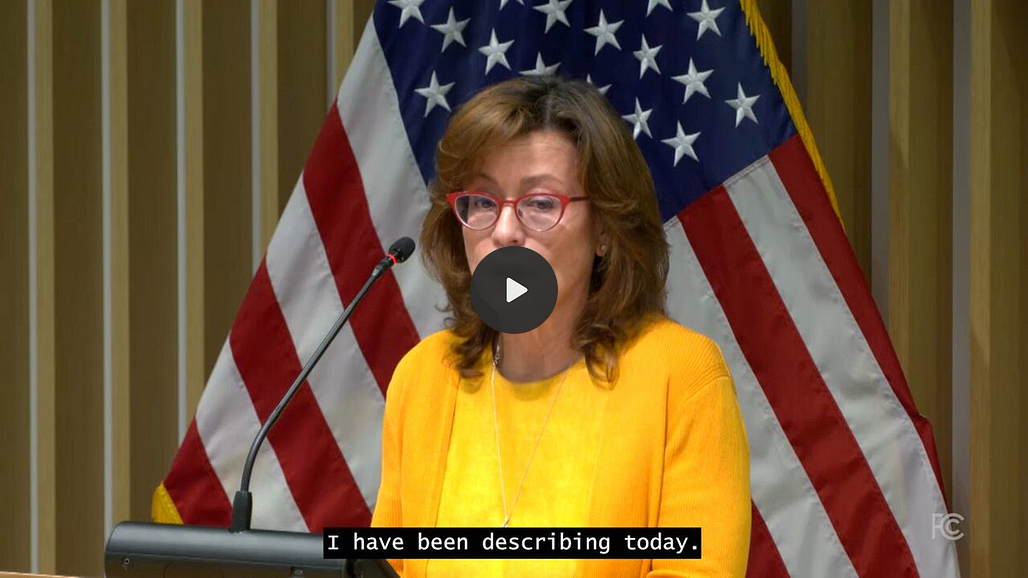
FCC Commissioner Anna Gomez — the lone Democrat — sees something more troubling in the agency’s latest notice.
“The public interest does not mean this administration’s interests,” she warned, accusing the FCC of using the concept of public service as a political weapon.

If recent history is any guide, the FCC’s concerns may not stop with technical compliance, public files, or license paperwork.
The next battleground could be diversity, equity, and inclusion policies.
You knew that’s where they were going.
The Trump administration has already targeted DEI programs across government, universities, corporations, and federal contractors. Media companies have not escaped that scrutiny. Several broadcasters have scaled back DEI initiatives over the past year amid growing political pressure.
It’s not difficult to imagine similar questions eventually finding their way into FCC proceedings.
Nor is it difficult to imagine heightened scrutiny falling on broadcasters perceived as politically unfriendly to the administration.
That possibility is what makes this notice feel different, because broadcasters have seen what has happened elsewhere.
They’ve watched investigations involving major television networks. They’ve watched public criticism — and sometimes government threats — directed at journalists and news organizations. They’ve watched regulators become more willing to engage directly in disputes involving editorial content.
Or the jokes of late-night hosts.
Now the FCC is reminding radio and television stations that their licenses remain subject to government review.
Officially, the agency says it’s simply enforcing long-standing law.
Many broadcasters hear something else.
For years, radio operators worried about audience erosion, streaming competition, declining revenue, and shrinking news staffs.
Now they may be adding another concern to the list:
Whether Washington is preparing to decide which broadcasters are serving the public interest — and which broadcasters are not.
If you made it this far, thank you. And now, I’d like to ask a personal favor: Become a paid subscriber to Archer’s Line. I don’t take advertising, and I’m not paid by a company. The only support I get is from you.