

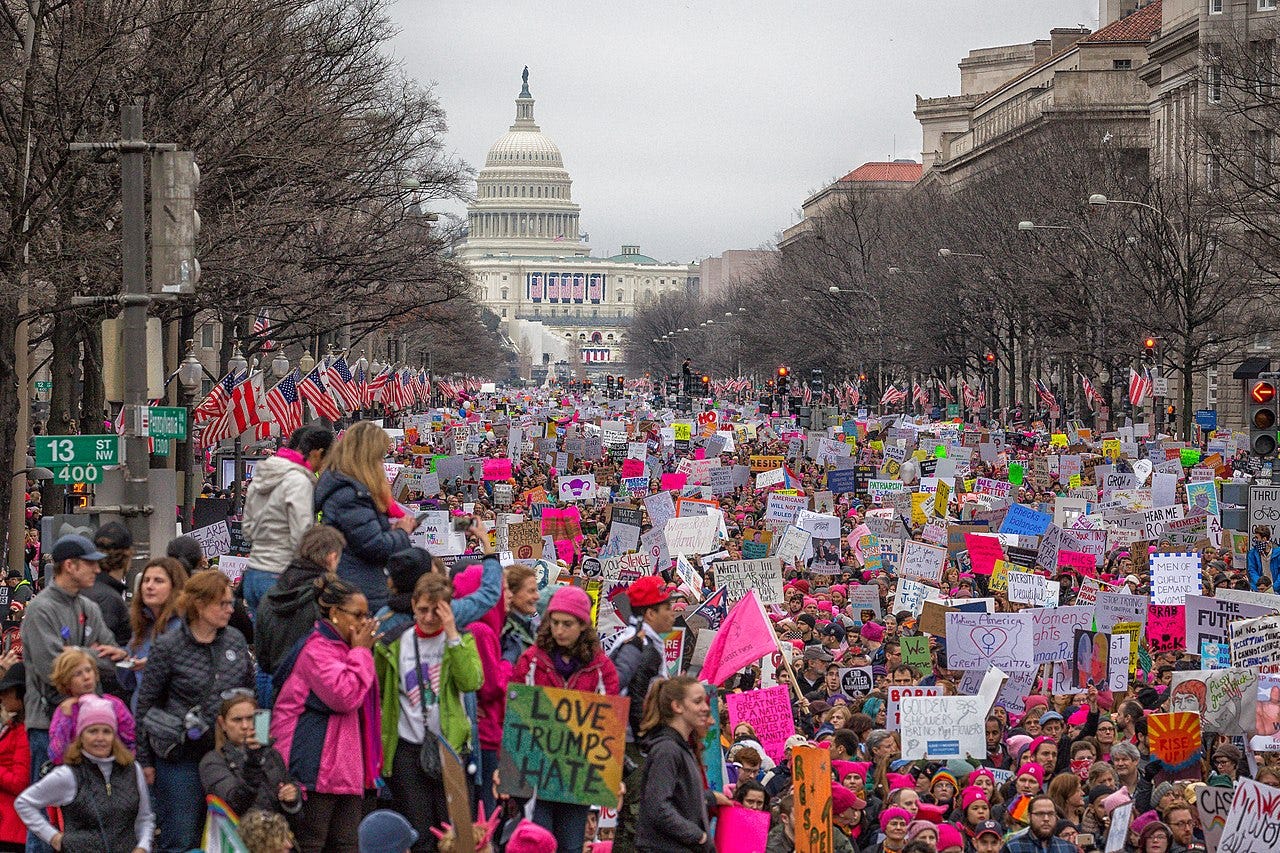
International Women’s Day always puts men in a slightly awkward position.
We can’t explain what it’s like to be a woman. We shouldn’t pretend we can. How dumb would we be to mansplain this day to women? (But sure as hell, some man will.)
But after more than 45 years working in radio studios and newsrooms, I can say this: some of the toughest professionals I’ve ever worked with were women who had to work twice as hard to get half the credit.
I saw it in meetings where a woman would make a smart point, only to have it ignored until a man repeated it ten minutes later. I saw it in newsrooms where women had to prove their competence again and again, long after their male colleagues were taken seriously by default. And I saw it in the quiet persistence of people who simply refused to accept the limits the culture tried to place on them.
Which makes the current moment feel a little strange.
While women have never had more opportunities in modern history, there is also a growing online culture openly arguing that equality itself was a mistake.
Some of the most visible examples come from the social media world.
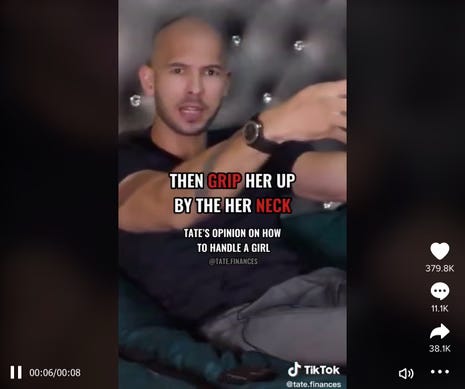
One of the biggest influencers in what’s often called the “manosphere” is Andrew Tate. Before platforms tried to curb his reach, Tate built a massive audience on TikTok and YouTube promoting a worldview built on hyper-masculinity and hostility toward women. In various interviews and clips, he has said that women belong to men in relationships, that women share responsibility if they’re assaulted, and that men should control their partners.
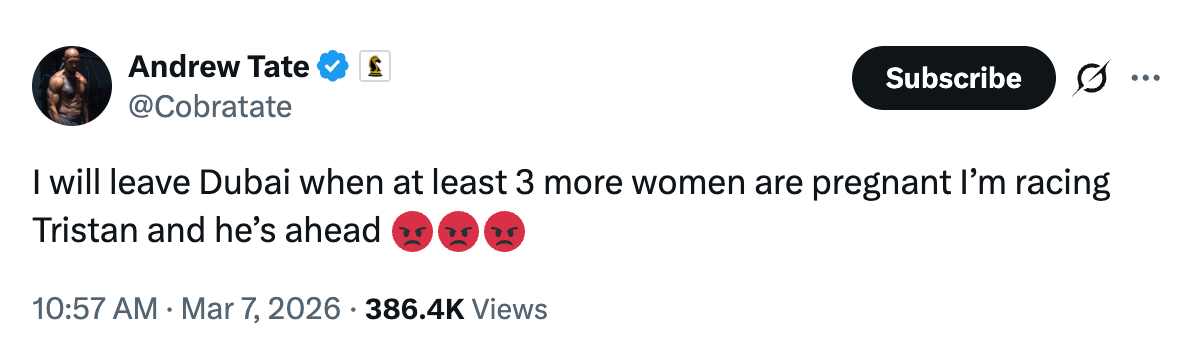
Millions of young men watched that content. Many adopted the worldview. They added to the toxic atmosphere that now permeates so much of the online world.
Even after bans and restrictions, the clips still circulate everywhere.
Then there’s a phrase that pops up more and more often on social media: “Repeal the 19th.”
That’s not a metaphor. It’s a direct reference to the amendment that gave women the right to vote in 1920.
In certain corners of the internet, the argument is surprisingly blunt. Women, they claim, vote emotionally. Women supposedly support bigger government. Therefore democracy would function better if only men voted.
For a long time that idea lived mostly in obscure forums and fringe blogs. Today it shows up openly on X, on podcasts, and in YouTube debates aimed at young male audiences.
Some political figures have said it outright.
Christian nationalist pastor Joel Webbon has explained that he’s “grown to despise democracy” because women have the right to vote. Hear him explain it in his own words.
Nick Fuentes has argued on livestreams that society was more stable before women voted and that politics should return to male leadership. His comments spread widely online through short video clips and memes.
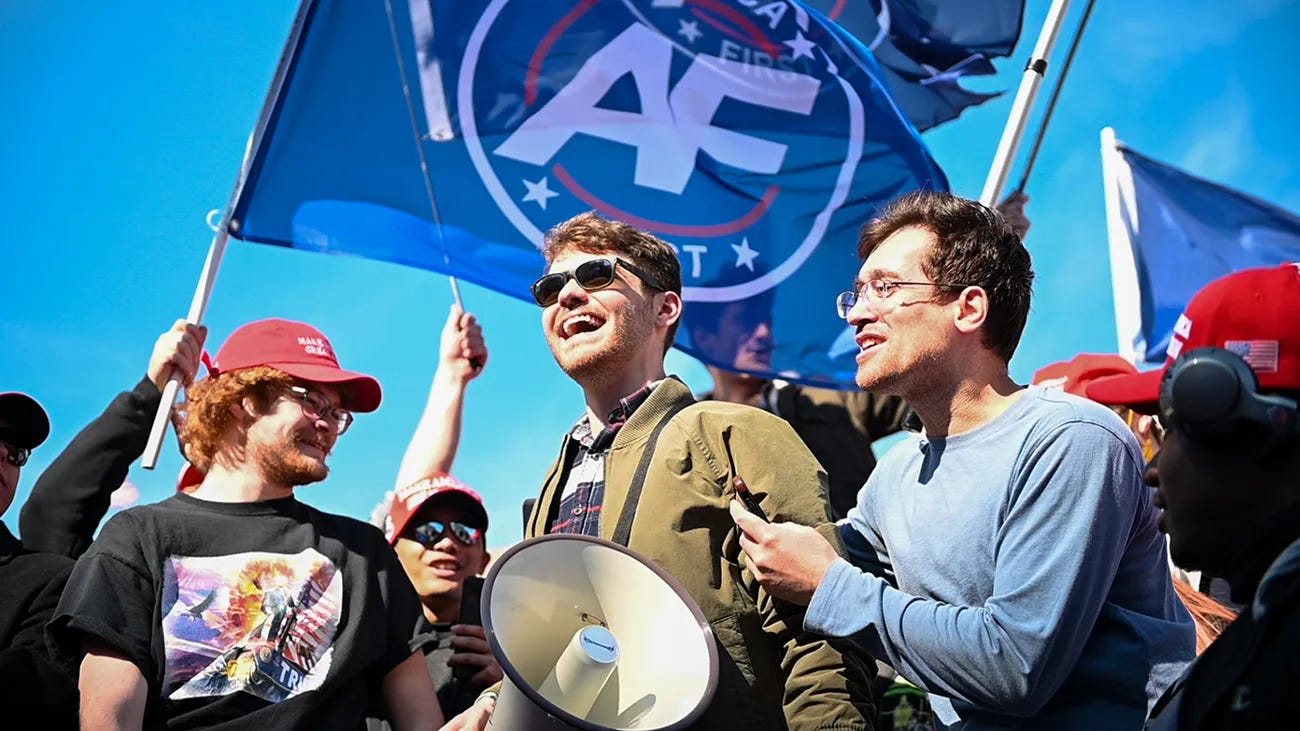
Another influencer, Hannah Pearl Davis, has suggested in interviews and videos that society might have been better before women had the vote and that traditional gender hierarchies should come back.

These ideas aren’t dominant in American life. Most people reject them.
But the fact that they’re circulating at all — and reaching large audiences — tells you something about the cultural moment we’re living in.
Part of the reason is the machinery of social media itself.
Algorithms reward outrage and provocation. Extreme statements travel farther than thoughtful ones. A teenager who starts watching dating advice videos can easily find themselves pulled into a stream of increasingly ideological content about masculinity, power, and resentment.
The algorithm is designed to give us someone or something to hate, then steadily increase the hatred — because that gets the most clicks, which makes marketing and advertising corporations happy. They’re like vampires feeding off rage, hate, and the rest of our negative emotions.
Researchers who study online radicalization have documented how those pipelines work. People start with self-help content, move into “red pill” ideology, and sometimes end up in communities that frame women not as partners but as adversaries.
It’s not the whole story of the internet.
But it’s a real one.
History has a lesson here.
Progress rarely moves in a straight line. It moves forward, then backward, then forward again. Gains that seem permanent often turn out to be more fragile than we thought.
We’re arguably living in a moment where some forces are trying to push things backward — and trying to make that reversal permanent. They may fail. But history tells us there are no guarantees.
That’s true of political systems. It’s true of civil rights. And it’s true of women’s equality.
International Women’s Day isn’t just about celebration. It’s about memory.
It’s a reminder that the rights and opportunities many people take for granted today were fought for by generations who refused to accept the limits placed on them. It’s also a reminder that those gains can erode if people assume the fight is already finished.
The women I worked with over the years didn’t ask for special treatment. Most of them just wanted what everyone else wants — the chance to do their work, to be heard, and to be judged by the quality of what they did.
That shouldn’t be controversial.
But the strange reality of our time is that ideas once settled are being argued again.
Which means International Women’s Day isn’t just about the past.
It’s about the future, too.
What do you think? Drop your thoughts in the comments. Share the article with your friends, and check out the podchunk version of Archer’s Line below, as well as the Disciples of Democracy podcast.
Loren, my husband, used to joke OFTEN "see, you give women the vote and suddenly got they want everything". He said it to me often --and it is funny even when he's aiming at me. Most, if not all, of the time that's where he was aiming....me. I laughed every time. Now that I think about it, I did while reading this, he hasn't said it for a rather long time. Maybe it's just not as funny to him lately.
Thank you, Rob, I really like this.