

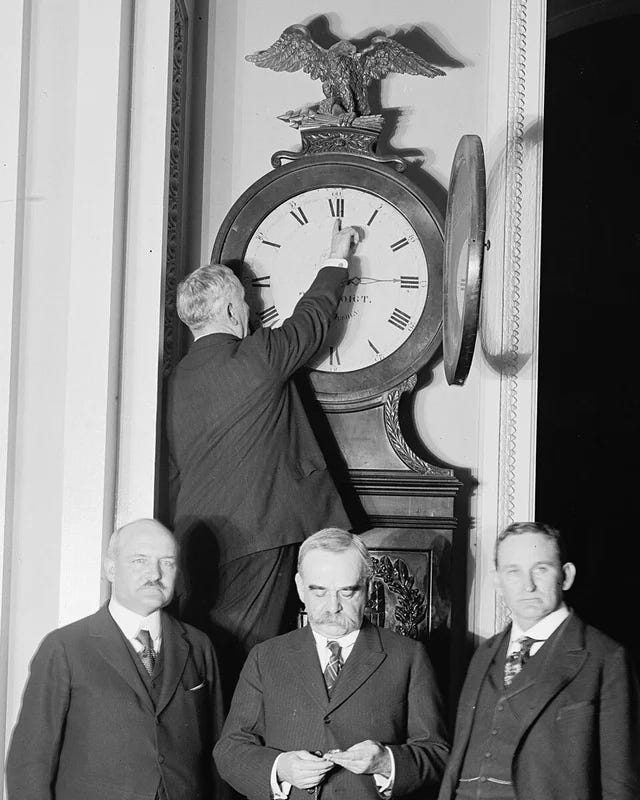
Sunday morning, November 1, at 2 a.m., most Americans will turn their clocks back an hour. Or, more likely, they’ll wake up and discover their phones have already done it for them.
We’ll get an extra hour of sleep, assuming the cat agrees to cooperate. The sun will rise an hour earlier by the clock, and sunset will arrive an hour earlier, too.
And millions of Americans will complain that it’s getting dark before dinner.
Well, yes. That’s why they call it winter.
The days get shorter. The temperatures drop. Trees lose their leaves. It’s a whole astronomical arrangement we’ve had going for several billion years, and so far, the universe has declined our requests to reschedule it.
But there are people who think we should eliminate the twice-yearly clock changes by making daylight saving time permanent.
I agree with the first part. I’m all for getting rid of the clock changes.
The second part is where they lose me.
I want permanent standard time.
You know. The default setting.
A brief history of messing with time
For most of human history, people got along reasonably well without daylight saving time. They looked at the sun, figured out roughly what time it was, and went about their business.
Then came the railroads.
By the 19th century, American towns were keeping their own local times, which worked reasonably well until trains started carrying people between them. In 1883, the railroads introduced standardized time zones. Congress made the system official in 1918.
That same year, the federal government introduced daylight saving time, partly to conserve resources during World War I.
It was so “popular” that Congress repealed it in 1919, overriding President Woodrow Wilson’s veto.
For the next couple of decades, there was no nationwide daylight saving time requirement. Some cities and states continued using it, but much of the country stayed on standard time throughout the year.
And somehow civilization survived.
During World War II, President Franklin Roosevelt brought back year-round daylight saving time. It was called War Time. It lasted from February 1942 until September 1945.
After the war, the country returned to a confusing assortment of local daylight saving rules. Some places observed it, others didn’t, and the dates varied. Congress finally standardized the schedule in 1966, although states could opt out.
The point is that year-round standard time is hardly a radical experiment. Americans spent decades living with it, including periods when daylight saving time was entirely optional.
We already tried the other idea
In 1973, the country was dealing with an energy crisis. Gasoline prices were rising, supplies were tight, and President Richard Nixon was looking for ways to conserve energy.
Congress came up with a plan: permanent daylight saving time.
Well, technically, it was a temporary experiment designed to last into 1975. But the idea was to keep the clocks an hour ahead through the winter and see what happened.
It began January 6, 1974.
At first, Americans loved it. One survey found 79 percent supported the idea.
Then the rest of January happened.
In parts of the country, the sun wasn’t coming up until around 9 a.m. Children were heading to school in darkness. Adults were commuting to work in darkness. And people began discovering that having a little extra daylight at 5 p.m. wasn’t nearly as wonderful when you couldn’t see your hand in front of your face at 8 in the morning.
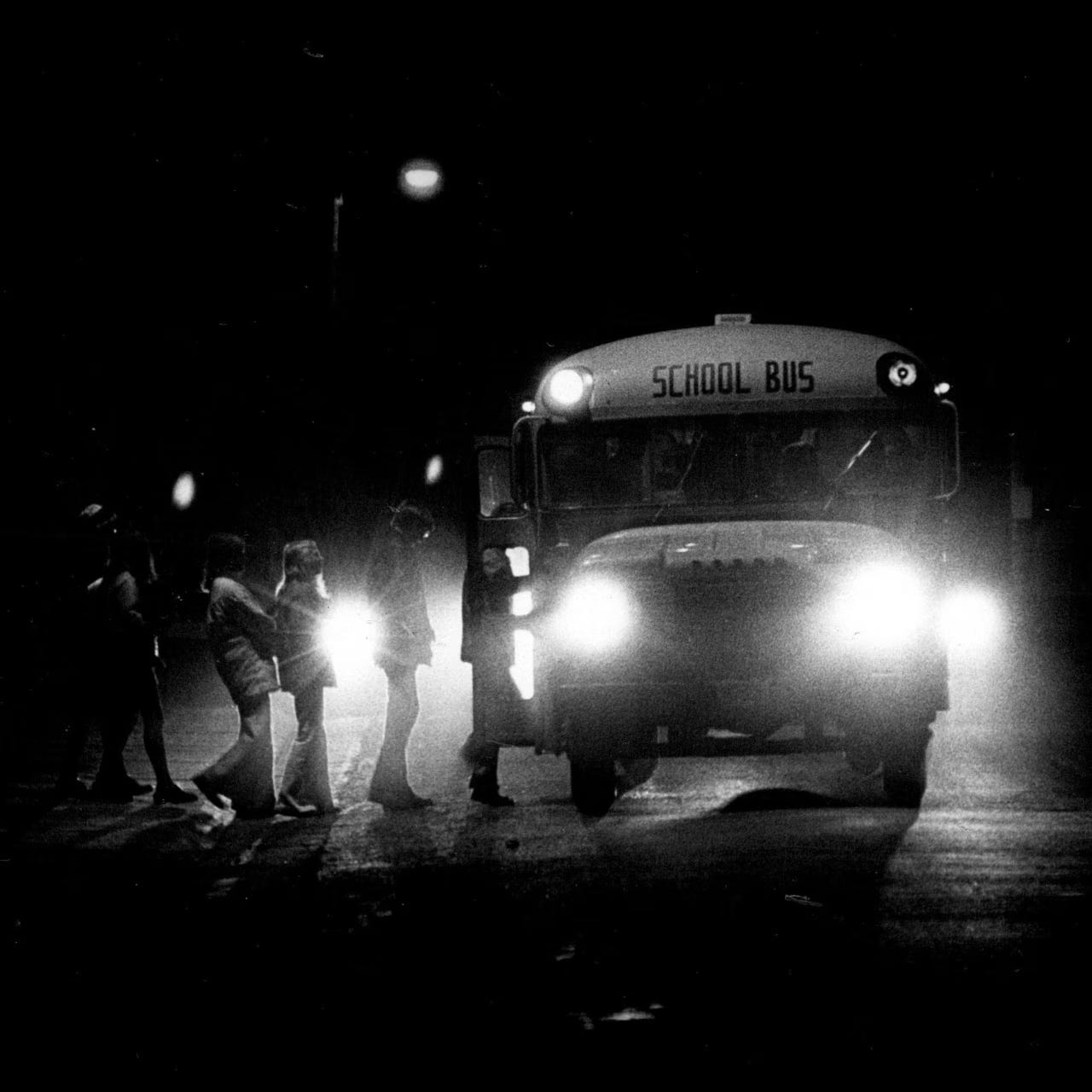
There were serious concerns about children being struck by cars on their way to school. The accidents were real, although researchers couldn’t establish that daylight saving time alone caused an increase in deaths.
Public support collapsed to 42 percent within weeks.
By October 1974, Congress had seen enough. The country returned to standard time for the winter, ending the year-round experiment after less than ten months.
Congress actually admitted an idea wasn’t working and changed course.
I’ll give you a moment to recover from the shock.
And despite all the promises about saving energy, subsequent research found little evidence that the experiment had accomplished much.
We’ve already tried permanent daylight saving time. We didn’t like it.
Why are we talking about doing it again?
Your body doesn’t care what Congress thinks
There’s another reason to leave the clocks alone, and this one has nothing to do with whether it’s dark when you get home from work.
Our bodies have internal clocks. They’re called circadian rhythms, and they’re closely tied to the natural cycle of sunlight and darkness.
Morning light helps tell your brain it’s time to wake up. Darkness helps prepare it for sleep.
Changing the clocks twice a year interferes with that system.
Research has linked the spring transition to an increased risk of heart attacks and traffic accidents, among other problems. Not every study agrees about every health effect, and the fall transition is generally less disruptive than springing forward. But there’s enough evidence to raise legitimate concerns about the whole practice.
The American Academy of Sleep Medicine recommends eliminating seasonal clock changes and adopting permanent standard time. Its position is that standard time more closely matches our natural circadian rhythms.
We’ve become remarkably good at convincing ourselves that we can improve nature by passing legislation.
But sunrise is a physical event; it doesn’t care what the government thinks or even what your Apple Watch says.
And there’s a radio problem
Permanent daylight saving time could cause headaches for certain AM radio stations.
Some AM stations are licensed to operate only between sunrise and sunset. Others must reduce their power or change their antenna patterns at night to prevent interference with other stations.
That’s because AM signals behave differently after dark. Under nighttime conditions, they can travel much greater distances, potentially interfering with stations hundreds of miles away.
The Federal Communications Commission bases many of those operating restrictions on sunrise and sunset.
Now imagine a station that’s supposed to provide local news, weather, and traffic during morning drive time.
If permanent daylight saving time pushes winter sunrise from 8 a.m. to 9 a.m., a daytime-only station could lose another hour of its morning programming. Some other stations could remain at reduced power longer into the morning commute.
During the 1974 experiment, the FCC reported that year-round daylight saving time was hurting some AM stations financially because of interference restrictions during morning drive.
But I like long summer evenings!
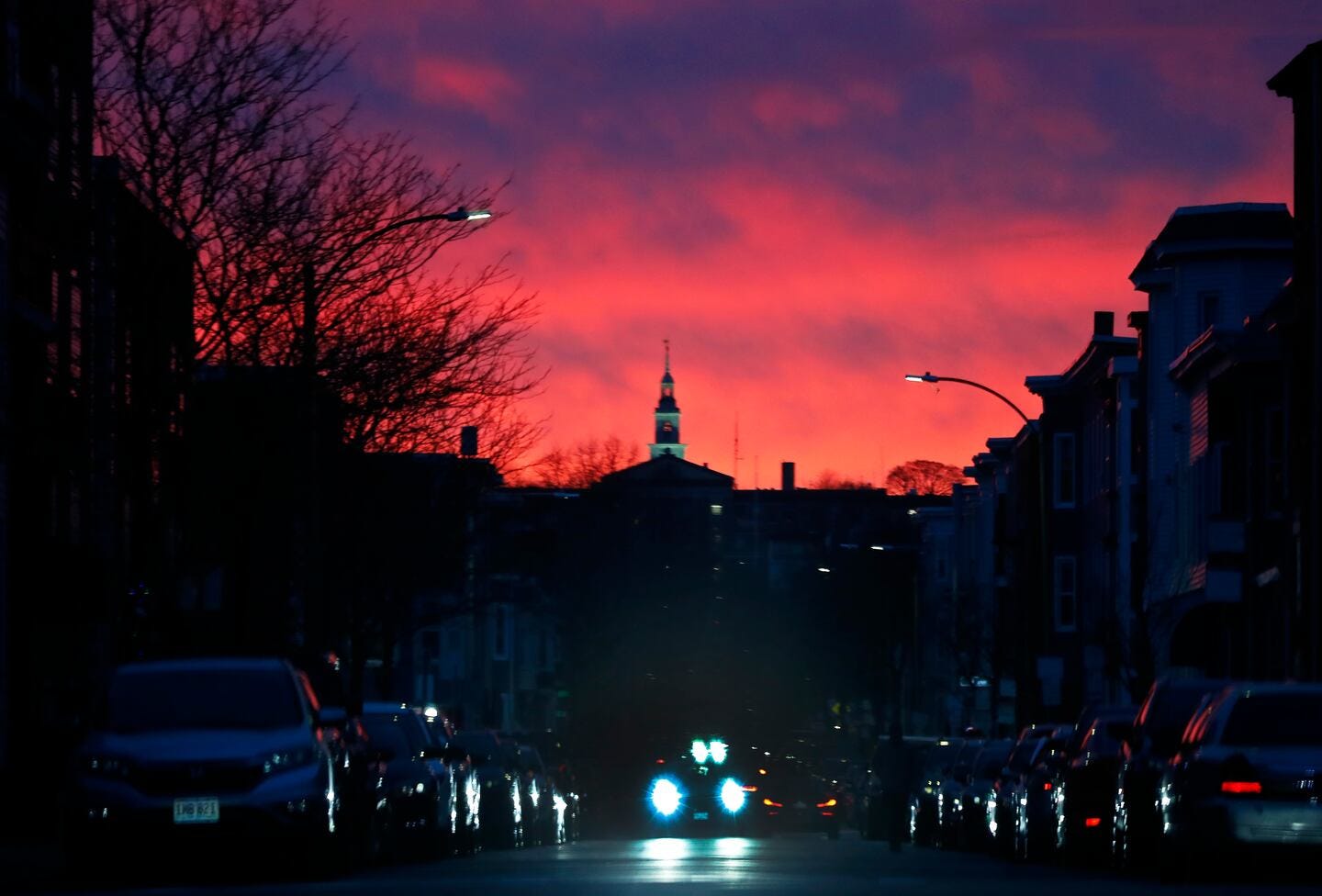
So do I.
I enjoy having daylight after dinner. I understand why people like being able to play golf, take a walk, or sit outside after work.
But here’s the thing: Daylight saving time doesn’t create any daylight.
It just changes the number on the clock when that daylight occurs.
Permanent standard time would mean earlier summer sunrises and earlier summer sunsets. Some northern parts of the country would see the sun rise before 5 a.m. around the summer solstice.
That’s a legitimate inconvenience. I won’t pretend otherwise.
And yes, winter sunsets would be early. In some places, very early.
But winter days are short. That’s what happens when your part of the planet is tilted away from the sun. That’s nature. That’s how the gods intended it.
Pick a time and leave it alone
I wrote about this subject back in August, when permanent daylight saving time was getting another round of political attention. I thought permanent standard time was the better choice then, and I still do.
Sunday morning, we’re going to move our clocks backward. We’ll complain for a few days about the early sunsets. Then we’ll get used to it.
In March, we’ll move the clocks forward again, lose an hour of sleep, and complain about that instead.
We’ve turned a perfectly ordinary astronomical cycle into a recurring national grievance.
I’d rather we stop.
Let’s have earlier winter sunrises, respect the biological clocks we’ve inherited through millions of years of evolution, and stop pretending that changing the time changes the seasons.
Keep standard time all year.
And if you’re upset that it’s dark at 5:30 in December, I have some bad news.
The Earth doesn’t care.
What do you think? Permanent standard or DST? Or keep changing the clocks twice a year?