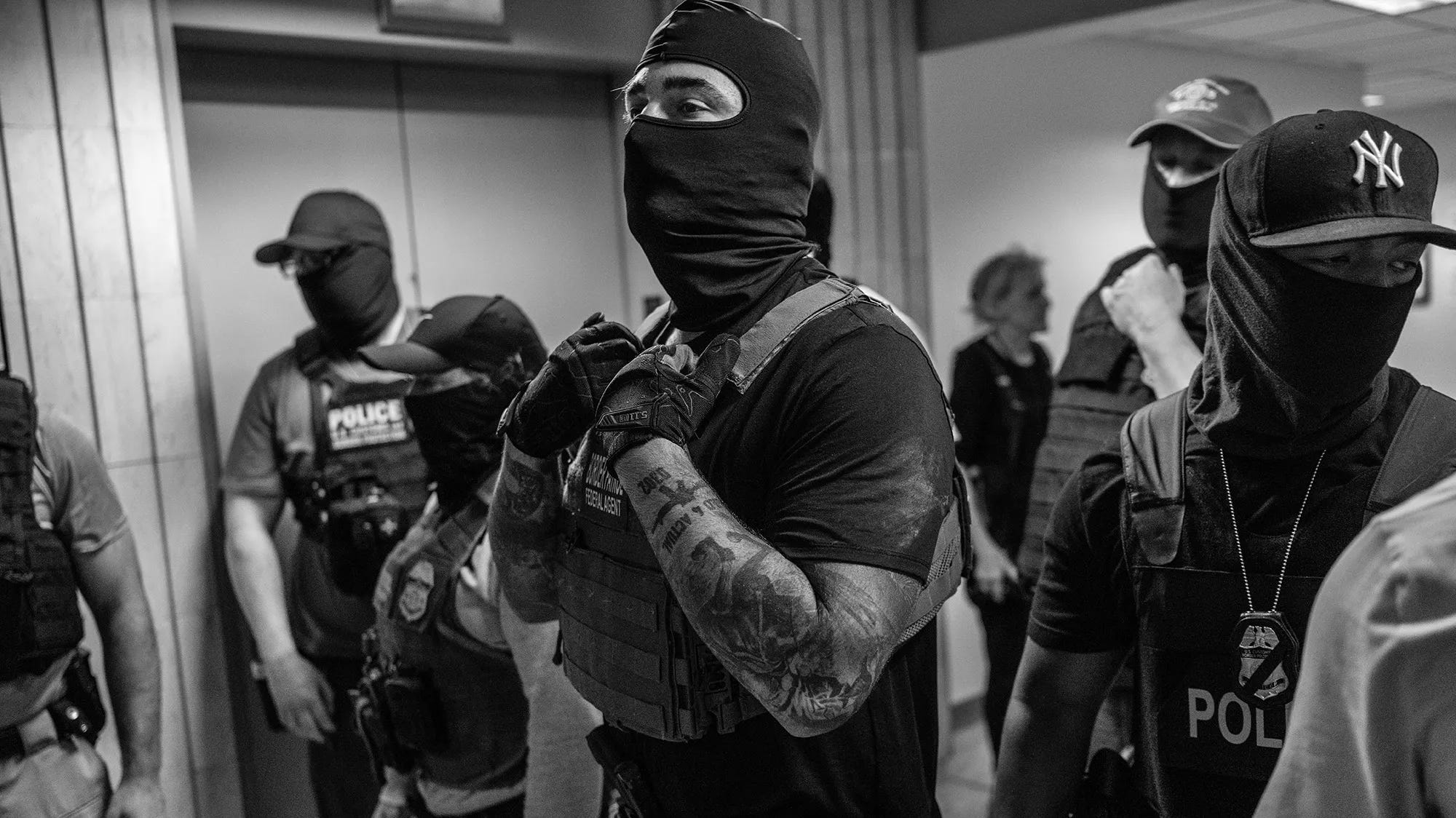
Why Are ICE Agents Masked?
Accountability, January 6 Links, and Federal Enforcement
Paid subscribers get early access to this and other exclusive articles.
When a local police officer shoots someone, we know the drill.
The officer is identified and placed on leave as the investigation begins. Another agency steps in. Information is released and reported on by the news media. Body camera footage is reviewed and then made public. The idea is accountability.
This is how it works in a country governed by law.
But as every American can see — whether they want to admit it or not — that’s not how things work with ICE and CBP.
Agents who kill people in the streets remain masked and anonymous. Officers who use deadly force are quietly reassigned, free to do the same thing again. There’s no independent investigation. Federal authorities block local and state inquiries.
Why? Is it because if their faces and names were revealed, we’d learn who they are — and what they’ve done before?
The killing of Alex Pretti in Minneapolis brought this into sharp focus. A CBP agent shot him. We still don’t know the agent’s name. Greg Bovino, the Border Patrol official in charge at the time, refused to identify him. We’re now told by DHS that two officers have been placed on administrative leave, but they still haven’t been named.
Local authorities were blocked from fully accessing the scene and the evidence. The investigation stayed inside the same federal system that employs the shooter.
When asked why ICE and CBP agents wear masks, the official answer is always the same: protection from being doxxed, from being threatened, for their own safety.
Never mind that the administration and its supporters have often engaged in doxxing their enemies and critics — resulting in real threats and real danger.
But here’s the problem. Plenty of law enforcement officers face threats. Cops testify in court. Detectives arrest violent criminals. Prosecutors go after gangs and cartels. Judges sentence people with real power and real grudges.
They don’t get to erase their identities. They are public agents of the state. Citizens in a free country have a right to know who they are.
They don’t get to operate faceless in public spaces. They don’t get to refuse identification after using deadly force. They don’t get to declare themselves untouchable.
ICE and CBP do.
This is why people are asking uncomfortable questions.
Are these agents January 6 offenders who were pardoned and folded into federal service? Proud Boys? Members of white supremacist militias?
There’s no public evidence proving that. And it matters to say that plainly.
But there is evidence their behavior looks disturbingly familiar to people who watched January 6 unfold. The aggression. The contempt for civilians. The casual violence. The confidence that nothing will happen to them afterward.
That confidence doesn’t come from nowhere.
It comes from watching leadership close ranks immediately. From seeing officials smear victims before facts are established. From knowing names won’t be released, faces won’t be shown, and actions won’t be judged by anyone outside the same chain of command.
Local cops are accountable to mayors, city councils, district attorneys, civilian review boards, and voters. ICE and CBP answer upward, not outward. They don’t need community trust. They don’t need consent. They don’t need cooperation.
They need only permission.
And permission has been granted.
When Bovino refused to name the agent who shot Pretti, he wasn’t protecting an individual. He was sending a message — not just to the public, but to every agent under his command.
You can do whatever you want, and you won’t be held accountable.
That’s not law enforcement culture. That’s something else.
In a democracy, the people who wield the power of the state are supposed to be visible. Identifiable. Constrained. That’s the tradeoff. We give them authority. They submit to oversight.
Masks break that contract.
And when masks become standard, not exceptional, the question isn’t why people are suspicious. The question is why anyone is surprised.
Because when agents hide their faces, refuse their names, block investigations, and act as if the law doesn’t apply to them, people are going to ask why.
Is it because they’re afraid people will find out who they are? Because they assaulted cops on January 6? Threatened lawmakers? Vandalized the Capitol? Marched in Charlottesville? Are they known white supremacists? Proud Boys?
And it’s not just activists or commentators asking anymore. Lawmakers are asking too.
Members of Congress have demanded to know who these masked ICE and CBP agents are, why their identities are being concealed, and whether any participated in January 6 or belong to extremist groups. Some are calling for formal investigations independent of DHS, precisely because the secrecy makes it impossible to rule those things out.
When agents refuse to show their faces, refuse to give their names, and refuse to be held to account, they invite these questions.
Transparency would answer them quickly.
Silence only makes them louder.
Leave a comment below and let me know what you think.


When you have done nothing shameful, you are freed from the need for secrecy and lies. And it is very freeing. Thank you, Rob, once again.