


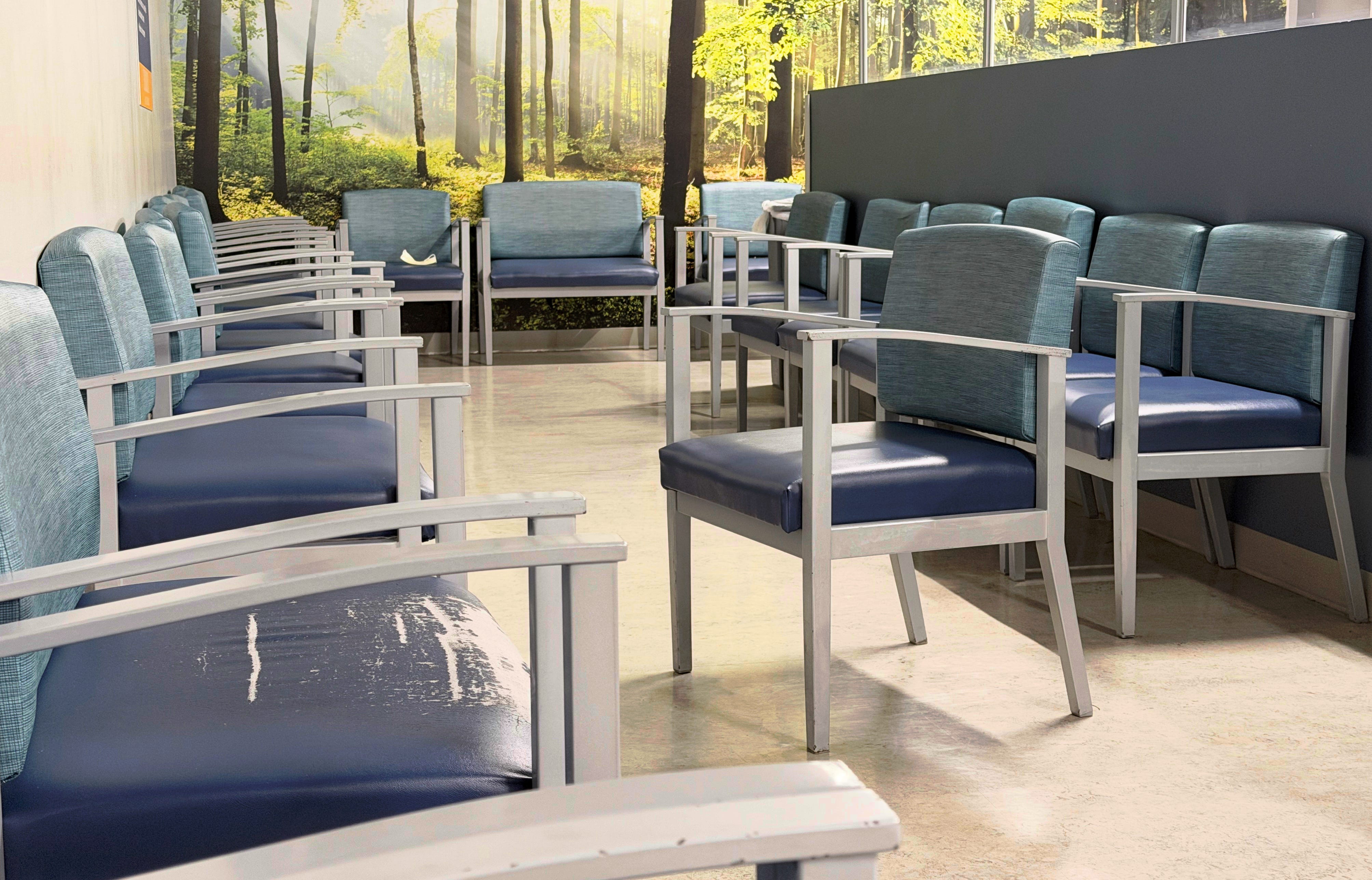
My wife went to the emergency room Friday night at 6. Nothing life-threatening, thankfully, but she was feeling pretty miserable.
I joined her when I got off work at 11.
They still hadn’t taken her in.
Finally, things started moving around 1 am. She got treatment, talked to a succession of doctors and nurses, with more waiting in between, received IV fluids, and felt a whole lot better.
We got home at 3 am.
Nine hours in the emergency room. Maybe an hour, total, of real treatment.
We’ve all been there. Long waits, crowded ERs, overworked doctors and nurses. But nine hours seems a little excessive.
My previous personal record was about 3 hours, suffering from what felt like civilization-ending gallstone pain. Three hours felt like nine. Or possibly a couple of Ice Ages.
Eventually, they got enough pain medication into me that I was sufficiently blissed out to love the entire human race.
My wife wasn’t so lucky. She had to endure most of those nine hours without the benefit of chemically induced universal brotherhood.
And I had to sit there and watch.
We were sitting inside a building filled with people whose combined medical knowledge and experience probably amounted to centuries. They had machines and computers that would have sent frontier doctors running to the nearest church, screaming about wizards and demons.
And yet, there we sat, waiting more than 7 hours before someone could get IV fluids into my wife.
What's the point of all that technology if patients have to wait most of the night before anybody can use it to help them?
To be fair, the ER wasn’t exactly the waiting room on The Pitt. It was crowded, but not overflowing. There appeared to be plenty of doctors and nurses, all of them busy doing something.
What they were doing, and how many other patients needed their attention, I couldn’t tell you.
For all we knew, somebody was being wheeled into surgery with three bullet wounds.
My wife’s condition wasn’t life-threatening. There was no danger of death or a Xenomorph bursting out of her chest. So she probably wasn’t at the top of the priority list.
We get remarkably selfish when someone we love is hurting. I understand why my wife wasn't a priority, but understanding doesn't make the waiting any easier. We want somebody to do something, preferably right now.
I’m deliberately not naming the hospital. I don’t know what else was happening that night, and it wouldn’t be fair to single out an emergency department whose staff may have been dealing with situations far more serious than ours.
Besides, the doctors and nurses who eventually treated my wife were attentive and helpful. Once she received treatment, she got better.
We’re told we have the best health care system in the world. Maybe we do, at least when it comes to some of the science, technology, and expertise.
But having the world’s most advanced medical equipment doesn’t mean much to the person who’s been sitting in a waiting room for hours, feeling miserable.
And that’s assuming you can afford the care in the first place.
The uninsured are entitled to emergency screening and stabilizing treatment, but that doesn’t mean they can afford the bill afterward. Or the follow-up care. Or the medications.
There's an obscene amount of money in American health care. Insurance companies, drug manufacturers, and plenty of other businesses make fortunes from it. Of course, not every hospital is swimming in money. Some are barely staying open.
I’m not suggesting there’s some executive sitting in an office somewhere, cackling over a spreadsheet while patients suffer. Although I wouldn’t completely rule out the cackling.
Still, with all that money sloshing around the health care industry, you'd think we could figure out how to get people treated without making them spend half the night in a waiting room. Or the whole night.
I don’t have a brilliant solution. If I did, I’d probably be running a hospital instead of writing about sitting in one.
At 3 am Saturday, we finally got home. My wife was feeling much better, and I was grateful.
But I kept thinking about those nine hours, and all the people still sitting in that waiting room when we left.
What’s the longest you’ve ever waited in an emergency room? And how was the care when you finally got it? Tell me in the comments.
If you enjoyed this, please share it. And if you’d like to support Archer’s Line, consider becoming a paid subscriber. It helps keep these essays coming.
Over the past few months I, my wife and my brother in law each had the opportunity to be treated at a local hospital emergency room. In each case, the ER stay was eight-to-nine hours. One led to a hospital admission for a week.
As you write, “having the world’s most advanced medical equipment doesn’t mean much to the person who’s been sitting in a waiting room for hours, feeling miserable.” Likewise, medical science can create a drug that cures cancer and brings about world peace. But if one cannot afford it, it might as well not even exist.
People often say that the U.S. healthcare system is broken. I disagree. I maintain that the healthcare system is working as designed for those who designed it. If we’re going to make it work better for patients who aren't rich, we’re going to have to step on some toes, slay some sacred cows and generally put a lot of noses out of joint.