

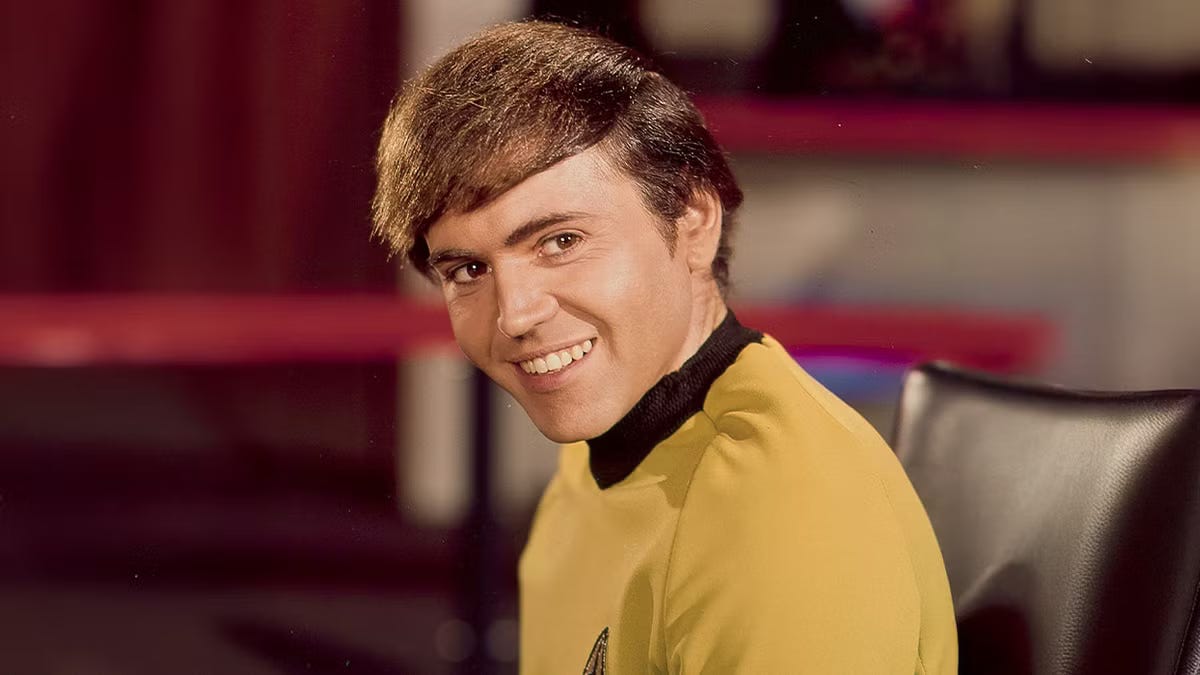
Got the news Monday morning. Walter Koenig, who played Chekov on the original Star Trek, passed away Sunday at his home in North Hollywood, California. The family said the cause of death was old age.
And now, there are only two left from the original show. William Shatner and George Takei, Kirk and Sulu, respectively.
What struck me is what strikes all people in my age group. The passing of the people, places, and things that defined our childhoods.
While I can’t remember when, precisely, I discovered Star Trek, I was a fan from early on. I don’t remember how I came across it, if someone told me about it, or if I started catching the reruns in the afternoon, but I was hooked. It had to have been in the early 70s, 1972 probably, when Star Trek found its new life in syndication, when it first gained cult status.
Maybe it was the colors that got me. The spaceships. A look at a possible future where we harnessed wonderful technology to meet other beings, to have talking computers, self-opening doors, magical transporters, and food coming right out of the walls. Not to mention the other nifty things like a communications device that you flipped open to talk to other people. And phasers. Gods know there were a few bullies at school who would rue the day if I ever had one.
As I got older, the stories stuck with me. The first science fiction lesson I learned from Star Trek was that the big, scary alien wasn’t so scary after all. It was just another person who was like us — curious about meeting new species of intelligent life. Finding us as strange and wonderful as we found them. That was “The Corbomite Maneuver.”
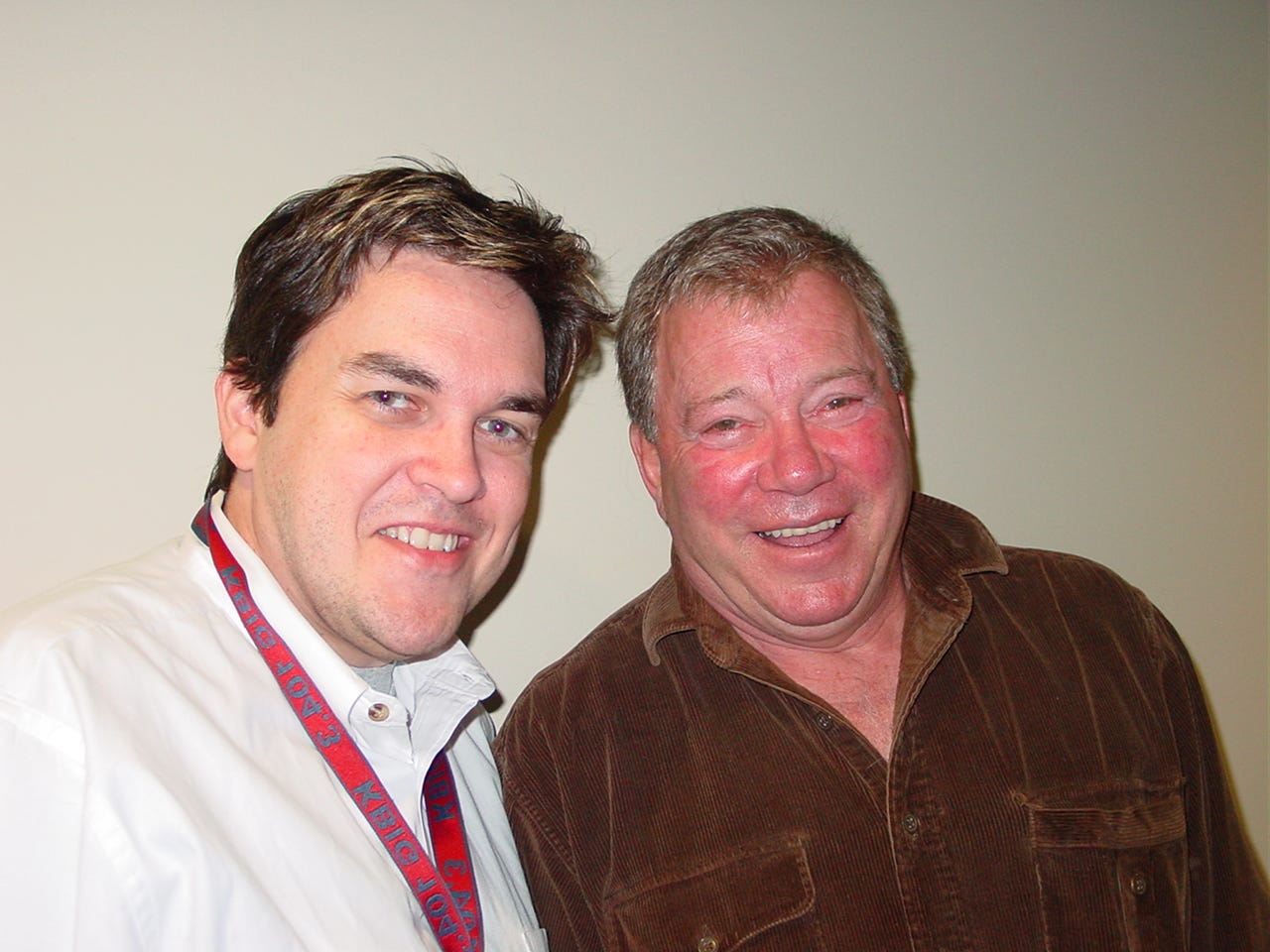
I met William Shatner once. It was in the early 2000s at KBIG in L.A. He’d been interviewed on one of the other stations, and his people were rushing him out because he was late for another appearance. But I ran after him and begged him for a photo, and he was kind enough to stop for me.
As I look around, I see the passing of so many of the icons I grew up with. And not just TV, movie, and musical heroes, but friends, loved ones, and family. This is the age where you find yourself saying goodbye far more often than you ever did.
And how do you describe this time? It’s a time every single one of us goes through. The road ahead suddenly looks so much shorter than the one behind.
And so it goes.
We were smart enough to understand early on that nothing is permanent except impermanence. But understanding it and living it are two different things. And, of course, they’re reminders that soon you’ll be the one others wave goodbye to. Or so you hope.
But our navigator is gone now.
Chekov arrived as the young newcomer, with a haircut meant to appeal to the teenagers watching at home. But he became part of the family. Koenig returned for the movies and kept meeting fans at conventions and gatherings, talking about his time among the stars.
For those of us watching in the early ’70s, that crew offered a hopeful dream of the future. Somehow, we’d worked out our problems well enough to go exploring together.
And we were old enough and bold enough to go where no one had gone before.
Who was the first person you grew up watching whose death felt like losing a piece of your own childhood?
What did Star Trek’s vision of the future mean to you when you first watched it? Has that changed over the years?
I remember my favorite teacher in school, a teacher that had a profound effect on the development of my critical thinking, asking our class to write letters to the network when they were cancelling Star Trek. I think I was a freshman in high school.
Later on my husband and I were both fortunate enough to work with members of the cast - both of us with Bill Shatner, and Mike with George Takei and Walter Koenig. What a wonderful legacy they left! And lots of fun stories.