

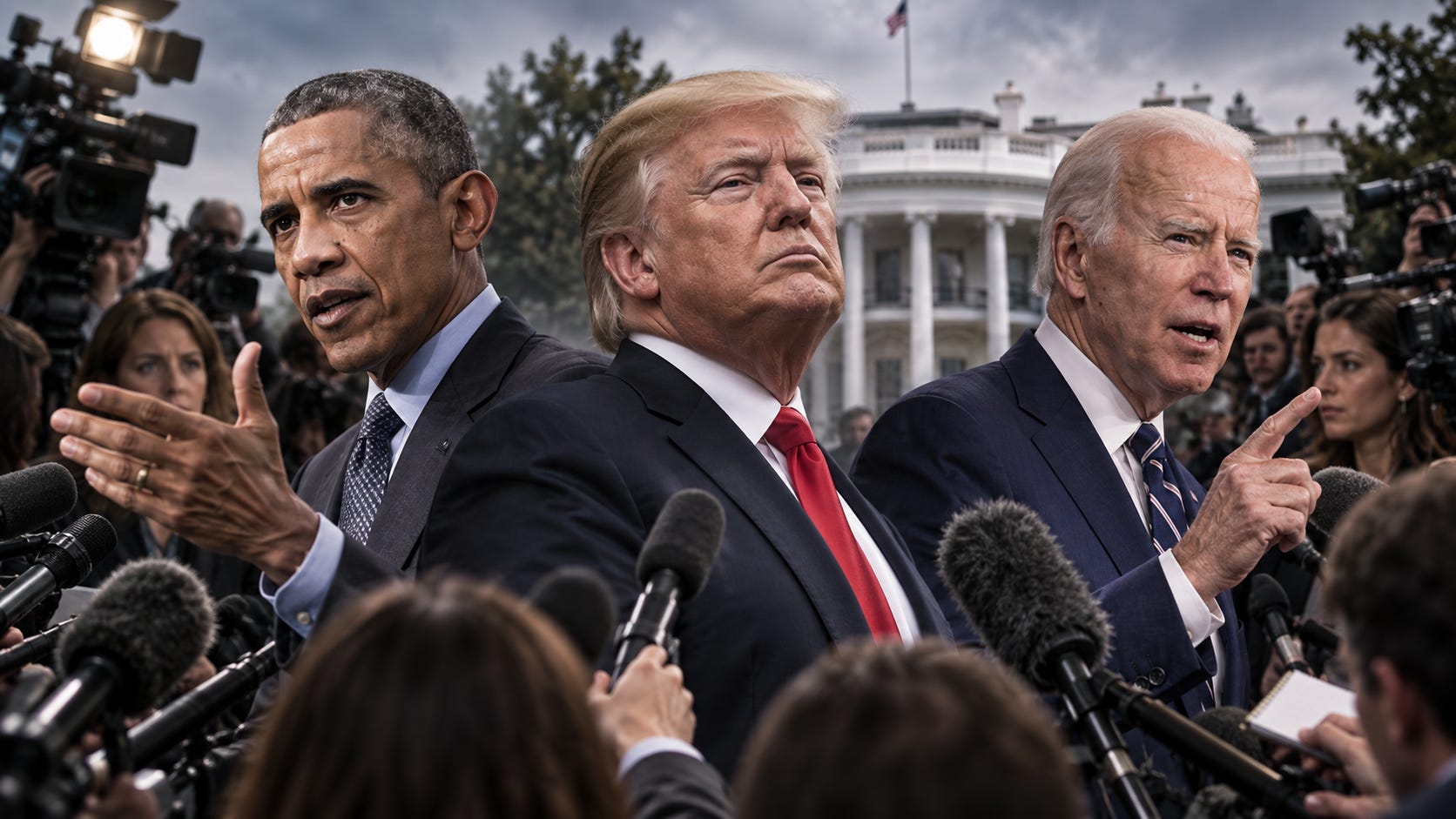
Friday, President Trump said he was “banning” CNN, Politico, and MS NOW from the White House.
Saturday morning, he followed through.
Reporters from all three organizations were turned away. Their White House press credentials were confiscated or deactivated.
Has anything like this happened before?
Yes — but not quite like this, at least in the modern White House press era.
Presidents and the press have been fighting pretty much as long as presidents and the press have existed. White Houses have restricted reporters, excluded news organizations from particular events, and occasionally yanked individual credentials.
There are several important precedents. But each was narrower.
Obama and Fox News, 2009. The Obama White House tried to exclude Fox News from a pool interview with Treasury official Kenneth Feinberg, amid a larger dispute over whether the administration considered Fox a legitimate news organization. The other television networks objected and refused to participate unless Fox was included. The White House backed down. Fox’s White House credentials were not revoked.
Trump, February 2017. The first Trump White House excluded CNN, The New York Times, Politico, the Los Angeles Times, and several other organizations from an off-camera press briefing conducted by Sean Spicer. AP and Time declined to participate in protest. But this was exclusion from one briefing, not removal of those organizations from the White House grounds.
Jim Acosta, 2018. Trump revoked CNN correspondent Jim Acosta’s White House hard pass after a confrontation at a news conference. CNN sued. A federal judge ordered the pass restored, finding that the White House had likely violated Acosta’s due-process rights. The administration reinstated him. Importantly, CNN itself wasn’t banned. One reporter lost his credential.
Brian Karem, 2019. The Trump White House suspended the Playboy correspondent’s hard pass for 30 days after a verbal confrontation in the Rose Garden. Karem sued. The D.C. Circuit later concluded that the suspension likely violated his Fifth Amendment right to due process because the White House had not given him adequate notice of what conduct could bring that punishment. Again, this involved one journalist, not an entire news organization.
Biden and the 442, 2023. This one has been getting a lot of attention since Trump’s announcement. The Biden White House changed the eligibility rules for White House “hard passes” — permanent credentials that allow reporters regular access without applying for a pass each day.
Existing passes expired July 31, and journalists had to reapply under the new standards. Among other requirements, applicants had to regularly cover the White House, work for a news organization, live in the Washington area, and have accreditation from a congressional or Supreme Court press gallery.
After the change, the number of hard-pass holders went from 1,417 to 975 — a drop of 442.
That’s the source of the claim that Biden “revoked 442 press passes.”
But that leaves out a pretty important piece of the story. The White House said only one application for a new hard pass had actually been denied. Many of the others did not reapply or no longer met the requirements. And journalists without hard passes could still request day passes to enter and cover the White House.
You can certainly argue about whether Biden’s new rules were too restrictive. Some journalists did. But mechanically, this was very different from identifying particular news organizations and ordering their reporters off the grounds.
Associated Press, 2025. This is probably the closest recent precedent. Trump’s White House restricted AP reporters from the Oval Office, Air Force One, and other limited-access presidential events after AP declined to use “Gulf of America” exclusively for the Gulf of Mexico.
AP sued. A federal district judge ruled that the government could not retaliate against AP because of its editorial choices. An appeals court later stayed that ruling while the case proceeded, allowing the White House restrictions to remain largely in place during the appeal. But AP reporters were not categorically prohibited from entering the White House complex.
There’s an older case that’s worth a look.
Journalist Robert Sherrill was denied a White House press pass beginning in 1966, ostensibly for security reasons.
In Sherrill v. Knight in 1977, the D.C. Circuit drew an important distinction. The White House does not have to provide press facilities in the first place. But once it establishes facilities that are generally available to bona fide Washington journalists, it cannot deny access arbitrarily or because it dislikes the content of a journalist’s work.
The court also held that a journalist denied a pass must be given the factual basis for that decision, an opportunity to respond, and a written explanation of the final decision.
What makes this weekend’s action different
The big distinctions are scope and stated reason.
Trump isn’t excluding reporters from one briefing. He isn’t suspending one correspondent after an alleged violation of White House rules. And he hasn’t said these organizations present a security problem.
He said they were being banned because, in his words, they report “FAKE NEWS,” “FICTION,” and “LIES.” Asked whether a specific story prompted the decision, Trump said it was “really just cumulative stories over the past few years.”
And Saturday, reporters from CNN, MS NOW, and Politico were denied their normal access to the White House grounds.
Put all of that history together, and there are plenty of examples of presidents fighting with reporters. There are examples of reporters being tossed out of individual events. There are examples of entire news organizations being excluded from particular briefings. There are examples of individual White House credentials being revoked.
The courts have treated selective access to particular presidential events differently from general access to established White House press facilities.
CNN, MS NOW, and Politico have all indicated that they intend to defend their First Amendment rights. They have announced they’ll be suing the Trump administration.
If you find Archer’s Line worth reading, please consider subscribing.
Free subscriptions help this newsletter grow. Paid subscriptions are what help keep it going.
The move to Atlanta has come with more moving pieces — and expenses — than Ronnie and I expected, so if you’ve been thinking about becoming a paid subscriber, this would be an especially good time. It directly supports the time and research that go into pieces like this one.
No guilt if a paid subscription isn’t in the cards. Read, share, and stick around.
But if you can support Archer’s Line, I’d be very grateful.