

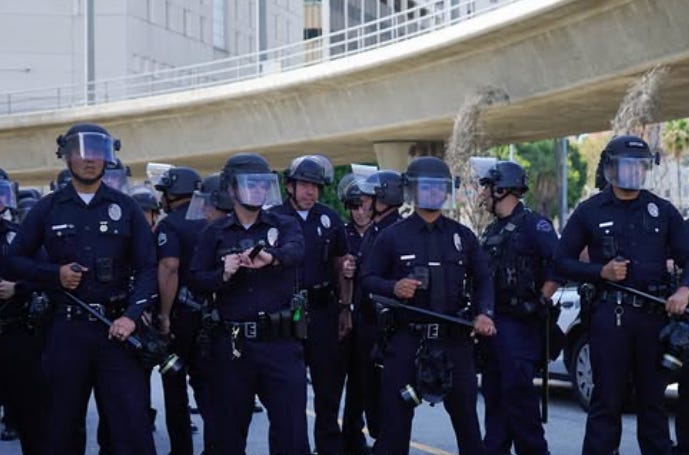
Most of the time, law enforcement and local reporters can work hand in hand. After all, a lot of reporting comes from information given to them by the police.
But when the big crowds gather, the protests get heated, and tempers flare between demonstrators and cops, something shifts.
Like it did in Los Angeles on April 11.
That protest was part of a wave of demonstrations tied to immigration enforcement actions — crowds gathering in and around downtown, tensions already high, with police trying to keep streets open and prevent the kind of clashes that can escalate quickly.
Multiple journalists at that protest say they were shoved, pushed back, and threatened with arrest. One reporter says an officer told her she could be detained. Others were hit or forced out while doing their jobs.
The police will say it’s all part of crowd control, that sometimes they have to ratchet up the force level to keep crowds from getting out of hand, blocking a freeway, or committing vandalism, and that they were never targeting reporters.
The problem is, it isn’t rare.
If you’ve covered protests — or even just watched closely — you’ve seen this movie before. Los Angeles has its own track record. Lawsuits. Court orders. Journalists hit with projectiles. Photographers caught in the same sweeps as the protesters they’re there to document.
And it’s not just the LAPD. The Sheriff’s Department has its own history of friction with reporters, including allegations of surveillance and intimidation. Go back further and you run into the old Public Disorder Intelligence Division — a reminder that in this city, the relationship between law enforcement and the press has never exactly been comfortable.
There’s more than one example of a reporter being arrested, with the police claiming they didn’t identify themselves as reporters, or they weren’t wearing proper credentials, and that they weren’t rough at all with the reporter.
But the reporter tells a different story.
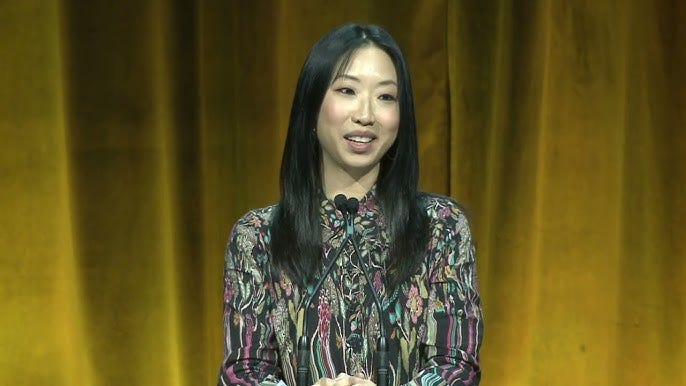
In 2020, Josie Huang, a reporter with KPCC, was covering a protest in Lynwood when Los Angeles County sheriff’s deputies rushed her as she filmed an arrest.
She says she identified herself. She says she was wearing her press credentials.
The department said she interfered and didn’t make it clear she was a journalist.
Then the video came out.
It shows her credentials hanging from her neck. It captures her repeatedly shouting that she’s a reporter as deputies shove her and throw her to the ground.
Charges were filed against her. Then they were dropped. Later, the county agreed to a settlement worth hundreds of thousands of dollars.
That seems to be a pattern. It happens. There’s fallout. Then we wait for it to happen again.
But step back, and the geography stops mattering. Because this isn’t just Los Angeles.
During the protests in 2020, journalists across the country were arrested, shoved, and shot with rubber bullets. It didn’t matter if the reporters were from national outlets, network operations, major papers, local stations, freelancers, or independent journalists.
And before you point out that this sounds like I’m just pointing the finger at law enforcement, let me be clear. It’s not just the cops.
Reporters have also been surrounded by protesters, shouted down, and had equipment grabbed or destroyed. By both sides of whatever demonstration is happening. Sometimes the journalists are branded as fake news, and the protesters want to teach them a lesson. Sometimes they’re branded as mouthpieces of the government, there to help the authority suppress the cries of the downtrodden — and the protesters want to teach them a lesson.
That leaves journalists in a strange place — inside the story, but not really belonging to either side of it.
There was always tension. Always distrust. Police didn’t like cameras in their faces. Reporters didn’t always get cooperation. That’s not new.
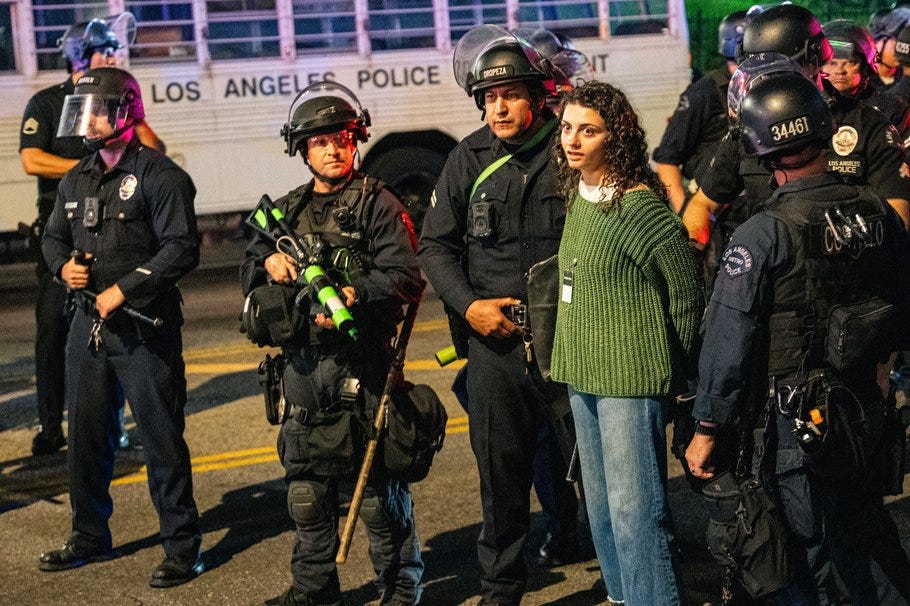
What’s changed is how often the press gets treated like just another body in the crowd. Someone to move. Someone to push back. Sometimes, someone to neutralize with force.
That shift shows up in moments like April 11, when multiple journalists get handled the same way at the same time.
It’s not one officer losing control. It starts to look like instinct. And sometimes, it has the whiff of policy.
There are reasons for that, and they’re not complicated.
Trust in media has collapsed. Every camera is a potential viral clip. Every interaction can end up online within minutes. Independent journalists don’t always have the backing — or the visibility — that once gave them some protection.
And protests themselves aren’t what they were. They’re louder, faster, more chaotic. Police respond differently. So does the crowd.
Put all of that together, and the press ends up in the middle — not above it.
There’s a line that used to be clearer: you might not like the press, but you understood what they were doing there. Not just at demonstrations, but in war zones and disaster scenes.
Now, that line gets blurry in real time.
You can see it in how quickly a press badge gets ignored, or how often a camera doesn’t slow anything down.
That doesn’t mean every incident is intentional. It doesn’t mean every officer is targeting journalists.
But when it keeps happening — in different cities, different protests, different years — it stops looking like a coincidence.
In this day and age of ever-growing rage, anger, and violence, and wide chasms between political ideologies and worldviews, when we hear more about the protests that turn violent rather than the peaceful ones, I despair that things are ever going to calm down and go back to that low rumble we were used to.
I hope I’m wrong. Because reporters have a job to do. So does law enforcement. And so do the demonstrators.
If this is the kind of conversation you think we should be having more often, subscribe to Archer’s Line. And for the unfiltered version, listen to Disciples of Democracy — where we take these stories apart and put them back together.
I have seen those changes across time and I am still surprised by it at times. I, like you, hope to see it change for the better but it's very discouraging so far.
Thank you Rob.