

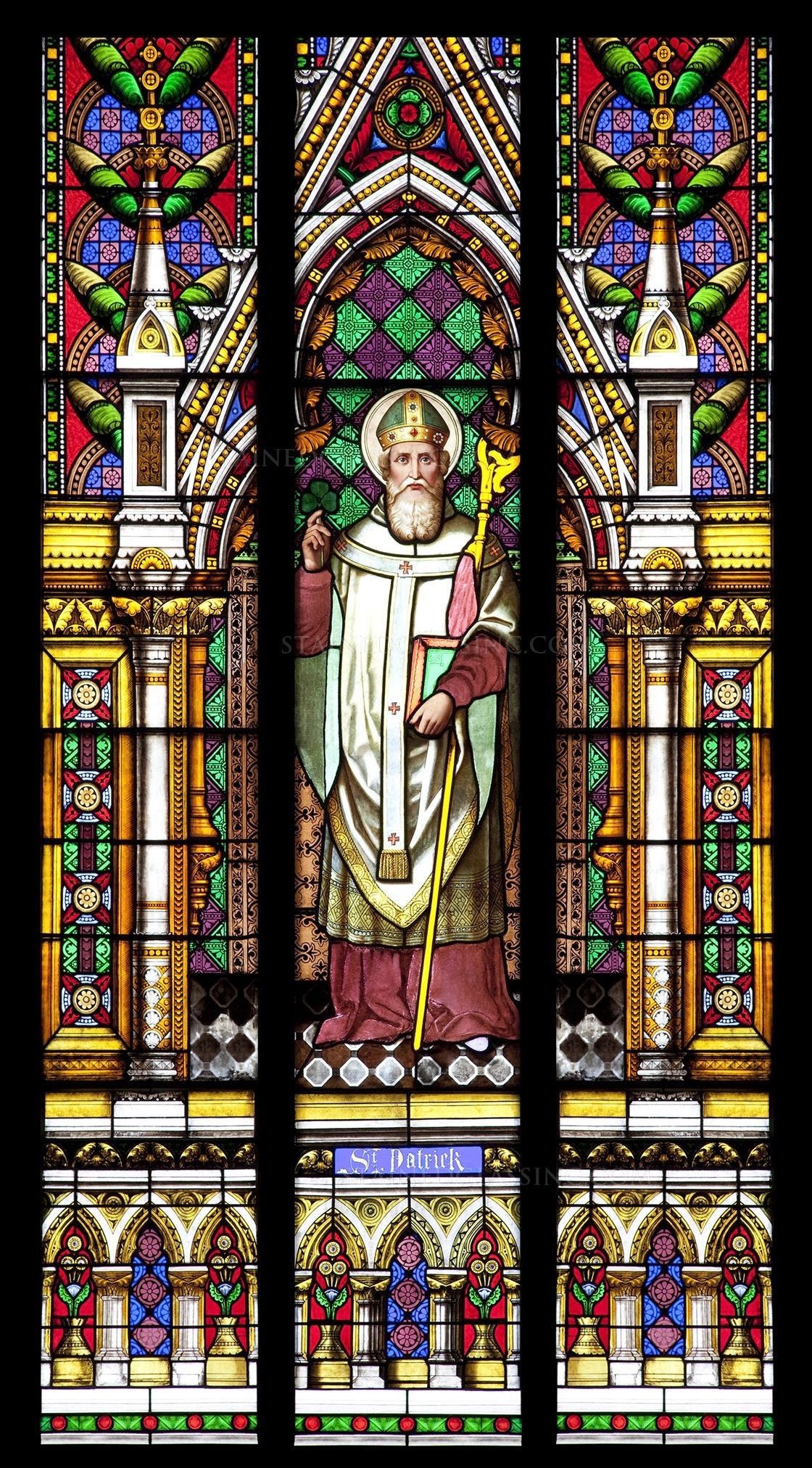
Every March 17th, the world celebrates St. Patrick.
The world puts on something green, raises a pint, and toasts St. Patrick — patron saint of Ireland, driver-out of snakes, explainer of the Trinity via small plants. It’s a great tradition. There’s just one small problem. The version we celebrate is mostly myth. The history is a lot messier.
To start with, there may have been two St. Patricks.
And historians have been arguing about it — bitterly, sometimes ridiculously, and in at least one case in court — for nearly a hundred years.
Let’s start with what we actually know — separating story from record, which turns out to be a lot less than the shamrock-and-snake industry would suggest.
Patrick, so the story goes, was kidnapped from Roman Britain — likely somewhere along the western coast of what is now England or Wales — by Irish pirates as a teenager, taken to Ireland, and made to tend sheep as a slave for six years. Then he heard voices, escaped, walked 200 miles, hitched a ride with some sailors, was shipwrecked near France, helped feed the crew when a herd of pigs appeared after he prayed, and eventually made it home.
Then he decided to go back.
This is the detail that separates Patrick from most of us. Most people, after escaping six years of slavery on a foreign island, would lie low for a while. Patrick became a priest, had more visions — including one where the Irish people begged him to return — and went back. He spent decades converting the island to Christianity. By his own account, he occasionally raised the dead to back him up. You know. For emphasis.
That’s the traditional story. Parts of it come from Patrick’s own writings. Parts come from much later accounts that read more like legend than record.
“Nothing is clearer than that Patrick grafted Christianity onto the pagan traditions with so much skill that he won people over before they fully understood the difference between the two.” — Scholar John O’Donovan, 1856, with the tone of someone who has just figured out a magic trick.
Enter the second Patrick
Here’s where it gets interesting.
In 431 CE, the Pope sent a bishop named Palladius from Gaul (modern-day France) to Ireland, specifically to minister to Irish people who had already converted to Christianity. That matters because it means Christianity was already in Ireland before Patrick arrived. Patrick isn’t credited with showing up until 432.
So who was Palladius? A bishop. A missionary. A man sent by Rome to do roughly the job Patrick is famous for. And a 9th-century Irish text called the Book of Armagh describes Palladius as “Patrick by another name.”
Other old records add to the confusion. An 8th-century calendar of saints lists a feast day for an “Old Patrick… beloved foster father.” The Annals of Ulster notes “the repose of the elder Patrick, as some books state,” in 457. Two sets of records. Two sets of dates. Two men who may have been blended, over centuries, into one.
If that’s true, the St. Patrick we celebrate isn’t a person so much as a composite character.
In 1942, historian Thomas O’Rahilly made the case formally: there had been two missionaries, both named some version of “Patricius,” whose lives had been scrambled together. The theory sparked a real fight in academic circles — one that, by all accounts, got ugly and petty — and ended with an actual libel case against a journalist who had the nerve to make fun of it in print.
While we’re here — about those snakes

There were no snakes in Ireland for Patrick to drive out. There have never been native snakes in Ireland. The island was cut off from Britain after the last Ice Age before snakes could get there. This isn’t disputed. The snakes are a metaphor — most likely for paganism, or the Druids, depending on who you ask.
The shamrock is similarly shaky. It doesn’t appear in any early Patrick stories. The first record linking Patrick to the shamrock comes from 1684, when an English visitor noted that the Irish wore “shamroges, 3 leav’d grass” on Patrick’s Day and also, apparently, ate them. The idea that Patrick used it to explain the Trinity is a nice story, but no one wrote it down for over a thousand years.
And the green? Patrick’s original color was blue. The Order of St. Patrick, founded in 1783, used sky blue as its symbol. Green took over in the 17th century, when Irish nationalists adopted it to push back against British rule. The color we associate with Patrick is the color of rebellion.
The man probably wasn’t Irish, didn’t banish literal snakes, may not have used a shamrock, wasn’t originally linked to green, and might be two people. The legend filled in the rest.
So which Patrick are you celebrating?
Whether there was one Patrick or two, someone went back. That’s a story — whether truth or fiction — that teaches us something. Someone who had every reason to avoid Ireland — who had been enslaved there, who suffered there — felt called to return and did. The historian Thomas Cahill called him “the first missionary to people beyond the reach of Roman law,” and said the step he took was “as bold as Columbus’s, and a thousand times more humane.”
Patrick wrote honestly about his doubts, was embarrassed by his lack of formal education, and near the end of his life fired off a furious letter denouncing a British warlord who had raided Ireland and enslaved Irish Christians. Patrick knew what slavery felt like. He said so.
That’s the story. A flawed, stubborn man who went back to the place that had broken him and did something remarkable there.
The green beer is optional.
What do you think? Leave a comment below. And if you’re in need of some politics and/or outrage, check out the Disciples of Democracy podcast with my friend, Jack Messenger.
You dug up a few things I hadn't known before. I like this very much and I love St. Patrick's Day. I hope yours is a good one, Rob, green beer or not.