

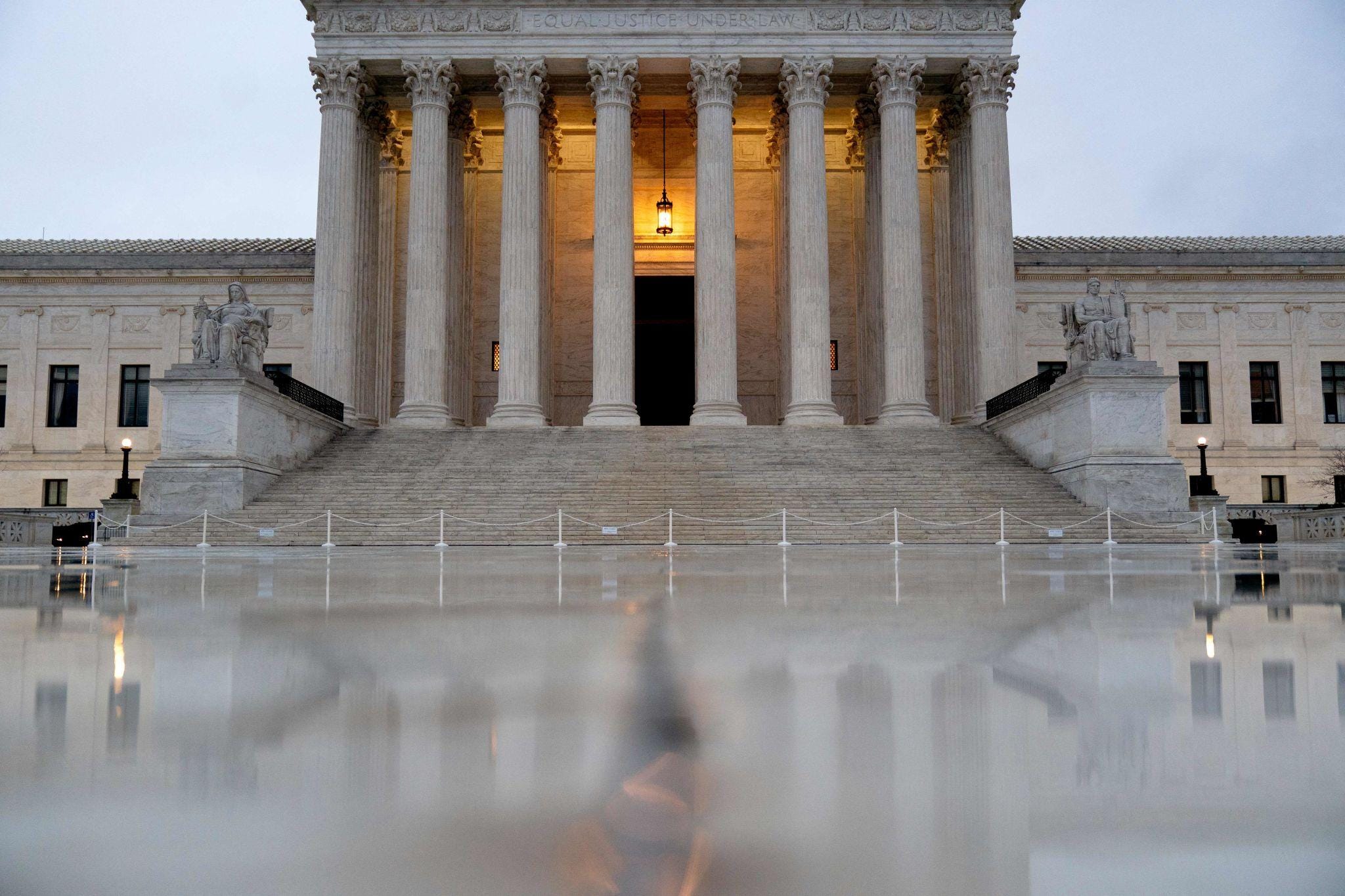
Arguments were heard last Tuesday before the Supreme Court in a little-noticed but very important case that cuts right into how federal power actually works.
Ann E. Marimow writes in the New York Times that the court is hearing a challenge from AT&T and Verizon — both hit with tens of millions of dollars in fines by the Federal Communications Commission.
The issue isn’t whether the companies mishandled customer data. It’s how they were punished.
The FCC fined AT&T more than 57 million dollars and Verizon more than 48 million dollars over location data practices — data that ended up exposing sensitive information about millions of customers.
At one point, according to earlier reporting cited in the case, even a sheriff was able to access private location data — including that of a judge.
The FCC says this is exactly why it needs enforcement power — fast, direct, and meaningful.
The companies say they shouldn’t have been fined without a jury.
The FCC doesn’t take every violation to a jury trial. It investigates, decides, and issues penalties internally. That’s been standard practice across multiple federal agencies for decades.
Marimow writes that this case follows a recent Supreme Court ruling that struck down a similar enforcement setup at the Securities and Exchange Commission, saying it violated the Seventh Amendment right to a jury trial.
Same argument here.

The Government’s Position
The Trump administration is defending the FCC. Their argument is blunt: take away this authority, and enforcement collapses.
The solicitor general warned that stripping the FCC’s ability to issue fines could leave “a significant gap in federal oversight,” with rules on privacy, national security, and more going unenforced.
If agencies can’t act directly, everything slows down. Every major enforcement action risks turning into a full federal trial.
The Companies’ Argument
AT&T and Verizon aren’t arguing that they shouldn’t be regulated. They’re arguing the process is unconstitutional.
Their position: the FCC acts as investigator, prosecutor, judge, and jury — all inside the executive branch.
And if a company wants a real jury trial, it has to refuse to pay the fine first.
That means risking more penalties, reputational damage, and a legal escalation just to get into court.
They say that’s not a real choice — and that receiving massive fines without being able to defend themselves before a jury isn’t fair.
The Split
Lower courts already disagree.
One federal appeals court sided with AT&T — saying you can’t punish first and offer a jury later.
Another sided with Verizon — saying the option for a jury exists if the company forces the issue.
That split is why this is now at the Supreme Court.
What’s Actually at Stake
This ruling won’t just hit the FCC.
At least five other federal agencies use similar enforcement tools — including areas like nuclear safety, health benefits oversight, and wildlife regulation.
If the court rules broadly, it could force a redesign of how federal agencies operate.
A decision is expected by early summer.
By then, we’ll know whether the court is continuing its push to limit administrative power — or drawing a line.
Either way, this is one of those cases that won’t dominate headlines.
But it will shape how rules are enforced in this country going forward.
What do you think — should federal agencies be able to fine companies like this without a jury trial, or is that a line that shouldn’t be crossed? Let me know in the comments.
And if you want more breakdowns like this — clear, direct, and focused on how the system actually works — consider becoming a paid subscriber to Archer’s Line. That’s how I keep doing this.
Federal agencies under the Trump regime are targetting communication and media outlets who voice more independent information that isn't always in line with Trump's alternative universe with attempts to normalize his perspective. And it really is his perspective. However, if agencies are allowed to continue being investigators and judge without jury to levy giant fines on corporations then all federal government segments should have the same right. Congress is the segment so obviously needs to have more power over stopping companys and individuals from ignoring their authority.
This is the first I'm hearing about the case. I am uncertain about quite a bit of this until I can learn more.
Thank you Rob.