

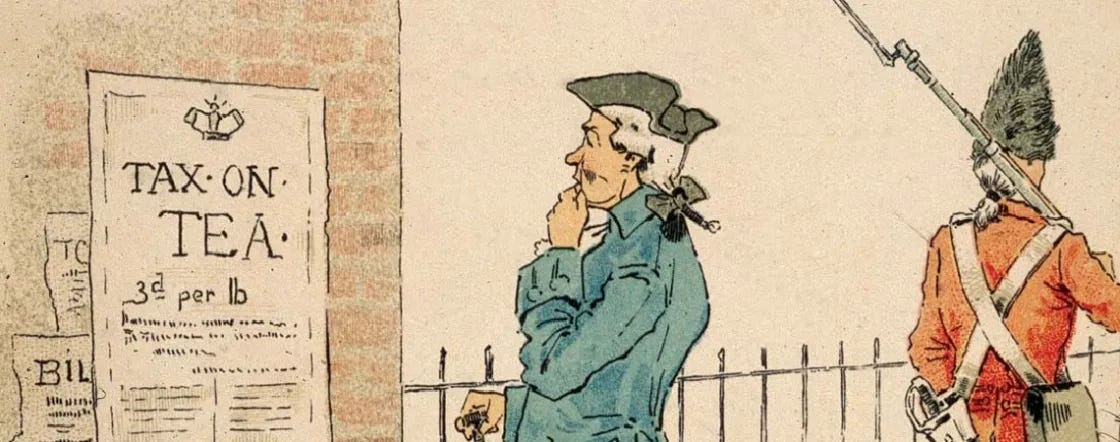
Tax Day is coming. And some Americans have decided they’re not paying.
Let me be clear: not paying your federal taxes is against the law. I’m not recommending it. If you try it, you’re looking at penalties, interest, wage garnishments, liens on your bank accounts, and in extreme cases, criminal charges. The IRS doesn’t care how principled your reasons are.
But here’s what I find worth paying attention to: a lot of people know all of that — and they’re doing it anyway.
Take Rachel Cohen. She’s a 31-year-old lawyer in Chicago who posted a video on Instagram saying she won’t be paying the $8,800 she owes in federal income taxes this year. The video got 140,000 likes. In the comments, plenty of people said they wanted to do the same. Others warned her about the consequences.
“I’ve gotten a lot of people saying, ‘Rachel, this is illegal,’” she told The Guardian. “To which I say, with gentleness: ‘I am a competent attorney!’”
She’s not confused about the risks. She’s done the math. She says she doesn’t want her money going to the war in Iran, to operations in Gaza, or to ICE agents detaining her neighbors. She plans to put the $8,800 in a high-yield savings account instead.
“Of course I’m nervous and I’m scared,” she said. “But I’m doing an informed risk assessment and deciding to do this anyway, because I think that’s the level of severity the moment calls for.”
She’s not alone.
The National War Tax Resistance Coordinating Committee has existed since the early 1980s, quietly hosting trainings for people who want to withhold taxes as a form of protest. A few years ago, those sessions might have drawn a dozen people.
In January of this year, nearly 500 showed up.
Their website logged more than 110,000 unique visitors.
Lincoln Rice, who leads the organization, says interest spiked three times after Trump’s re-election: when DOGE began cutting federal agencies, after passage of the One Big Beautiful Bill, and when the United States attacked Venezuela and seized its president in January.
This isn’t just a fringe curiosity anymore.
And it’s not new.
Tax resistance has deep roots in American history — deeper than most people realize.
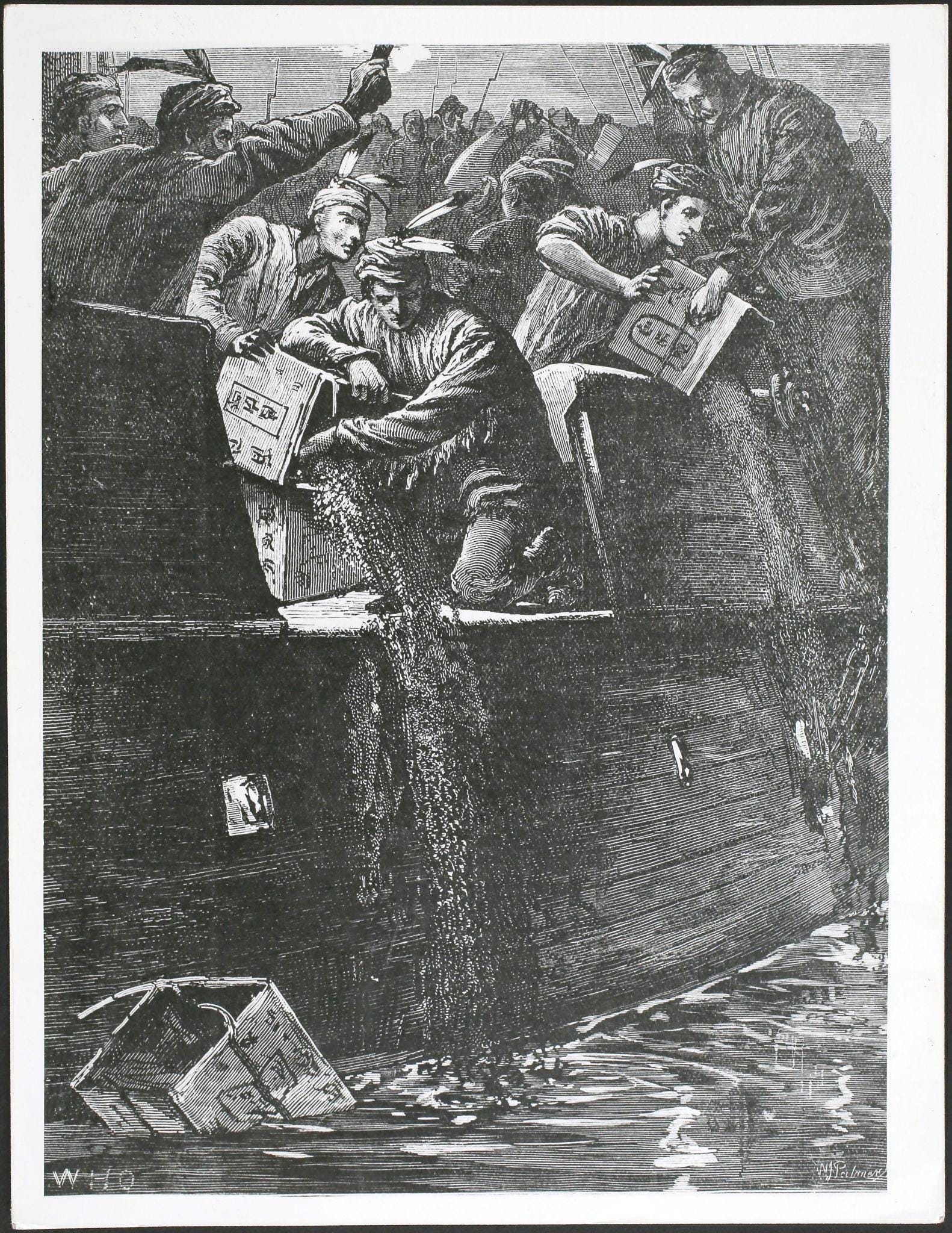
The Boston Tea Party was, at its core, a tax protest. Henry David Thoreau went to jail rather than pay a tax that supported slavery and the Mexican-American War. His night in jail produced Civil Disobedience, the essay that later inspired Gandhi and Martin Luther King Jr.
During the Vietnam War, Joan Baez publicly refused to pay the portion of her taxes earmarked for weapons. Gloria Steinem did the same. At one point, an estimated 200,000 to 500,000 Americans refused to pay a telephone tax that funded the war.
The tradition never fully disappeared. It mostly moved to the margins — often practiced by Quakers and Mennonites who see war-tax resistance as a moral obligation.
A woman named Chrissy Kirchhoefer in St. Louis has been withholding part of her federal taxes since 1998, redirecting the money to community projects. During the Biden years, a new generation of younger activists began doing the same over U.S. support for Israel’s war in Gaza.
Now, under Trump’s second term, the movement is growing again.
A group called National Tax Strike has emerged over the past year, producing guides for people who want to understand how tax resistance works — and what it might cost them.
Christina Thompson, a volunteer coordinator with the group, puts it this way:
“We are being told we have to go without affordable healthcare, affordable groceries, affordable housing, because we want to fund these forever wars that enrich a small portion of the country. I want people to ask a simple question: are your tax dollars making your life better?”
There is one more wrinkle.
The Trump administration has cut the IRS workforce by about 27 percent since last year. Some tax experts wonder whether the agency even has the capacity right now to chase down large numbers of protesters.
Lincoln Rice says his organization hasn’t recently heard of new resisters facing garnishments or bank levies. But that could change quickly.
And again, I want to stress this: the legal risk is real. Penalties and interest can add up fast. The IRS can seize bank accounts. In rare cases, people have lost homes over tax debt.
The fact that enforcement might be stretched thin today doesn’t mean it will stay that way.
But here’s what I keep coming back to.
When large numbers of people are willing to accept legal and financial consequences to make a political point, something deeper is going on. This is not just a policy disagreement. It looks more like moral distress.
That’s people who have looked at the usual channels — voting, calling representatives, showing up at rallies — and decided those aren’t enough. That they need to put something real on the line. What’s happening is so much of an outrage that they’re willing to lose money, lose their homes, even go to jail because they can’t morally take part.
You can agree or disagree with that choice. But it tells you something about where a lot of Americans think we are right now.
April 15 is five weeks away.
What do you think? Are you willing to go to jail or lose your home to protest what the Trump administration is doing with your tax dollars? Please leave a comment below. And check out the Disciples of Democracy podcast, and the podchunk version of Archer’s Line.
I remember going to visit one of my two uncles when I was young. My cousin was just a baby and I'm sure we went to meet him. After the visit I had questions--a number of them. My mom explained and the story involves both of her only brothers who were the youngest of the siblings. The uncle we visited had a goat and I believe some chickens in the backyard, no car and no job. That's especially surprising given that he lived in Chicago. The reason for all of this was because he would not pay taxes due to the Vietnam war. (Which, of course, wasn't a war--but that's a different story.)
What makes that even more interesting is that his only brother was in Vietnam 🇻🇳. That uncle was the youngest of all but the one who passed first while waiting for an organ transplant through the VA.