


We’re in a period in the radio business where stations that can’t make enough money for their owners aren’t being sold — they’re just being… turned off.
Signals are being “paused.” The music, the news, the personalities, the commercials, the public service — all of it falls silent.
But I still think radio has a future, and I know where it is.
More on that in a moment.
This month, Townsquare Media shut down 103.9 in Lubbock, Texas, pointing to “economic conditions.” That phrase shows up a lot lately. It usually means the math no longer works.
They told the FCC they might bring it back. Maybe. More likely, they’ll try to sell it — if anyone’s buying — or just give up the license. And as fewer owners seem willing to take on new stations, that last option is becoming the plan more often than not.
Terminal dead air.
Across the company, stations that used to be marginal are being erased.
In Rochester, Minnesota, KOLM went silent and stayed that way long enough for the license to be canceled. In Walton, New York, WDLA was taken dark, then eventually unloaded for fifty thousand dollars — basically a liquidation price. Other AM signals in Iowa, Texas, New Jersey, and Maine — same story. Shut down, stripped for parts, or simply surrendered.
It’s happening across the ownership landscape.
At Cumulus Media, the cuts came in waves — nearly twenty stations shut down starting last year. Not long after that, the company filed for Chapter 11, trying to restructure more than five hundred million dollars in debt.
Audacy has been doing its own version of triage since coming out of bankruptcy — selling off land, walking away from AM licenses.
iHeartMedia is leaning further into automation and national scale. If a small-market AM doesn’t fit that model, it’s expendable. One example: in Lancaster, Pennsylvania, they lost a tower site lease for an AM station — and instead of replacing it, they moved the programming elsewhere and let the AM signal die.
Even Beasley Broadcast Group, which hasn’t gone as far down this road yet, is under pressure — cutting staff, looking at asset sales, trying to get ahead of debt coming due.
So what’s really behind all this “economic conditions” language?
AM transmitters are expensive to run. The infrastructure is old. Maintenance costs keep climbing. And advertisers — for the most part — have already moved on.
So companies are making a hard decision.
Instead of pouring money into signals that don’t generate revenue, they’re letting them go dark. Sometimes temporarily, often permanently.
For decades, the assumption was that every signal had value — that you held onto it, found a format, and made it work. That assumption is gone.
Now, if a station doesn’t justify itself financially, it doesn’t get saved. It gets silenced. And once it goes quiet, there’s a good chance it never comes back.
Recently, my friend Jack Messenger was planning an episode of Disciples of Democracy about the decline of radio — and whether there’s still a future for it, and if so, where.
Jack reached out to several big-name radio people to join the conversation. None of them wanted to do it. I don’t know their reasons. But if it were me, I can guess what the thinking might be: there’s no future — and it’s too painful to say out loud.
But I’m not sure that’s the whole story. Because I still think if there is a future for radio, it’s in small towns.
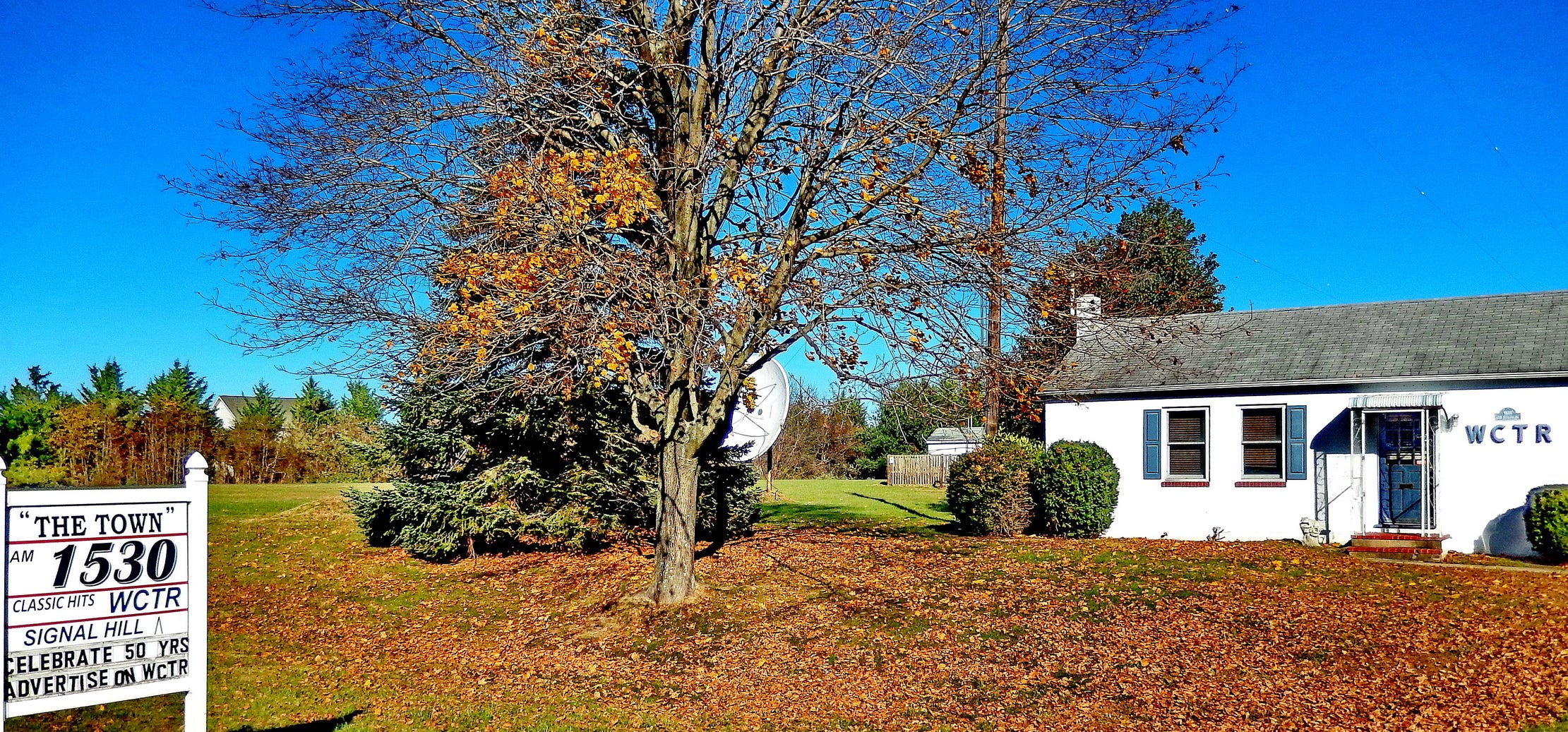
On a recent trip through some smaller communities on the East Coast, I noticed something right away. People weren’t listening to Apple Music or Spotify. They weren’t even playing their own libraries.
They were listening to local radio.
And when I asked what they had on, they knew. The station name. The call letters. Sometimes even who was on the air at that moment. Because they knew them. “They live right down the road from my sister.”
And there were commercials — lots of them. Local businesses. Local money. Maybe the production wasn’t as slick as what I’m used to with my big-city ears and major-market self-importance.
But it worked.
Money going into a local owner’s pocket.
That’s the part the big companies don’t want anymore. They’re chasing scale. National buys. Programmatic revenue. Efficiencies.
Small towns don’t offer that — at least not at the level those companies need to justify the cost.
So they sell off stations. Towers. Land. Or they just turn the signal off.
But if there’s a future for radio, it’s sitting right there in those towns, waiting for someone willing to invest in it.
Local owners who may not have bright, shiny, state-of-the-art studios — but have enough to get on the air, stay on the air, sell local ads, and serve the community.
Where the afternoon DJ isn’t a voice-tracked stranger from three states away. It’s Mac. And Mac is married to your cousin.
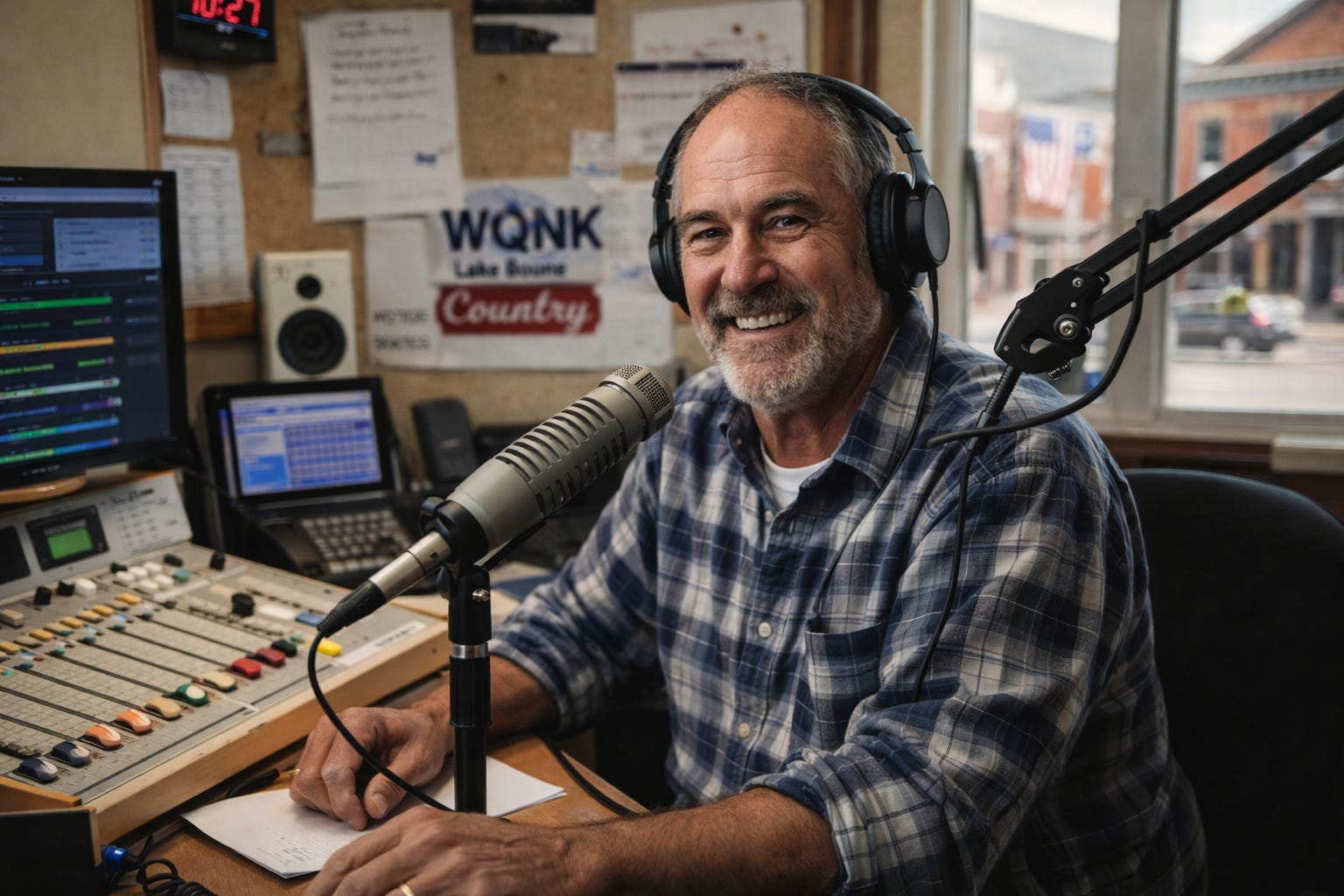
What I’m doing here on Archer’s Line is covering the industry I’ve been inside for most of my life — and trying to figure out where it goes from here.
I still think there’s a version of this business that works. It just doesn’t look like what the big companies are chasing.
I also break down current events and the bigger media picture — where trust is holding, where it’s collapsing, and why.
On Sunday, I’ll be writing about what may be the last neutral ground left in media — and where audiences still trust what they’re hearing.
If that matters to you, consider becoming a paid subscriber.
And if this piece hit home, share it, like it, and jump into the comments.
KOLM was my very first station. Started there in ‘77 or ‘78 as a teenager. Did radio news until 2021 - when the University of Minnesota sold my station. (More and more universities are doing this, too.) This breaks my heart.
Having grown up in the middle of Illinois, I know how important these local radio stations are. I still have my WJBC cookbook from Bloomington IL and actually my first job was as a child doing a radio commercial for TotHolder Safety Seats. You are correct - we knew the personalities on air, trusted them. Cutting these local radio lifelines is a tragedy. We need more community based engagement, not less.