

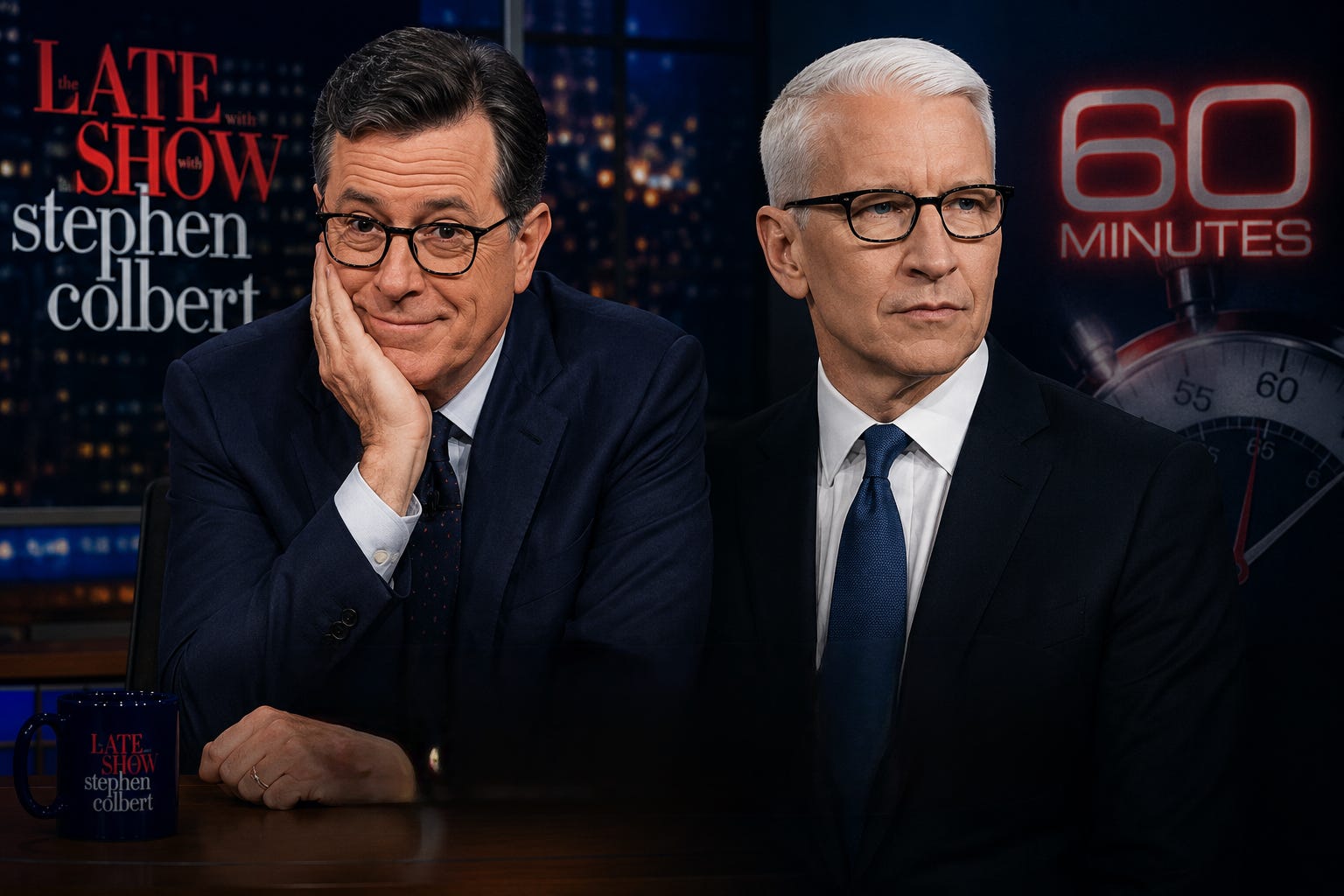
This is Stephen Colbert’s final week on CBS. The last show is Thursday.
And for people who grew up loving television — especially smart television — it feels strange.
I’ve been a fan of Colbert since his days on The Daily Show, back when he and Steve Carell would do those hilariously overcommitted correspondent bits together. There was always something different about him. He was building a character so committed to his own worldview that it became satire through sheer intensity.
And then there was that famous moment when Colbert filled in during a segment after the guest, Al Sharpton, didn’t show up. Stephen just pretended to be Sharpton. And it was all last-minute. Stephen recounts the story that he was on the way out the door to catch a sneak preview of The Lord of the Rings when Jon Stewart desperately needed him. You could almost see the future happening in real time. The guy simply took over the screen.
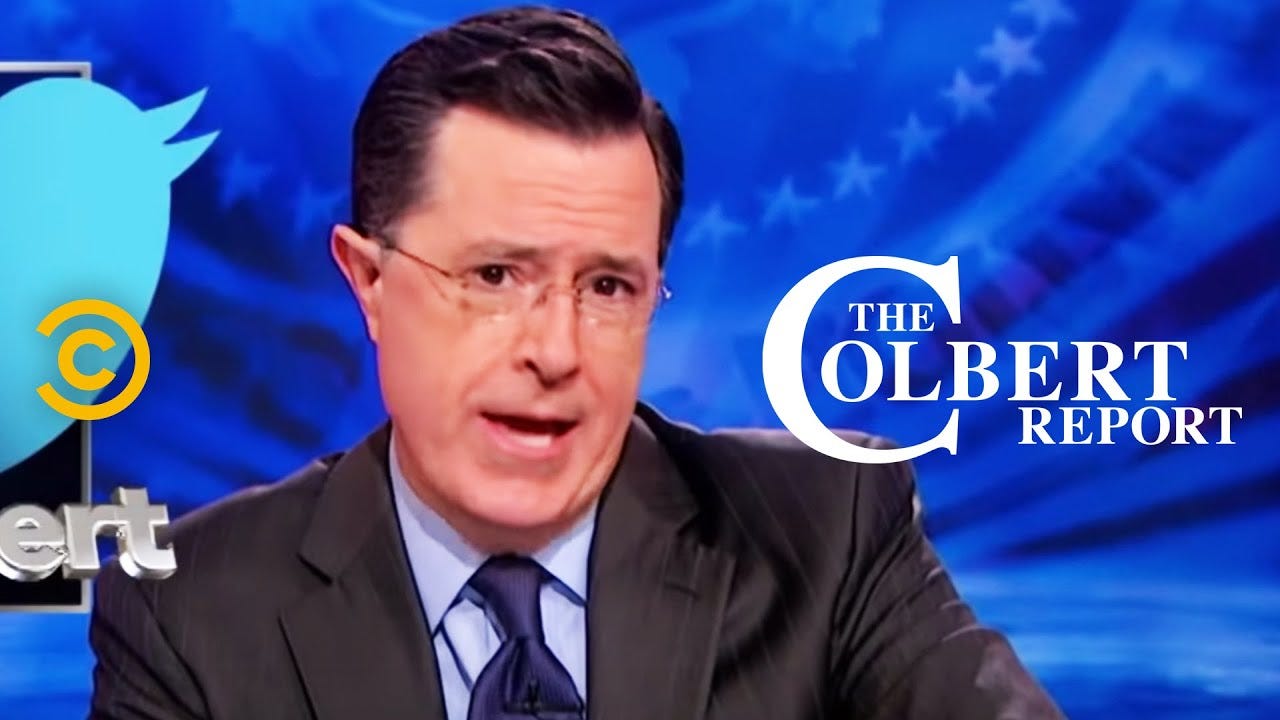
Then came The Colbert Report.
To me, it remains one of the sharpest pieces of political satire television has ever produced. It perfectly captured the performative certainty of the Bush-era cable opinion machine — particularly the style of Bill O’Reilly and the hosts who followed him. Colbert understood something important: The joke was confidence masquerading as authority. Outrage as performance art.
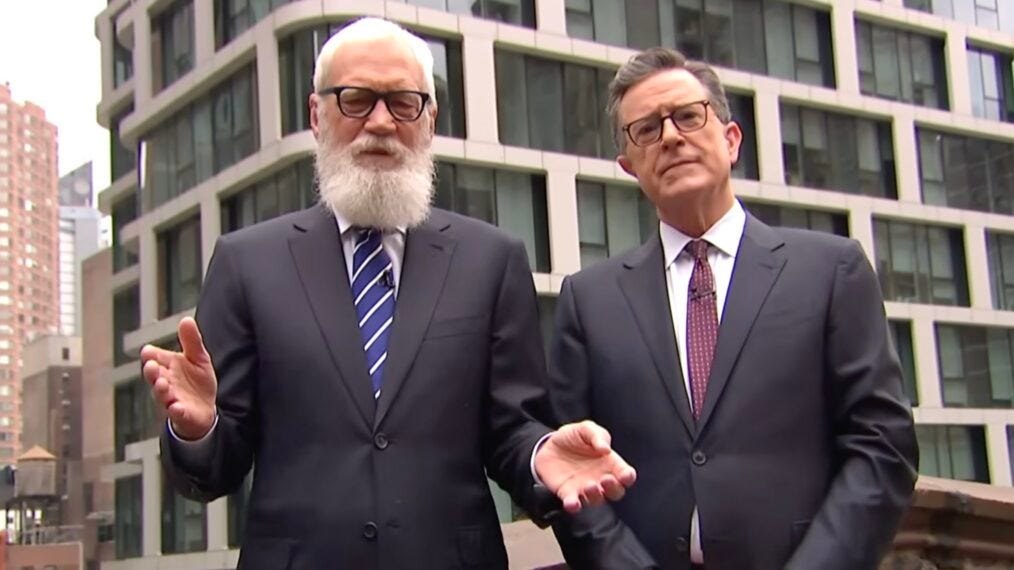
And when CBS announced Colbert would replace David Letterman on The Late Show with Stephen Colbert, I was ecstatic. Honestly ecstatic.
It felt impossible at first. The weird satirical character guy from Comedy Central taking over one of the most iconic desks in television history? Colbert was Colbert, the self-righteous egotistical blowhard.
But he grew into it. Not by becoming Letterman. By becoming more himself.
That’s probably what I’ll remember most about his CBS years. Somewhere along the line, especially after the arrival of the Trump regime, the pandemic, and some deeply personal conversations about grief and faith, Colbert evolved from satirist into something warmer and more human. He still had the jokes, but there was also vulnerability underneath them.
And now it’s ending.
Officially, CBS says this is about economics and the changing late-night landscape. A lot of viewers don’t buy that, especially given Paramount’s broader political pressures and ongoing corporate maneuvering. Whatever the real story is, one thing feels undeniable: CBS is walking away from a version of late-night television that once mattered culturally.
And what replaces Colbert?
A cheaper show designed to be endlessly replayed without topical jokes or political commentary.
Colbert’s departure also arrives during a strange moment for television news and legacy media overall.
On Sunday night, Anderson Cooper signed off from 60 Minutes after 20 years with the program. His farewell came as uncertainty hangs over the future of the broadcast under incoming changes reportedly being pushed by Bari Weiss.
“I hope 60 Minutes remains 60 Minutes,” Cooper said.
Well, we’ll see. That sentence carried more weight than he probably intended.
Because suddenly, a lot of institutions that once felt permanent don’t anymore.
CBS News Radio is shutting down at the end of the week. AP is laying off journalists. Local TV news across America keeps shrinking. Newspapers are disappearing. Entire generations of experienced reporters, editors, photographers, anchors, and producers are quietly being pushed out of the business.
The Associated Press announced Friday that it is laying off 20 U.S.-based journalists as part of a restructuring focused more heavily on visual journalism and new revenue strategies. The union representing AP journalists blasted the move, noting that even experienced photographers were among those cut.
That’s after buyouts had already reduced staffing further.
Everything is becoming smaller. Cheaper. Safer. More recyclable. Less risky. Less human.

Even television itself feels less permanent now.
There was a time when names like Letterman, Colbert, 60 Minutes, CBS News Radio, and the AP represented something sturdy in American culture. Reliable. Built to last.
Now they feel fragile.
And maybe that’s why Colbert’s final week is hitting people emotionally.
Because for a lot of viewers, he was part of an entire media ecosystem that shaped how we understood politics, satire, journalism, and culture over the past 25 years.
You look around now, and more and more of that world is disappearing.
I do hope Colbert shows up somewhere else. Streaming. Podcasting. Guest hosting. Whatever form it takes. He’s too talented, too intelligent, and too important to vanish from public life entirely.
But this week still feels like a curtain call for something bigger than one television show.
And I think a lot of us can feel it.
Let me know what you think. Also, follow our podcasts… Disciples of Democracy with my friend Jack Messenger, where we talk about how to help democracy survive… and Archer & Feldman, where we talk about the role of media, and whether it can survive.
I'm in lockstep with you on every word of this. Great read! Thank you Rob.