

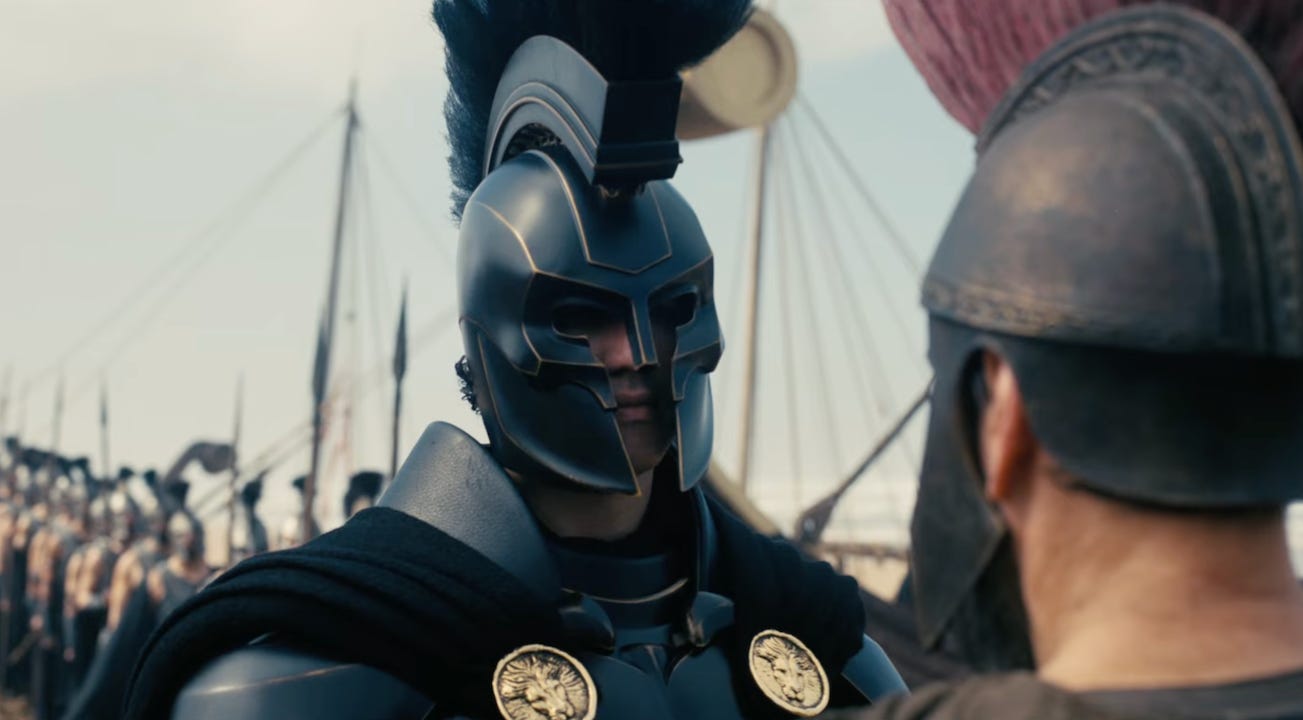
In my endless Archer’s Line quest to cover the media, my eyes tend to stay focused on my own field: radio and broadcasting. But I’m also a lover of movies. And among my favorites is just about anything that comes from the mind of Christopher Nolan.
We finally had the pleasure of taking in The Odyssey at the Television Academy.
There’s no doubt the film is a monumental achievement. And it’s hard not to laugh at the conservative hand-wringing over “woke.”
But at its heart is a very, very old concept: the idea that you should be kind to strangers and beggars because they may be gods in disguise.
It was found in many of the old religions and later made its way into the Old Testament of the Bible, with admonishments to treat the strangers among us as family—to be kind to them and treat them well—“because you were once strangers in the land of Egypt.”
It appears again in the New Testament: Do not neglect to show hospitality to strangers, because they might be “angels in disguise.”
In The Odyssey, it’s referred to as Zeus’s law. It seems that empathy, once upon a time, long, long ago, was seen as a good and godly thing—not, as members of the modern elite like Charlie Kirk and Elon Musk would have it, an evil thing, something that will kill us.
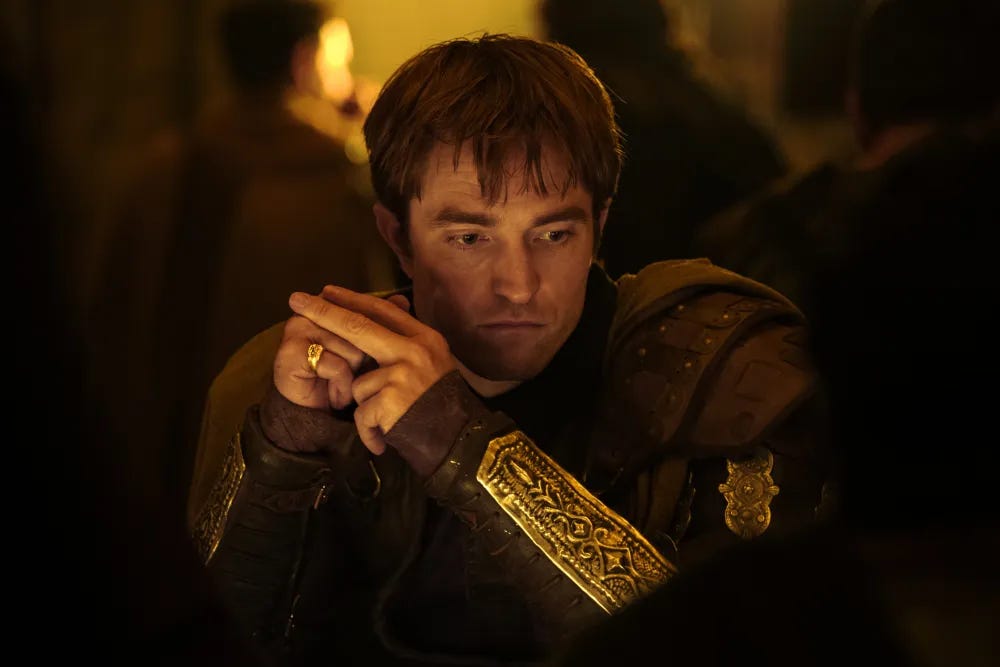
Kirk once said he couldn’t stand the word “empathy,” calling it a “made-up, New Age term” and claiming it does damage compared with sympathy. Musk has referred to “excessive” empathy during podcast appearances as a fundamental weakness that risks leading to civilizational decline.
What a subversion it is to denounce one of the oldest divine admonishments—and one of the most important in the Bible.
There are other themes in the film. There’s the idea that the cost of endless conquest and the expansion of power will consume us. That it destroys the soul to convince yourself you’re the hero, that you’re on the side of goodness and right, even as you conquer and destroy others without an ounce of empathy.
Nolan’s Odysseus and the Greeks weren’t the good guys. Ultimately, the “hero” needed to confess his sins. This was the final act, the culmination of everything that came before.
As such, the film is a condemnation of our times and our culture of dehumanization: the “othering” of minorities, trans people, immigrants—our “strangers”—so that they become easier to dispose of, to send away, to imprison, to put into camps.
It is also a condemnation of our modern “influencer” and celebrity culture, and its semi-religious belief that “I’m special, I’m the best, so how dare you disrespect me!”
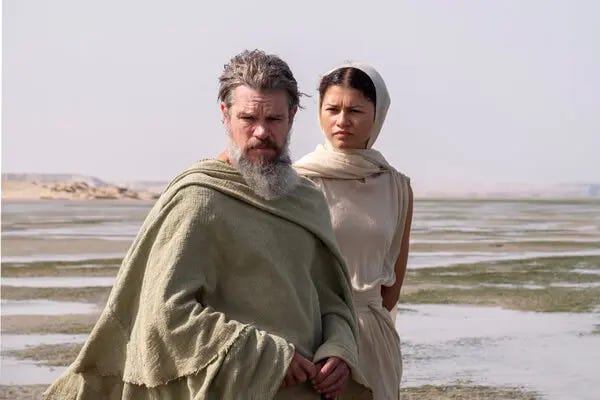
So the reality may be that the Elon Musks and Stephen Millers of the world aren’t as exercised about “woke actors” as they are about a story that presents empathy and kindness toward strangers as necessary for civilization to endure.
Even as they claim to be “saving Western civilization,” they are subverting the very thing that holds civilization together—in fact, the thing that may have created civilization in the first place:
“We’re in this together.”
The message of Nolan’s Odyssey is that we are judged by how we treat those we think are lesser than us. And we should be careful, because those we consider lesser may, in fact, be greater.
Do unto others as you’d have them do unto you.
This may have been among the earliest—perhaps the very first—messages of goodness that turned wandering groups of early humans into civilized societies. We owe everything to that message.
And whenever we forget it, we fall back into barbarism.
Have you seen The Odyssey? What was your take?
One more thing before I go. The new episode of Archer & Feldman is available. Our guest is Garrett Searight from Barrett Media. We’re talking about radio moves in Los Angeles, more deregulation is on the way, and what’s going on with AM radio. Check us out on YouTube and wherever you get your podcasts.
As I left the movie theatre skiddaddling to the ladies' room (the movie was 3 hours long), a lady I passed said to her friend, "Every time I see a Christopher Nolan movie, I feel like I've been through battle!" I turned around and said, "you have!". Everyone laughed, shaking their heads up and down. The movie was intense. From the words to the emotions to the acting and yes, there was a lot of "action" sailing through storms, fighting a monster, fighting with other men.. but the intensity is in the entire journey, and of course, thanks to Christopher Nolan and Dolby Sound - the music. John Leguizamo was superb. Everyone, from Matt Damon, Tom Holland and Robert Pattinson to Anne Hathaway, Lupita Nyong'o, Zendaya, Charlize Theron, and others, the storytelling through their characters, was excellent.
About that Emily Wilson "review" of the film: If a watchmaker wrote a long critique about Dali's "The Persistence of Memory," and complained the painting didn't have any timepieces in it, I would dismiss it, not because I disagree with the assessment, but because the watchmaker apparently was looking at a different painting.