


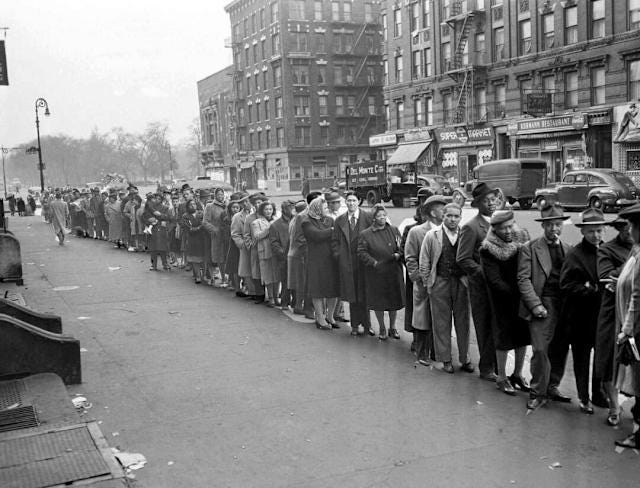
Pundits and politicians are telling us that today’s election is the most important one of our lifetimes.
And it could very well be.
This election, like the last few, finds the nation at a crossroads, with vastly different views about which road we should take. I’m not suggesting this election isn’t important. Every election is.
But we keep getting told that this election is existential. The country is finished if the other side wins. Death, destruction, and the end of civilization await us. But if our side wins, peace and prosperity are right around the corner. Possibly a utopia. With affordable groceries and cute puppies for everyone.
I remember hearing that if Bush won, we'd never have another election. Then Obama. Then Trump. Then Biden. Then Trump again. And somewhere in there, people were warning us what would happen if Hillary Clinton won.
After a few rounds of that, you can be excused if you’re among the few who are starting to feel like it’s campaign hyperbole.
It might get me in trouble to say this, but I don’t think anyone can accurately declare an election the most important of our lifetimes until after the votes have been counted.
Sometimes years afterward. Maybe even a generation or two.
Consider the election of 1860, when Abraham Lincoln won the presidency. Within months, Southern states began seceding from the Union. The Civil War followed, ultimately killing hundreds of thousands of Americans and bringing an end to slavery.
Or 1864, when Lincoln was up for reelection in the middle of that war. His defeat might have changed the course of the conflict, and the future of the United States.
Those were consequential elections. But nobody could know everything that would follow.
And that’s my point. Not every election can be the most important one ever. And the more politicians and pundits insist that it is, the more those words become background noise.
So how long have we been hearing this?
Apparently, forever.
Writer Jason Feifer dug through old newspaper archives and found that in October 1805, the editors of the Philadelphia Aurora were determined to defeat Pennsylvania Governor Thomas McKean.
They warned readers that they were about to participate in the most important election they’d ever been called upon to attend.
That was 221 years ago.
McKean won anyway.
In 1923, a Tennessee newspaper used similar language to describe a local election over funding for road improvements.
Apparently, civilization itself was at stake over potholes.
By the middle of the 20th century, the warning was familiar presidential campaign rhetoric. Harry Truman called the 1952 election the most important of Americans’ lifetimes. His candidate, Adlai Stevenson, lost to Dwight Eisenhower.
Four years later, Truman sounded the same alarm.
Somehow, America had survived the previous most important election long enough to hold another one.
Sometimes the stakes really are enormous.
Consider 1932, when Franklin Roosevelt defeated Herbert Hoover during the Great Depression. The New Deal fundamentally changed the relationship between Americans and their government.
But voters couldn’t have foreseen everything that followed, including Roosevelt leading the country through most of World War II.
That’s the problem with declaring an election the most important of our lifetimes before it happens.
We know what candidates promise. We have some idea of what they’ll try to accomplish.
But we don’t know what history has planned for them.
Is anybody listening anymore?
Political campaigns use fear because fear gets people’s attention.
But does it work?
In a 2024 survey, just 27% of registered voters called that year’s presidential election the single most important of their lifetimes.
Twenty years earlier, the number was 32%.
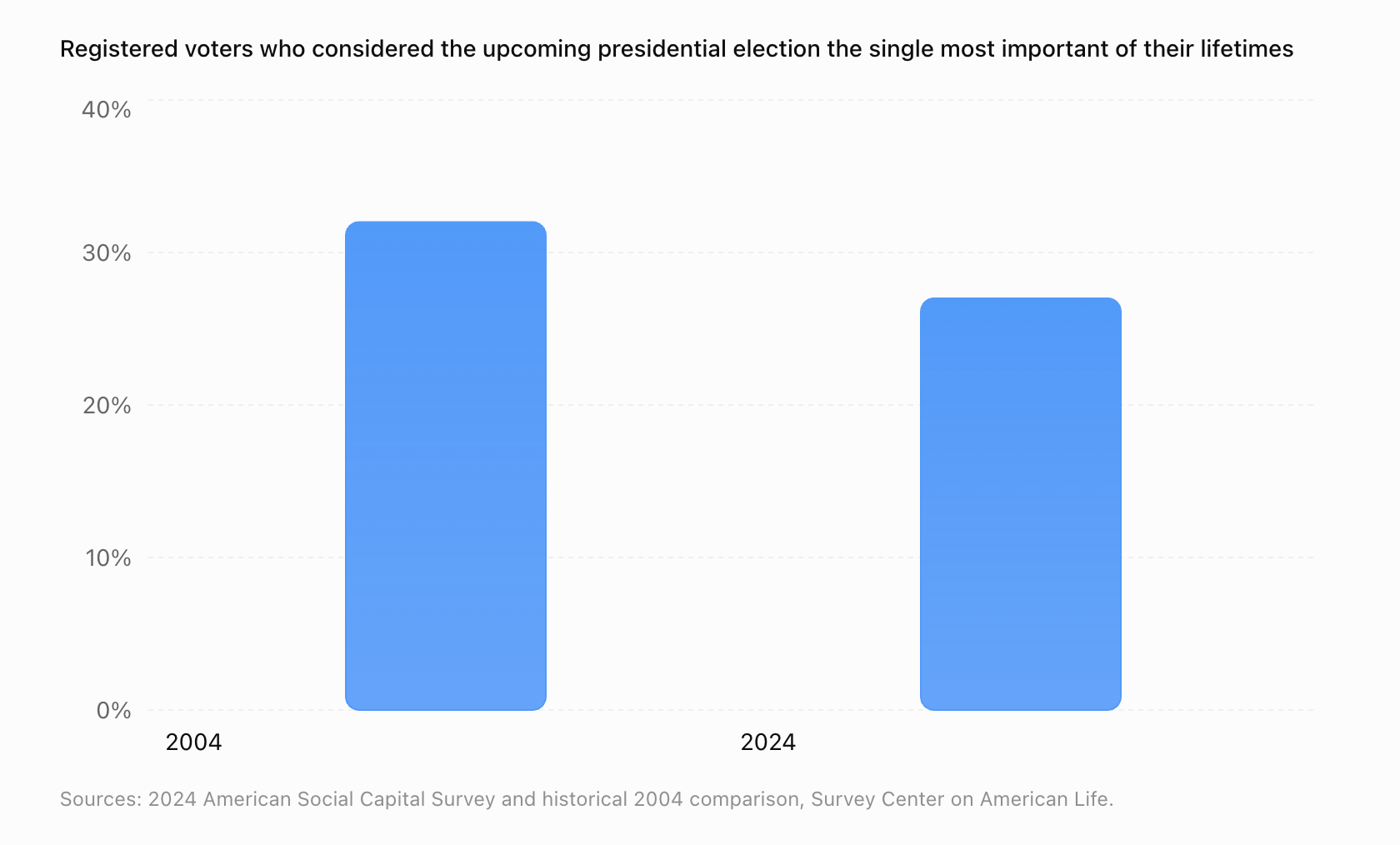
That doesn’t prove Americans are becoming numb to the warnings. But declaring an election uniquely consequential doesn’t guarantee voters will agree.
I wonder how much credibility gets lost every time someone tells us we’re facing the final battle for America’s future.
If every election is the last chance to save the republic, what’s the next one supposed to be?
The last last chance?
It starts feeling like a musical act’s multiple “farewell” tours.
So how important is today’s election?
It’s very important. Everyone who can vote should vote. Our democratic republic depends on engaged voters.
But is it the most important one of our lives? We don’t know yet. We can’t know yet.
The people we elect will make decisions affecting our lives, our communities, and the direction of the country. Some could have consequences lasting decades.
But importance isn’t something we can measure entirely in advance. Time changes our understanding of what mattered, and why.
Maybe today’s election really will turn out to be the most important of our lifetimes.
Or maybe historians will decide that distinction belongs to another one.
Either way, Americans will cast their ballots today, and wait to see what happens.
And 2 years from now, I’m reasonably certain someone will tell us we’re facing the most important election of our lifetimes.
Again.
What do you think? Is this really the most important election of our lifetimes, or have we heard that one too many times? Leave a comment and let me know.
If you enjoyed this little trip through political history, please share it with someone. And if you’d like to help keep Archer’s Line going, consider becoming a paid subscriber. Your support makes a difference, and I appreciate it.