

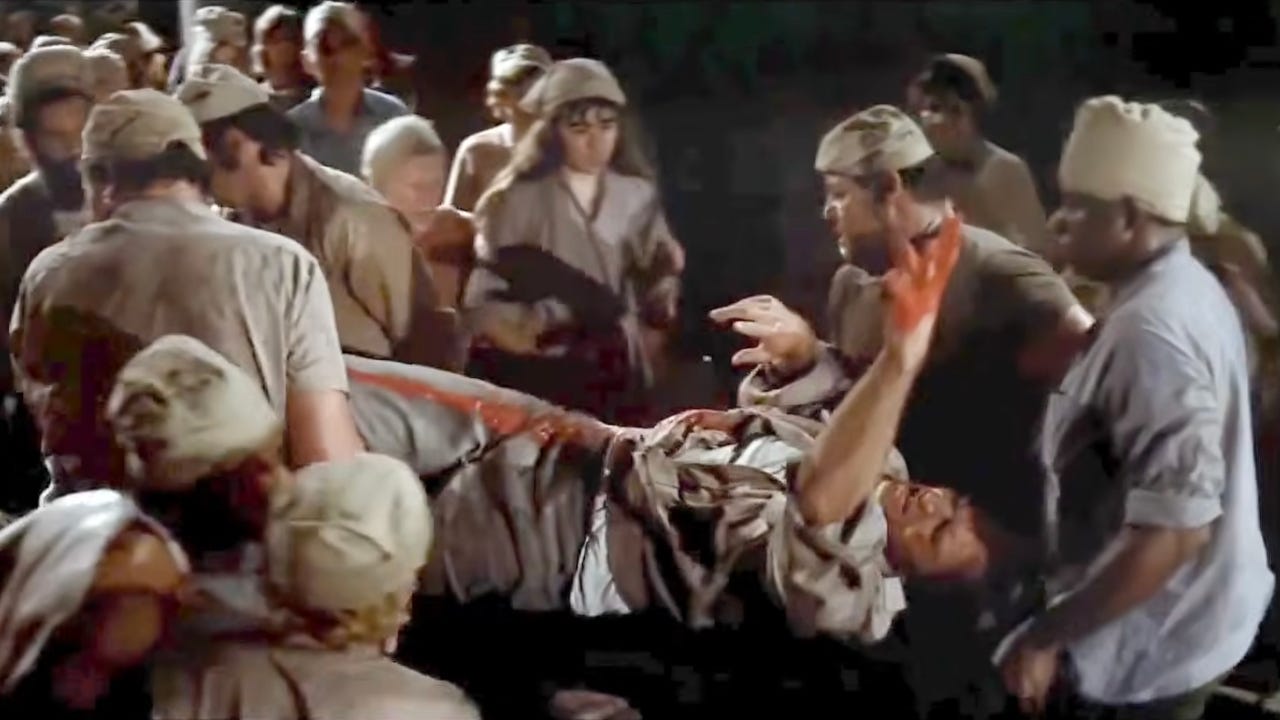
Bad news, everyone.
The world is scheduled to end on Friday, November 13, 2026. That’s less than a month from now, so you might want to hold off on your Christmas shopping.
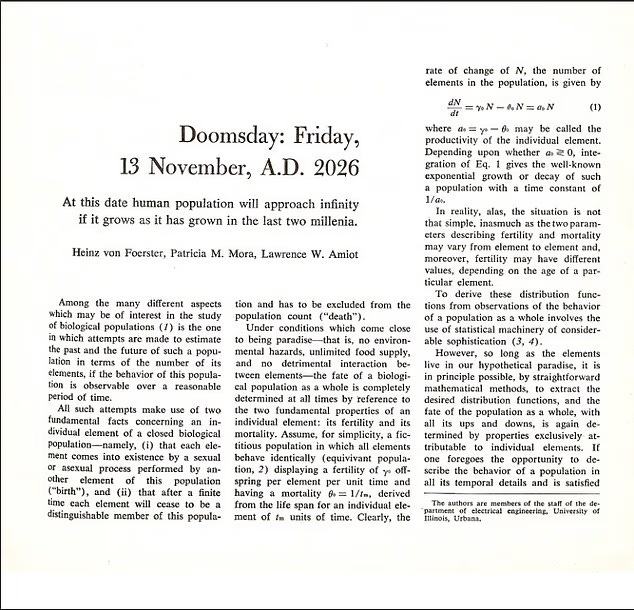
This isn’t something a guy on YouTube dreamed up after watching Ancient Aliens. It’s based on a scientific paper published in 1960, in the prestigious journal Science, by three researchers at the University of Illinois.
The paper had the reassuring title, “Doomsday: Friday, 13 November, A.D. 2026.”
I have to give them credit for picking a Friday the 13th.
Physicist Heinz von Foerster and his colleagues, Patricia Mora and Lawrence Amiot, had examined human population growth over the previous two thousand years and concluded that, if the trend continued, the number of people on Earth would approach infinity on that particular Friday.
Infinity. That’s a lot of people. Like, cars on the 405.
The scientists weren’t predicting that we’d run out of food. They figured human ingenuity would keep agricultural production ahead of demand. No, their concern was that we’d run out of room. We’d reproduce ourselves into a mathematical impossibility.
The paper was based on a mathematical extrapolation, not a claim that an infinite number of people could actually fit on the planet. But it came with a date, and nothing gives a prediction the appearance of authority quite like a date.
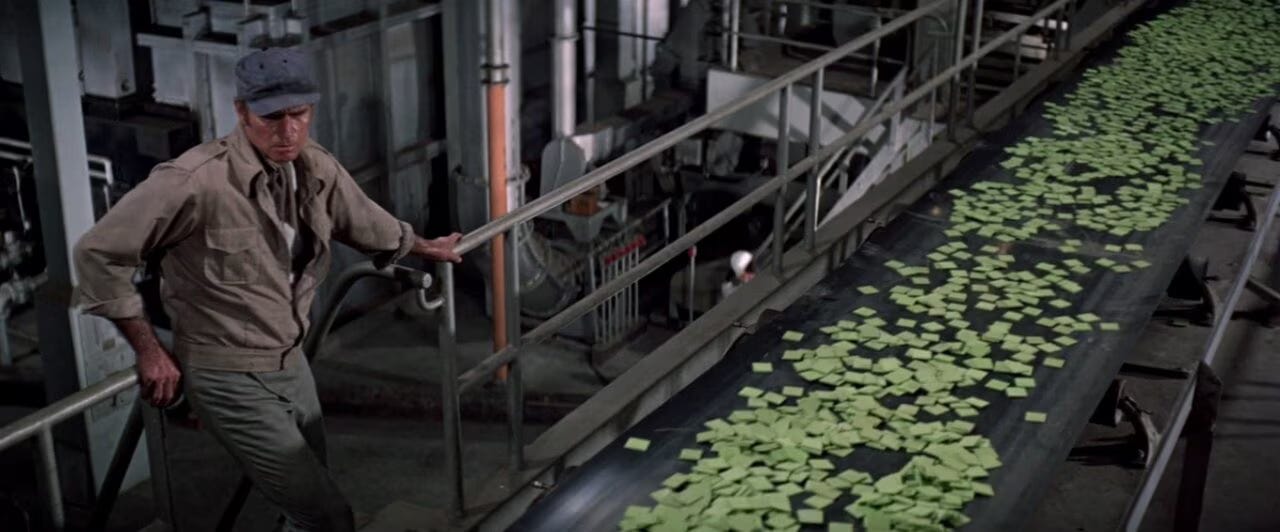
Harry Harrison drew on fears like these when he wrote the novel Make Room! Make Room! It got made into a movie, Soylent Green. Which is a yummy product made from the best stuff on earth. People.
Well, here we are in October 2026. The world has more than eight billion people, traffic is terrible, and finding a parking space remains one of the great challenges of modern civilization. But I haven’t noticed anyone being squeezed off the planet.
In fact, according to the latest warnings, we’ve got the opposite problem.
We’re not having enough babies. Elon Musk has been very concerned about this, and he’s taken personal action. I’ll let you finish that joke on your own.
Apparently, humanity is doomed either way.
The good old days of overpopulation
If you’re of a certain age, you’ll remember that overpopulation was one of the great terrors of the 1960s and 1970s. Along with nuclear war, pollution, and the possibility that the Russians would beat us to the Moon.
In 1968, Stanford biologist Paul Ehrlich published The Population Bomb, warning that population growth would lead to mass starvation. He predicted hundreds of millions of deaths from famine in the 1970s and 1980s.
The book became a bestseller, and Ehrlich became one of the most recognizable voices warning that humanity was reproducing itself into extinction.
The warnings weren’t limited to scientists.
Back to Soylent Green, which imagined the world nearing this endpoint in 2022. (I like to imagine the company slogan: “Here at Soylent Green, we believe people are our greatest asset. And resource!”)
By the time 2022 arrived, New York had plenty of problems, but an endless supply of Soylent Green wasn’t one of them.
Then there was Logan’s Run, which imagined a future society where everyone was put to death at age 30 to help manage the population. The 1976 film was set in the year 2274, so I suppose there’s still time for that one. But the way things are going, governments may be more interested in keeping people alive and working until they’re 90.
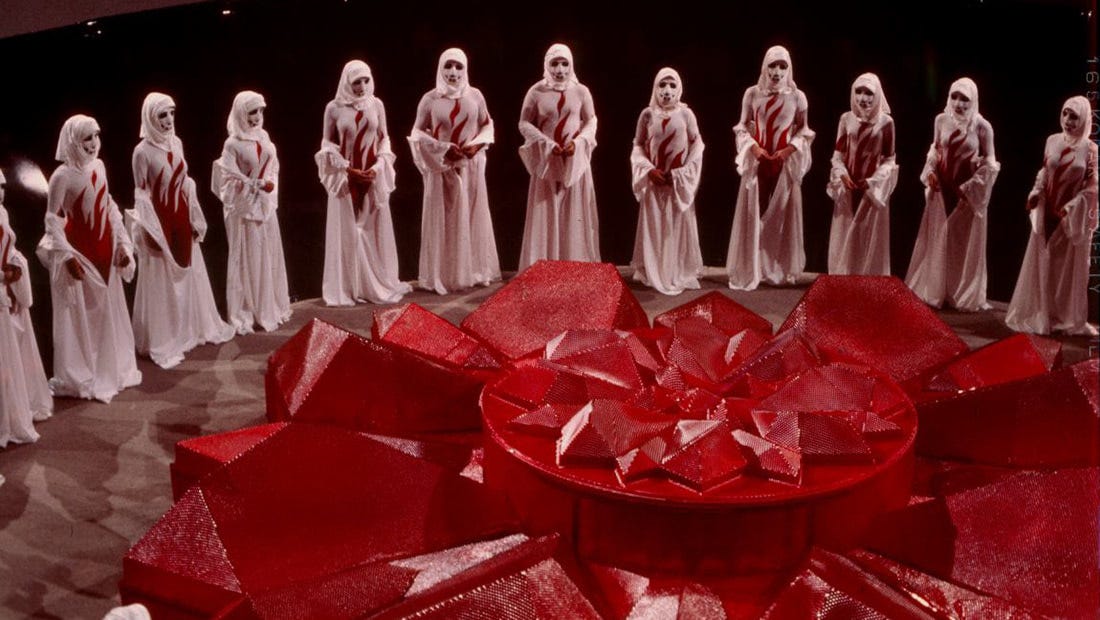
Science fiction has a long and distinguished history of getting the future wrong. We were supposed to have flying cars, cities on the Moon, household robots, and routine trips to Jupiter by now.
Stanley Kubrick’s 2001: A Space Odyssey gave us a permanent space station, a Moon base, and an intelligent computer that turned homicidal. We got the intelligent computers, although they seem more inclined to invent legal citations and recommend restaurants that closed three years ago.
Of course, science fiction isn’t supposed to be an accurate forecast. It’s a way of examining the present by imagining what might happen next. But sometimes those imaginary futures tell us more about the anxieties of the era in which they were created than about the future itself.
And in the 1960s and 1970s, we were anxious about having too many people.
The bomb fizzles
The world didn’t starve. The predicted global catastrophe never arrived.
Agricultural technology improved. Farmers produced more food on the same amount of land. Public health improved, childhood mortality declined, and life expectancy increased.
Norman Borlaug and the Green Revolution helped transform agricultural production in countries that had once faced chronic food shortages. Famine didn’t disappear, of course. It still exists, caused by a combination of poverty, war, political failures, and environmental disasters. But the worldwide mass starvation Ehrlich predicted didn’t happen.
And then birth rates started falling.
As countries became wealthier, women gained greater access to education and employment, contraception became more available, and families moved from farms to cities, the number of children born per woman began to decline.
This shouldn’t have come as a surprise. Demographers had been studying the relationship between economic development and fertility for decades.
But it did make the apocalyptic population forecasts look silly.
China, which spent decades trying to prevent people from having too many children, eventually found itself encouraging them to have more. Its population began declining in 2022.
Imagine spending years telling people they mustn’t have a second child, and then discovering you don’t have enough young people to support the economy.
The new population panic
Today, we’re hearing warnings that declining birth rates threaten the future of civilization.
South Korea has one of the world’s lowest fertility rates. Japan’s population has been shrinking for years. Much of Europe faces similar demographic pressures. And fertility in the United States remains below the level needed to replace the population from one generation to the next without immigration.
The concerns aren’t entirely imaginary. Fewer young workers supporting more retirees can place tremendous strain on pension systems, healthcare, and government finances. Some communities may shrink, businesses may struggle to find employees, and entire industries will have to adapt.
According to the United Nations, the world’s population is expected to reach approximately 10.3 billion people in the 2080s before beginning a gradual decline. By 2100, the projected population is still about 10.2 billion.
Ten billion human beings. That’s hardly an endangered species.
And I can’t help noticing that the people making confident predictions about the year 2100 are doing so in a world where we have trouble predicting what the economy will look like next Tuesday. And don’t get me started on the weather.
Past performance is no guarantee of future apocalypse
The scientists who predicted the population apocalypse of November 2026 weren’t idiots. They had data, mathematical models, and an understanding of historical population growth.
Their mistake was assuming that a trend would continue until it reached an absurd conclusion.
When birth rates are high, we’re warned that there will be too many people. When birth rates are low, we’re warned that there won’t be enough.
The common assumption is that whatever is happening today will continue tomorrow, next year, and for the next century.
Except history doesn’t work that way.
Think about what someone in 1960 would have had to predict about the following 66 years.
The Soviet Union would disappear. China would become an economic powerhouse. The United States would send astronauts to the Moon, stop going, and then spend decades talking about going back. Computers would shrink from room-sized machines into devices we carry in our pockets. Those devices would give us access to nearly all human knowledge, and we’d use them to post cat pics and Russian disinformation.
And a machine capable of writing an essay or holding a conversation would become something you could use while sitting on the toilet.
Try explaining all that to somebody in 1960.
Now imagine predicting the world of 2100.
Will artificial intelligence and robotics reduce the need for human labor? Will medical advances allow people to remain healthy and productive longer? Will the cost of raising children change? Will immigration reshape aging societies? Will new technologies make smaller workforces more productive?
I don’t know. Neither does anyone else.
Maybe we should ask the people having the babies
There’s another part of this debate that troubles me.
In 2025, the United Nations Population Fund released a report finding that millions of people weren’t having the number of children they wanted. Among the reasons were the cost of housing, job insecurity, expensive childcare, and concerns about the future.
Those seem like reasonable things to address.
Make it easier for young people to afford homes. Make childcare accessible. Give families some financial breathing room. Let people decide whether they want children, and how many.
What doesn’t make much sense is treating reproduction as a civic obligation, with governments deciding how many babies are required to keep the economic machinery running.
We tried that in reverse when overpopulation was the great fear. China’s one-child policy and India’s forced sterilization campaigns demonstrated what can happen when governments decide that demographic targets matter more than individual freedom.
I’d rather we didn’t repeat the experiment with the signs reversed.
And maybe a smaller population wouldn’t be such a terrible thing. It could mean less pressure on land, water, housing, and the environment. It might require us to rethink an economic model that assumes perpetual growth.
A shrinking population wouldn’t be painless. Some countries will face severe difficulties, and there are limits to how much technology can replace human workers, especially when it comes to caring for the elderly.
But adapting to demographic change is something human societies have been doing for centuries.
The end is always near
I’ve lived long enough to see quite a few predictions of catastrophe come and go. Nuclear annihilation, global famine, the Y2K computer meltdown, the Mayan apocalypse of 2012, and any number of warnings that the world had only ten years left to save itself from one thing or another.
Some threats were real, even when the worst outcomes didn’t happen. Nuclear weapons remain dangerous and scary because, you know, terrorists. And rogue nations. Environmental damage is real. Climate change isn’t going away.
But there’s a difference between recognizing a problem and declaring that the future is already written.
Maybe the lesson is that humanity doesn’t operate according to a fixed mathematical formula. We change. We invent things. We make mistakes. We adapt. Sometimes we even learn from those mistakes, although there are days when I find that very hard to believe.
Meanwhile, we’re less than a month away from the day three scientists predicted the human population would approach infinity.
If the world survives November 13, we can turn our attention to the next demographic apocalypse.
Rapture, anyone?