

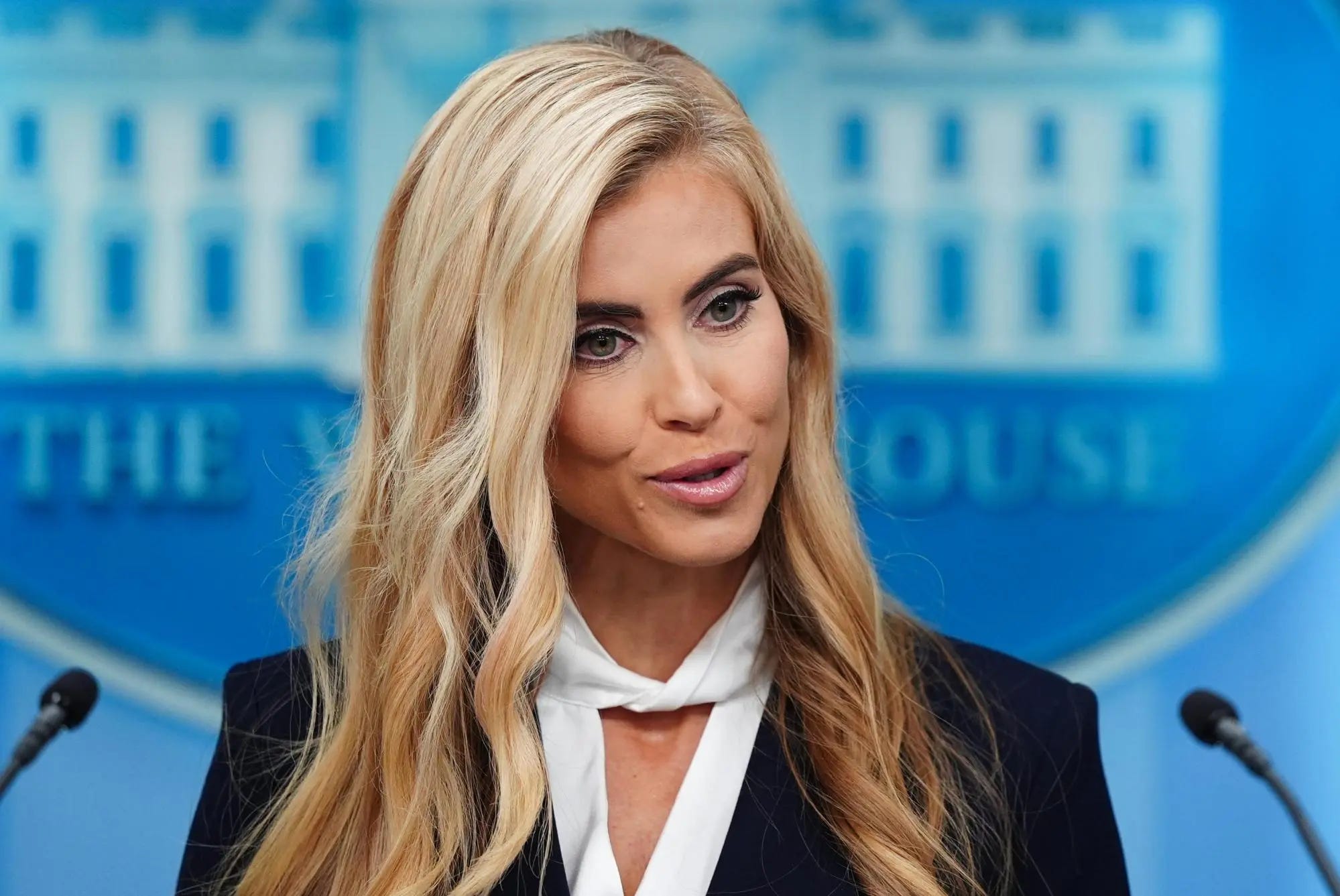
Katie Zacharia may want to hold off on redecorating her White House office. For a couple of weeks, at least.
President Trump’s new press secretary made her debut Tuesday, and the reviews were not kind. Her first briefing lasted just 14 minutes, during which she read much of her opening statement from prepared notes, answered questions from only three reporters, and seemed to struggle with her delivery.
At one point, while talking about her family, she referred to her husband as “my president” before correcting herself. That sort of slip might ordinarily be forgotten by lunchtime. But this was her first appearance in one of the most visible jobs in Washington, and the cameras were rolling. Most of the viewers — let’s be real — were hoping for a gaffe.
(And for sure, I’ve been the gaff-er quite a few times myself in my long radio career.)
The three reporters who got to ask questions represented Breitbart, Fox News, and the Daily Mail, none of which is known for being hostile to Trump. Reporters from other outlets never got a chance.
The reviews from inside the administration may have been worse than those from outside. CNN reported that several White House officials were already questioning how long Zacharia would last. One described her debut as “brutal.”
But the White House issued a statement praising her performance, and Trump himself called it “excellent.”
So there you have it. Depending on whom you ask, Katie Zacharia either got off to a fine start or is already approaching her expiration date.
Of course, one briefing doesn’t make a career. She could settle into the job, become a fixture behind the podium, and remain there until the end of Trump’s presidency. Or she could be looking for work before Halloween.
And that got me thinking about the history of White House press secretaries, a job in which some people have lasted for years while others barely had time to learn where the bathrooms were.
The revolving door
The modern White House press secretary’s job dates to Herbert Hoover’s presidency, when George Akerson became the first person to formally hold the title in 1929.
Since then, the people who have occupied that office have represented an assortment of journalists, political operatives, and people whose chief qualification seems to have been the confidence of the president.
Some had remarkably short careers.
Jerald terHorst — 30 days, 1974
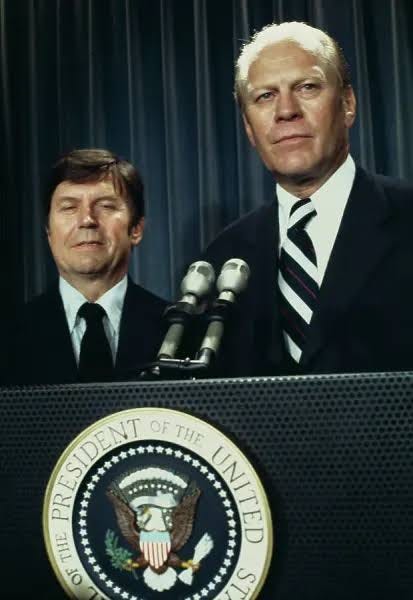
TerHorst, a veteran Detroit journalist, became Gerald Ford’s press secretary when Ford assumed the presidency following Richard Nixon’s resignation on August 9, 1974.
A month later, Ford pardoned Nixon.
TerHorst resigned in protest. He couldn’t defend a decision he didn’t agree with.
He lasted one month, and left as a matter of conscience.
Jonathan Daniels — about seven weeks, 1945
Daniels was appointed by Franklin Roosevelt in the final weeks of World War II. Less than three weeks later, Roosevelt died, and Harry Truman became president.
Daniels stayed on briefly during the transition before Truman installed his own press secretary, Charles Ross.
Daniels found himself working for a different president than the one who had hired him.
Sometimes the boss leaves before you do.
Jake Siewert — about four months, 2000–2001
Siewert became Bill Clinton’s final White House press secretary in September 2000. He inherited a presidency with only a few months remaining, and his job ended when George W. Bush took office in January 2001.
This is one of the problems with comparing press secretaries by tenure alone. A short stay doesn’t necessarily mean someone was bad at the job. Sometimes history makes the decision.
Then there’s a man who has become the unofficial measuring stick for short careers in the Trump White House.
Anthony Scaramucci — 11 days, 2017
The Mooch.
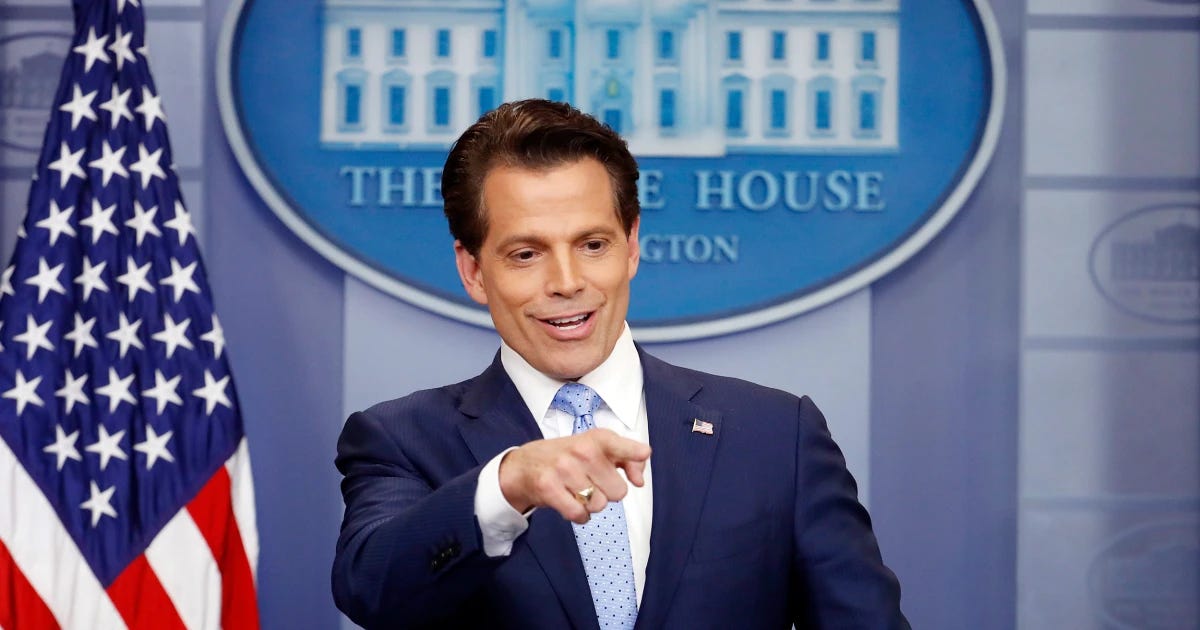
Technically, Scaramucci wasn’t a press secretary. He was White House communications director, which is a different job. But any discussion of short-lived White House communications careers would be incomplete without him.
Appointed in July 2017, he was gone 11 days later, following an extraordinary episode that included an obscenity-filled conversation with a reporter from The New Yorker and a change in White House leadership.
Scaramucci hasn’t forgotten it, either. After Zacharia’s debut, he posted on X that she had made it to one-eleventh of a Scaramucci. He also shared a meme comparing her prospective tenure with the shelf life of a head of lettuce.
Apparently, there’s still some mileage in being the guy who lasted 11 days.
The long-haulers
Now consider the other end of the spectrum.
Some White House press secretaries lasted through wars, recessions, scandals, and political upheavals. Their survival had less to do with their ability to deliver a flawless briefing than with their relationship with the person sitting in the Oval Office.
Stephen Early — 12 years, 1933–1945
Early served Franklin D. Roosevelt from the beginning of his presidency until the final weeks of his life.
Early was there during the Great Depression, the New Deal, the rise of Nazi Germany, Pearl Harbor, and almost the entire Second World War.
He had been a journalist before joining Roosevelt’s administration, and he understood how reporters worked. More than that, he had Roosevelt’s trust, and their relationship went back years.
Early helped manage that relationship for a dozen years. He understood what Roosevelt wanted to say, what he didn’t want to say, and how to keep the White House press operation functioning through some of the most turbulent years in American history.
Twelve years is practically a geological era in White House communications.
James Hagerty — eight years, 1953–1961
Hagerty served for all eight years of Dwight Eisenhower’s presidency.
Like Early, he had a background in journalism and had developed a working relationship with the man he represented before entering the White House. He had handled press duties for Eisenhower during the presidential campaign.
Hagerty helped bring the office into the television age, allowing cameras and recording equipment into presidential news conferences. He understood that television was changing the way Americans experienced politics, and he helped the Eisenhower administration adapt.
He also enjoyed the confidence of his boss. Eisenhower valued organization and trusted people who knew their jobs. Hagerty fit that description.
Marlin Fitzwater — nearly six years, 1987–1993
Fitzwater offers a different example. He served as press secretary under two presidents, Ronald Reagan and George H. W. Bush.
He took over during the closing years of the Reagan administration, when the Iran-Contra scandal had created serious communications problems for the White House. Then he stayed on after Bush became president.
That kind of continuity is unusual in Washington, where a new president often means a new cast of characters.
Fitzwater was a career government public information officer before reaching the White House. He knew the bureaucracy, understood how to work with reporters, and had a reputation for handling questions without turning every briefing into a confrontation.
He also knew that a press secretary needs credibility with two audiences: the president and the people asking the questions.
Ron Ziegler — more than five years, 1969–1974
And then there’s Nixon’s press secretary, Ron Ziegler, who stayed until the bitter end.
Ziegler became the public face of the administration’s response to Watergate. As the scandal unfolded, he defended Nixon, dismissed damaging reports, and found himself trying to explain a collection of revelations that eventually brought down the presidency.
He lasted more than five years, leaving when Nixon resigned.
What makes them last?
There’s a common thread among the long-serving press secretaries. They generally knew their presidents, understood their personalities, and had earned their confidence.
But there’s another factor, and it’s the one that makes the job such a strange profession.
A White House press secretary has to satisfy two masters who frequently have different interests.
The president wants his message delivered. Reporters want answers, including answers the president may have no interest in providing.
A good press secretary has to navigate that conflict without losing the confidence of either side. Too much independence can alienate the president. Too little candor can destroy credibility with the press.
Which brings us back to Katie Zacharia.
She has inherited a job in an administration where the president is his own chief spokesman. Trump talks constantly to reporters, posts his thoughts on social media, and often announces decisions before his communications staff is ready for them.
His press secretary isn’t so much the administration’s sole public voice as one more voice in a very crowded conversation.
Her predecessor, Karoline Leavitt, managed to stay in the job for about 17 months. She was combative with reporters, defended Trump through one controversy after another, and appeared comfortable with the kind of confrontation he often encourages.
Zacharia has barely begun.
The criticism of her first briefing may tell us something about her preparation, but it tells us very little about how long she’ll last. Presidents don’t necessarily judge their press secretaries by the same standards as journalists. What matters most may be whether Trump likes what he sees on television.
Katie Zacharia may yet find her footing. She may become an institution. Or she may join that select company of White House employees whose careers were measured in days rather than years.
If you enjoyed this trip through White House history, subscribe to Archer’s Line. It’s free, and you’ll get more history, politics, science, and the occasional absurdity delivered to your inbox.