

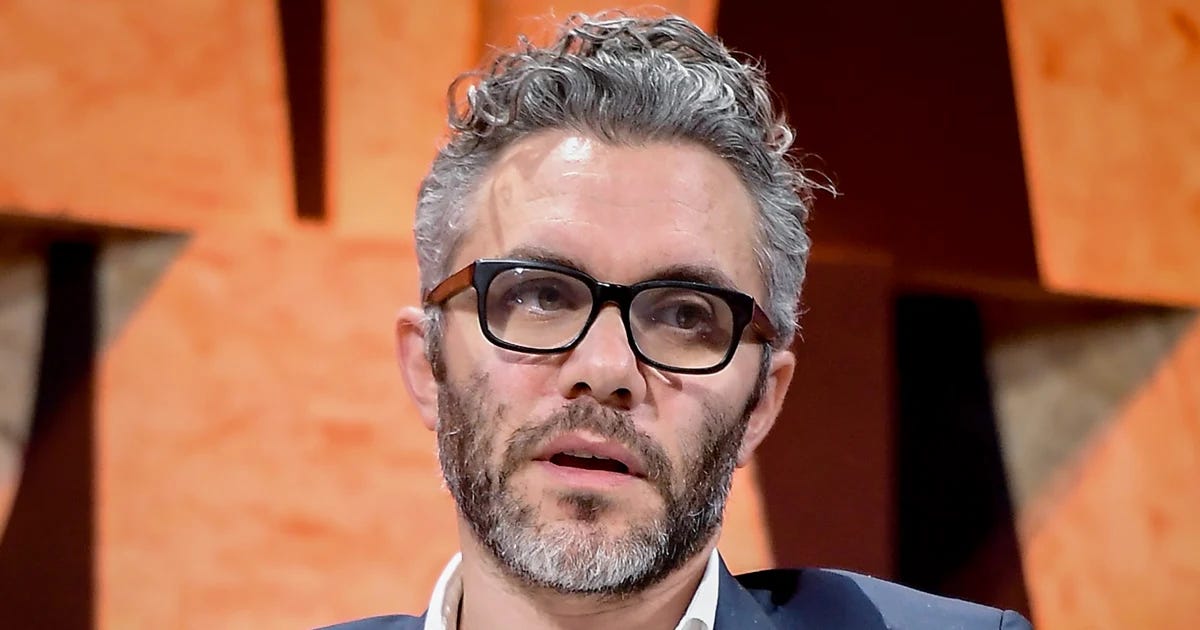
The most successful news program in television just got handed to someone who has never run a television news program.
Again.
First, David Ellison installed Bari Weiss to run CBS News. Now Weiss has installed Nick Bilton to run 60 Minutes. Neither came up through broadcast news. Neither spent years managing network newsrooms. Neither climbed the ladder that generations of CBS journalists spent decades climbing. And now they’re in charge of one of the most successful and influential news organizations in American history.
That would be a remarkable gamble under any circumstances.
It’s even more remarkable because 60 Minutes wasn’t failing. It wasn’t losing viewers. It wasn’t in need of rescue. According to Nielsen, the broadcast’s audience actually grew this season. The program remains one of the few pieces of appointment television in America, drawing millions of viewers every Sunday night.
So naturally, CBS decided to blow it up.
On Thursday, Weiss announced the biggest shakeup in the modern history of 60 Minutes. Veteran executive producer Tanya Simon is out after more than three decades with the broadcast. Correspondents Cecilia Vega and Sharyn Alfonsi are gone. Executive editor Draggan Mihailovich is gone. Senior producer Matthew Polevoy is gone. And in comes Bilton — a former technology columnist, documentary filmmaker, author, and producer. By most accounts he’s a talented storyteller. What he isn’t is a television news executive.
The parallels are hard to miss.
When Weiss arrived at CBS News, critics pointed out that she was primarily known as an opinion journalist. She had built a successful media brand. She had influence. What she didn’t have was experience running a major television news division. Now she’s making essentially the same argument on behalf of Bilton: the outsider, the disruptor, the fresh perspective, the person who sees what insiders supposedly cannot.
We’ve heard this speech before. Usually from consultants. Usually right before layoffs.
Bilton himself appears to embrace the role. “When you take an insider and you put them inside a company, nothing changes,” he said.
It’s an appealing line. It also raises a question: What exactly needed changing?
The argument for disruption works best when an institution is collapsing. When the building is on fire. 60 Minutes was doing the opposite. That’s what makes this moment so strange. CBS executives are treating one of television’s few remaining success stories as though it’s a failed startup in need of reinvention.
And the staff clearly knows what’s happening.
Sharyn Alfonsi publicly accused CBS management this week of blurring the line between editorial independence and corporate interests. Cecilia Vega left with an unusually blunt warning, saying she fears for the future of the broadcast and claiming reporters have become reluctant to pitch certain stories because of concerns about internal repercussions.
The changes come after Paramount’s controversial settlement with Donald Trump over the Kamala Harris interview lawsuit. (A lawsuit, by the way, legal experts say CBS would have won easily.) The changes also come after the resignation of former executive producer Bill Owens. After months of reports describing tension between CBS News journalists and corporate leadership. After repeated accusations that editorial decisions are being influenced by forces outside the newsroom.
And now comes the biggest change yet.
The one institution inside CBS News that historically operated with unusual independence is being brought more directly under the control of the new regime. Bilton insists 60 Minutes will remain independent. Maybe it will. I hope it does. American journalism needs institutions that can still tell powerful people to go to hell.
But that’s not what people inside the building appear to believe is happening.
The concern isn’t that Nick Bilton lacks talent. The concern is that relevant experience suddenly seems optional. Again.
First the news division. Now 60 Minutes.
The people running CBS News increasingly appear to believe journalism is just another content business. Something that can be optimized, disrupted, reimagined, platformed, and scaled.
Maybe they’re right. Maybe Bilton arrives and creates the greatest version of 60 Minutes in its 58-year history.
If he does, he’ll be the first person involved in these changes whose gamble paid off.
If you work in this crazy media business that’s under the biggest strain since the Republic’s founding, how the hell do you deal with the stress and anxiety? Check out the next edition of Archer & Feldman for “Staying Mentally Healthy in the Media Business (Frosted Noodles)” with Habit Coach Ronnie Loaiza — who just happens to be married to yours truly. The video and audio podcasts drop on Monday morning. Bookmark here:
The recent developments at CBS are frightening. Which makes the news of the acceptance speech of Santiago Campos for the CBS Mike Wallace scholarship all the more encouraging.
"While I want to thank CBS News for funding this generous gift towards my education, I want to acknowledge how the recent direction of the outlet stains the legacy of Mike Wallace," he said. Let us hope that we have courageous journalists and citizens of all ages who stand up to the undermining of the free press!