

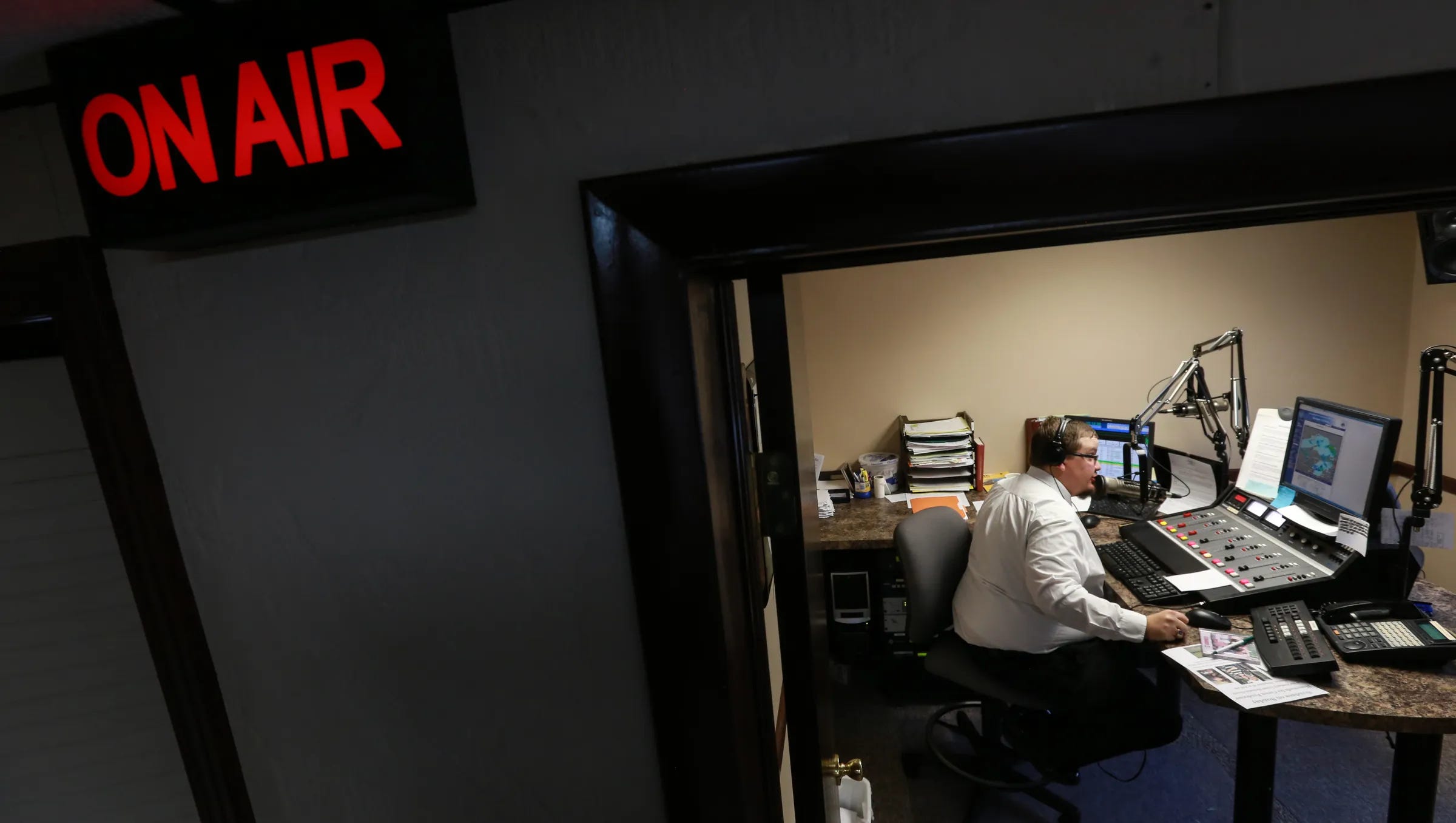
Things aren’t looking good for radio. The audience is shrinking. Listening is at the lowest levels we’ve seen.
But I still believe radio has a future, even taking that into account. More on that in a moment.
First, the bad news.
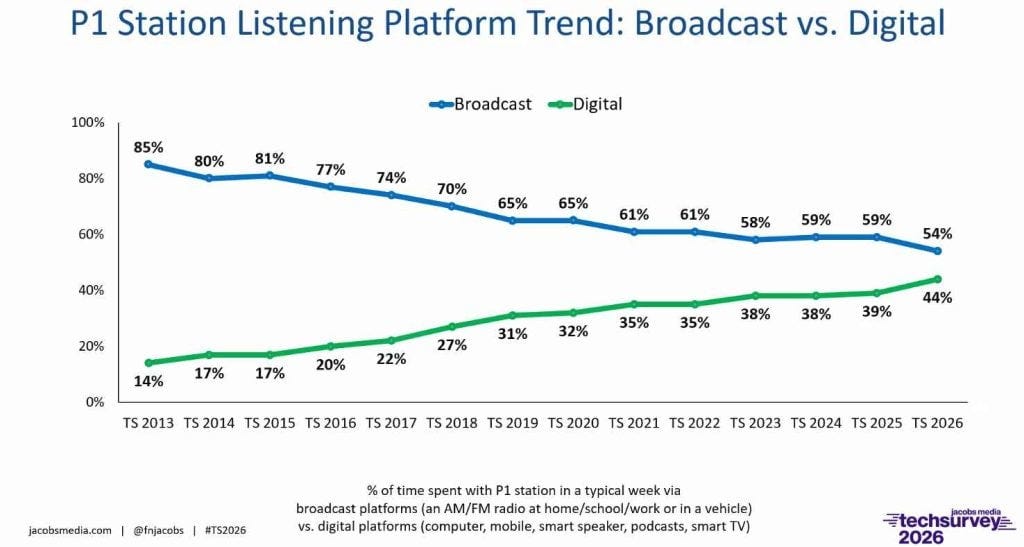
Jacobs Media released its Techsurvey 2026 last week, and if you work in broadcast, you’ll want to sit down. For the first time in the survey’s history, traditional AM/FM listening has fallen to just 54% of the time P1 listeners — that’s the industry term for your most loyal audience — spend with their favorite station. Digital platforms now account for 44%. A ten-point gap.
One year ago, that gap was fifteen points. And if you want to see how fast the ground is shifting, go back to 2013, when broadcast commanded 85% of listening time and digital was an afterthought at 14%. That was a 71-point gap. Today it’s ten. Jacobs Media president Fred Jacobs put it plainly: “The train isn’t leaving the station. It left quite a while ago.”
The demographic breakdown is where it gets uncomfortable. Gen Z has already crossed over — digital edges broadcast among that group 49 to 48. Millennials and Gen X are close behind, with broadcast holding only slim leads. Older listeners still skew toward over-the-air, but they are not a growth audience, and the industry knows it.
Format matters too. Sports radio is the outlier — and not in a good way for traditionalists. It’s the only format where digital has outpaced broadcast outright, 56 to 42. News/Talk holds the most loyal over-the-air audience at 59% broadcast, which may explain why that format has been the last refuge of the big AM stations trying to stay relevant.
The 44% digital number, by the way, isn’t just people streaming on their phones. It includes smart speakers, podcasts, smart TVs, and computer streams. It’s fragmented. But fragmented and growing still beats consolidated and shrinking.
So yes. The numbers are bad. Anyone telling you otherwise is selling something, probably to a board of directors, or to advertisers.
And yet.
I still believe radio has a future. It’s counterintuitive, but the way forward is to embrace the shrinkage.
The future is smaller but more vibrant and hyper-local than the one the big companies have been chasing.
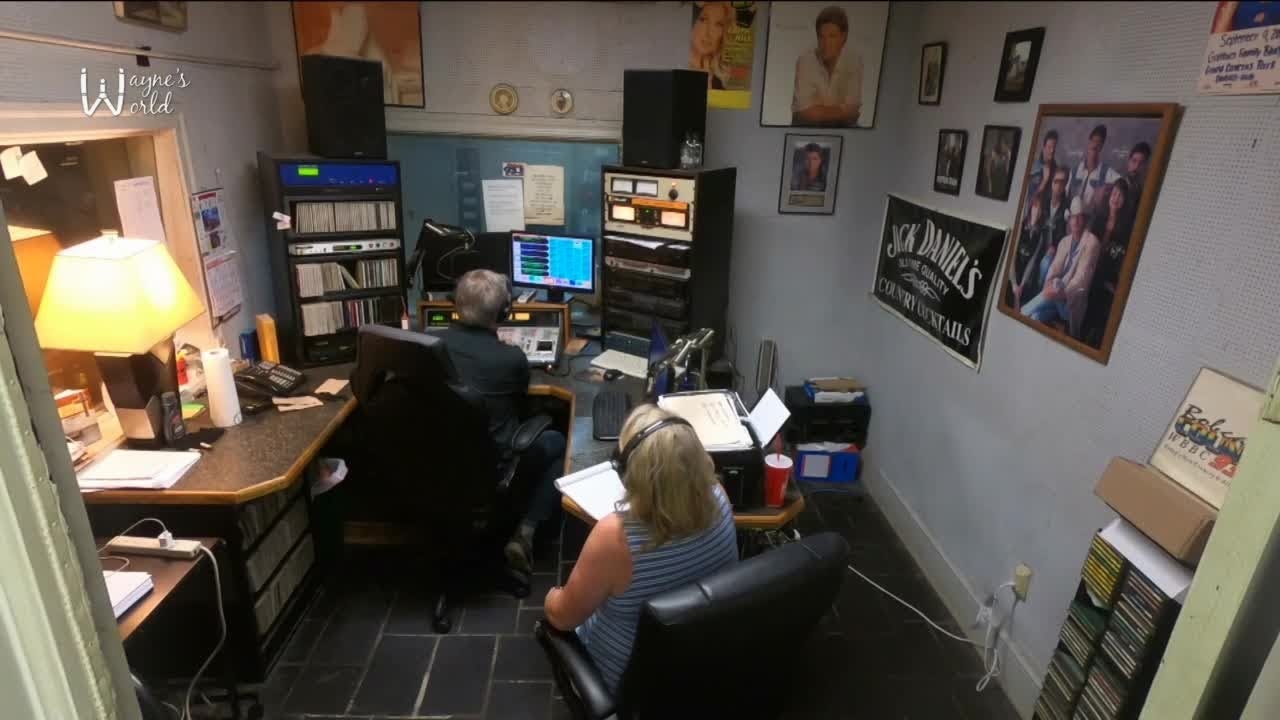
Last year, on a trip to the East Coast, we passed through a handful of small towns. And people there were listening to the radio. Not streaming. Not their own playlists. Radio. They knew the call letters. Most of them could name the person on the air. Many of them said, “It’s the only station I listen to.”
Most importantly for the dollar-watchers, there were lots of ads, almost all of them local businesses.
The future of radio, I think, lives there. In small markets with independent owners who actually know their listeners’ names, and with morning shows where the host went to the same high school as half the audience. That kind of radio doesn’t need to win a digital platform war. All it has to do is be indispensable to the people within 30 miles of the tower.
It’s live, local, and immediate.
And it doesn’t need big new buildings and the latest, most advanced state-of-the-art equipment. Just enough to stay on the air.
The large consolidated groups are not saving radio. They’re just determining how much of it survives their tenure, what they can get out of it before it dies. Not because they’re evil, but because they’re big companies, and they have Wall Street to answer to, not the listener.
They’re caught in a shrinking loop. To survive and service all the debt they’re carrying, they have to cut costs. They have no choice but to keep doing the things that are killing radio — continual layoffs, consolidating managers into bigger regions, and porting a few voices over to as many stations as possible.
But here’s the silver lining in those growing clouds.
Once the mammoth companies have cannibalized each other out of existence, and several of them are well along in that process, there will be more room. More frequencies. More opportunities for people who actually want to do radio rather than simply extract from it.
Hopefully, they’ll be smart enough to lean into the smaller model. They’ll find the smaller model easier to embrace by local audiences, who will be loyal because they feel like that radio station is theirs.
The Jacobs numbers are a warning for the big companies and their shareholders.
They’re not necessarily a warning for the station in your county that still airs the local school board meeting.
That station might outlast all of them.
I've been inside this business for most of my life. I know where the bodies are buried. Subscribe to Archer's Line — and I'll keep showing you where to look.
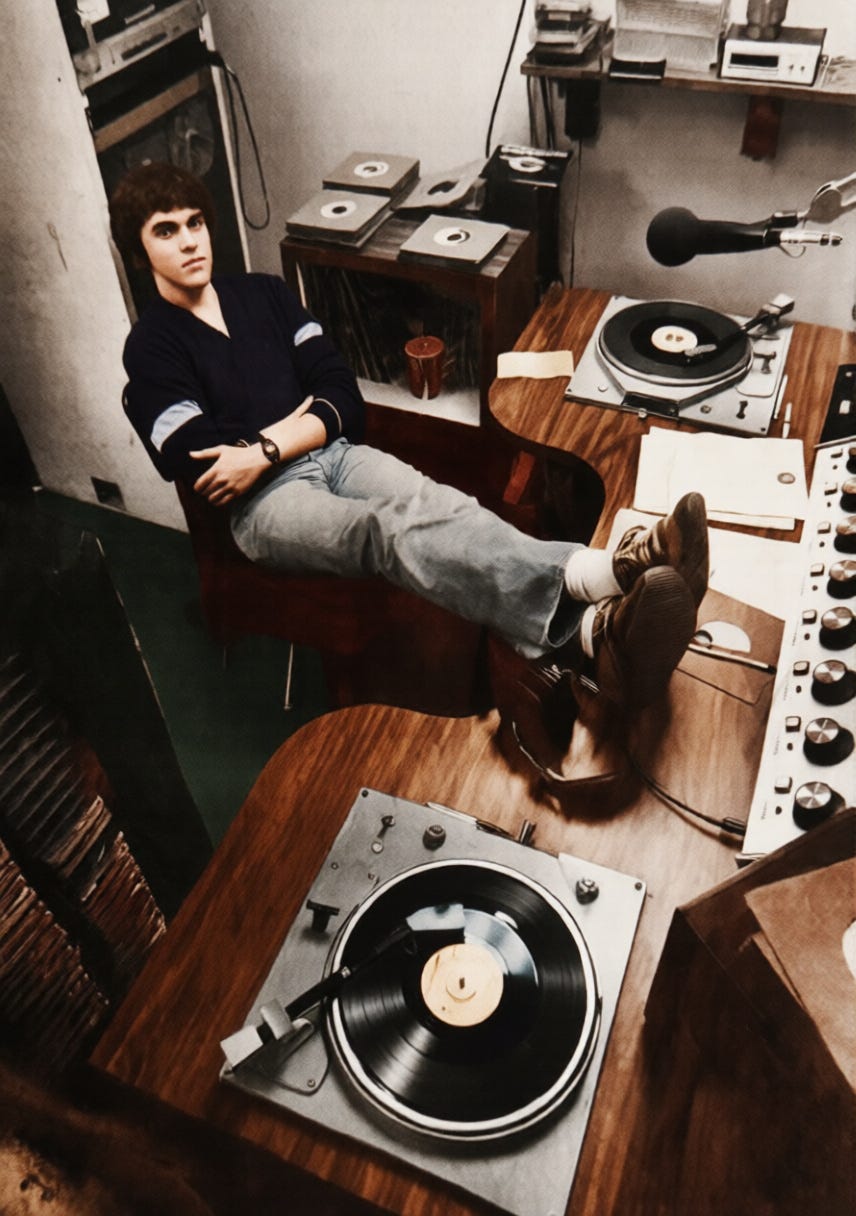
Someone joked about that old picture of me, that I should take my feet off the console. What's funny about that is, this was the pic taken of me by the local paper about me being a 'teen deejay' on local radio. And the first thing the boss yelled at me when the paper came out was, "Take your feet off the console!"
you'd be pleasantly surprised visiting the midwest as well.