



Sometimes I get lost in an old science fiction movie classic, like Them!, War of the Worlds, and Invaders from Mars.
Cheesy as they were, there’s a major cultural touchstone to notice in them.
In movies from that era, scientists, the military, and, more importantly, the federal government were always the good guys. Never to be questioned, never to be doubted. They were always competent, smart, knew what they were doing, and always wanted to do the right thing.
Then, everything shifted. Most historians say the turning point was Watergate.
Nowadays, trust in the federal government, all three branches of it, is at historic lows. The numbers are only a tiny bit better along party lines — if one’s party is the one in power.
In short, Americans don’t trust and don’t like the national government.
But some government still has the trust of the people: local and state. And therein lies a big opportunity for local radio — a medium that still has the trust of local viewers and listeners.
More on that in a bit. First, let’s look at how bad things are at the national level.
Nobody trusts Washington anymore
Gallup released its annual survey of Americans’ trust in government earlier this month, and the numbers are pretty dismal.
Only 33% of Americans say they have a great deal or fair amount of trust in the executive branch. That’s the presidency, in case you slept through civics class.
Congress does even worse, at 28%.
The judicial branch comes out on top, relatively speaking, at 46%. But that’s also the lowest level of trust Gallup has recorded for the courts.
We have a government that spends trillions of dollars, maintains the world’s most powerful military, regulates everything from commercial aviation to the ingredients in your breakfast cereal, and has the authority to launch nuclear weapons.
And two-thirds of the country doesn’t trust its ability to handle the job.
It wasn’t always this way.
In 1958, when Dwight Eisenhower was president, 73% of Americans trusted the federal government to do the right thing most or all of the time.
By 1980, that figure had fallen to about a quarter of the population.
The decline didn’t happen overnight, and Watergate wasn’t entirely responsible. Vietnam had already done a considerable amount of damage. The Pentagon Papers revealed that successive administrations had misled the public about the war. Watergate reinforced the suspicion that the people running the country might not be entirely truthful.
And that was before the Iran-Contra affair, the Iraq War, the financial crisis, and the political circus we’ve been watching for the past decade.
Of course, Americans have always been skeptical of politicians. That’s practically a national pastime.
But there’s a difference between believing politicians are occasionally dishonest and believing the entire machinery of government can’t be trusted.
And there’s another disturbing number in Gallup’s latest survey.
Only 51% of Americans trust their fellow Americans to make sound democratic judgments.
In 1976, that number was 86%.
Apparently, we’ve reached the point where we don’t trust the government, and we’re not particularly enthusiastic about the people who elect it, either.
Including, presumably, ourselves.
Something changes closer to home
Now here’s where the numbers get interesting.
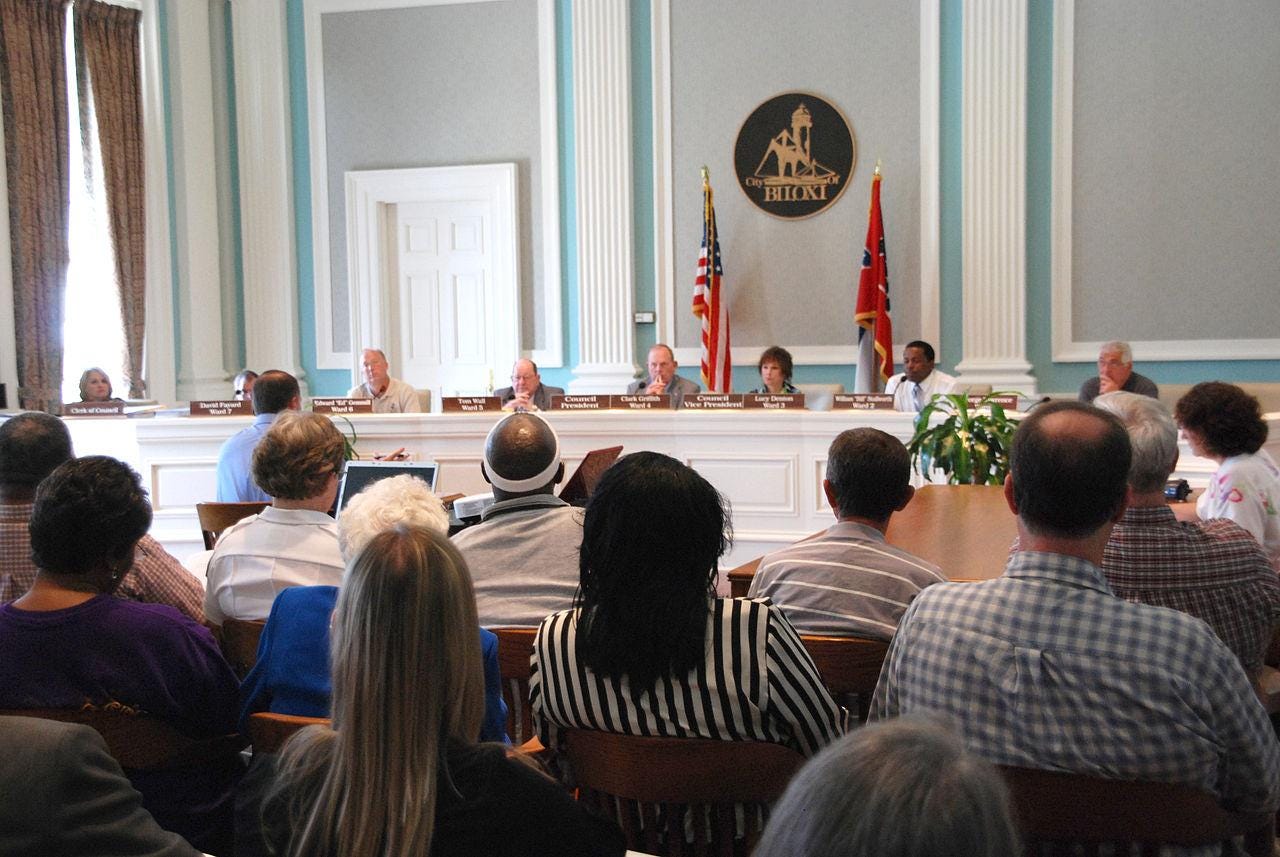
While trust in the federal government has been collapsing, trust in local government has remained relatively stable. Gallup found that 67% of Americans trust their local governments. State governments score 55%.
And unlike Washington, local government enjoys something resembling bipartisan confidence.
Among Democrats, 74% trust local government. Among Republicans and independents, it’s 64%.
Why?
I suspect part of the explanation is that local government is something we can actually see.
You may never meet the president, your senators, or the people making decisions at the Pentagon. But you might run into your mayor at the grocery store.
Your city council decides whether the road outside your house gets repaired. Your county government handles property taxes, parks, and other services. Your school board makes decisions that directly affect your children.
If the garbage doesn’t get picked up, you know whom to call.
Try getting that kind of response from Congress.
This doesn’t mean local government is inherently more honest, competent, or deserving of trust. Anyone who’s spent much time covering City Hall can tell you that local officials are perfectly capable of making a spectacular mess of things.
But their decisions are closer to the people who live with the consequences.
