

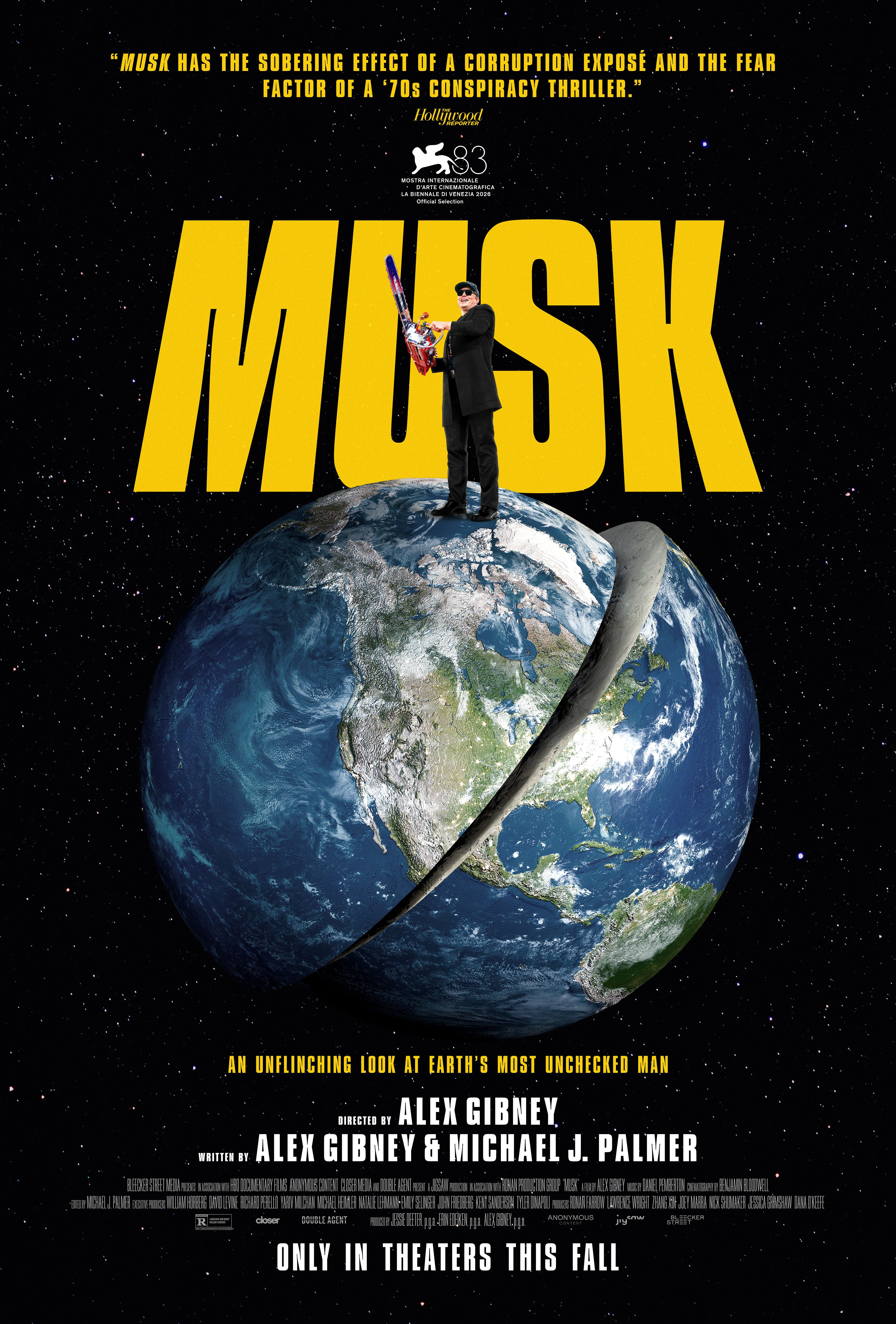
The “Musk” documentary is disappearing from theaters, and people have noticed. A lot of people.
Likes and shares don’t sell tickets. But they tell me plenty of folks want an answer to what should be an easy question: Where can I see this thing?
According to Showbiz411’s Roger Friedman, Gibney’s film opened in four theaters on October 9, widened to 472 on October 16, and a week later was gone from almost all of them. Friedman also heard from people whose screenings got canceled.
All the elements of a conspiracy theory are here: A movie about one of the most powerful men on Earth goes missing, the distributor changes hands, and the social platforms won’t sell it ad space.
Start with the billionaire. On October 15, Outerlight Entertainment announced it was buying Bleecker Street. Outerlight is backed by eBay founder Pierre Omidyar, so “a billionaire bought the distributor” has a basis for running up the conspiracy flag, though strictly speaking the buyer was his investment outfit.
What doesn’t get mentioned is in TheWrap’s report on the deal: Bleecker Street keeps control of its films, distribution, marketing and daily operations, and the existing bosses stay put.
Also, Omidyar and Musk aren’t exactly pals. Even Friedman’s piece, the one asking where the movie went, says so.
Two rich guys are not automatically on the same team. And a sale followed by a shrinking release doesn’t prove the new owner buried the film.
Now the box office. The Numbers has “Musk” taking in $314,489 across 472 theaters that October 16 weekend. That’s about $666 a screen for the whole weekend. A number with a reputation, and this time it earned it.
The film also runs 225 minutes. Three hours and forty-five minutes. That’s a big ask of a moviegoer and a bigger one of a theater manager staring at a schedule. If a movie is eating four hours of screen time and selling a handful of tickets, nobody needs a call from a billionaire to swap it out. The spreadsheet makes that call.
That doesn’t tell us who pulled which booking, or explain every canceled show. But any honest version of this story has to leave room for plain old business.
What happened to the ads is a more interesting story.
Before the film opened, Meta, YouTube, TikTok and X reportedly turned down paid ads for it. To be clear, that’s about buying promotion, not whether a plain ol’ user like you and me could post about the movie or share the trailer.
Meta and YouTube backed down. TheWrap reported that Meta called the rejection an error. YouTube said its system had temporarily restricted the ad, cleared it after review, and that the trailer was watchable the whole time.
TikTok went a step further, suspending the film’s ad account, then restoring it. Also an error, so it says. International Business Times reported that reversal, and noted Meta and YouTube had already lifted theirs.
X, owned by the man the movie is about, reportedly refused as well.
So “social media wouldn’t let them promote it” leaves out a lot of follow-up info. Three of the four said oops and moved on.
But a door opened late is still a problem. A movie gets a few weeks to find its audience. Lose your ads for part of that window, and you don’t get the time back when somebody fixes a setting.
Did it cost ticket sales? I don’t know, and neither does anyone claiming certainty in either direction.
What could clear all this up is Bleecker Street telling us its release plan, what happened with the canceled screenings, and where the film goes next. The platforms could tell us why ads for a documentary kept tripping their wires, and what keeps it from happening to the next one.
Let’s take them at their word: This was an error Meta, YouTube, and TikTok experienced for exactly the same movie. Okay. They did finally “fix” it and change course, but at the cost of vital early promotion.
But what if it was on purpose? No one can prove it was, unless someone leaks emails or memos showing a coordinated effort. But neither can anyone prove it wasn’t.
And that’s catnip in today’s conspiracy theory culture, where narratives live and grow based on a lack of evidence.
Meanwhile, I’d still like an answer to the question that started all this.
Where can I see the movie?
Questions are easy. Getting past the obvious answers takes work. If you value a closer look—even when the facts complicate a good story—subscribe and join me.