

KCBS traffic reporter Kim Vestal retired Friday, ending a radio career that spanned 47 years.
I thought: How lucky!
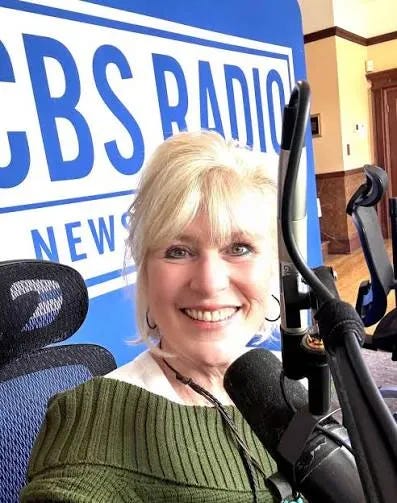
I’ve been in radio for 46 years now, and I really thought my position with KNX would be my last. I thought I’d retire from there.
I could see the finish line. It was still a few years down the road, sure, but it was within sight. I’d been steady. I’d been there more than 10 years. I thought the rest of the way would be smooth.
But, alas, there were ownership changes. Management shuffling. News directors and colleagues being shown the door.
Then the flying fickle finger of fate finally focused firmly on Yours Truly.
One Monday morning, before I headed to work, a Zoom invitation appeared. A Zoom call with the boss. I’d been around long enough to know what that would be about.
I’d already seen a few people retire from KNX, which had been oddly comforting. Here was a gig you could last long enough to retire from. Tom Haule. Mark Austin Thomas. Dick Helton. Vicky Moore. I really thought I’d make it, too.
But these days, opportunities to retire from a radio station come few and far between.
So congratulations, Kim Vestal. You made it.
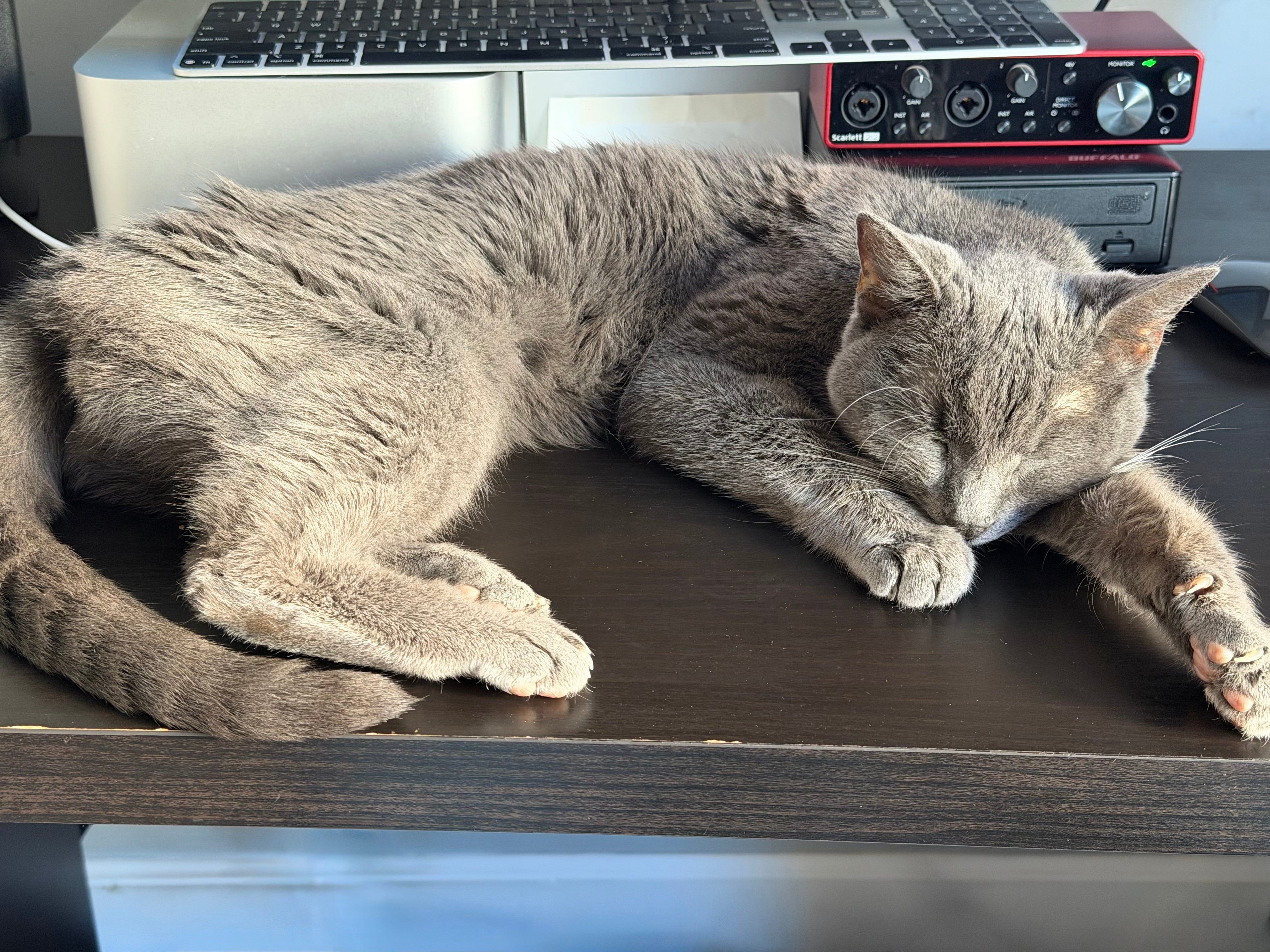
I’m still doing radio work of a sort. Some voice-over work. Some podcasting. Some news anchoring for Remote News Service. As always, I’m still talking into a microphone, often with a cat sitting on the desk directly in front of me.
But I probably won’t ever get to retire from a radio station.
Instead, my career has included the inevitable string of sudden meetings, sudden calls into the boss’s office, and sudden yawning trap doors opening beneath me.
The conversation usually begins with some variation of: “We’re moving into the future, and unfortunately, it will be a Rob-less future. Good luck!”
To be fair, there were also a few times when I left of my own accord.
The first time wasn’t a layoff. It was a firing. An honest-to-gods, “Get out of here. You’re gone!”
It was my first radio job. I was still a teenager, and I had kicked a hole in a wall. That’s not a metaphor. I kicked a hole in the wall. I don’t even remember what had pissed me off.
The station hired me back not long afterward, when I went to the boss and offered to pay for the damage. It was more like a family at that small-town station, and that’s how things were done then. This was when lots of small companies still owned most of the radio stations.
The next time, it was me quitting. I left that station and went to Stuart, Florida, where I moved from nights to afternoons and finally to mornings.
I left that one, too, along with my first marriage, which had blown up because of my own stupidity. That’s a story for my memoirs.
Career-wise, though, the flying fickle finger of fate had taken a fortunate turn. A consultant heard one of my airchecks and contacted a program director in Orlando.
This was the big time for me. A real radio market. An actual city to live in.
I had a good, long run at an adult-contemporary station, but that one ended with a layoff. A new program director arrived with a new direction he wanted to take the station. That direction was away from me.
Well, I should say that was the end of Part One.
I landed a part-time shift at the competitor across town. You could do that in radio back then, in the Before Times. Then another new program director showed up at my old station. He heard me and called. He wanted to know if I’d be willing to come back.
Why, sure. I never believed in burning bridges.
A few weeks later, the damn station announced it was changing formats, from adult contemporary to rock. And I thought, “Gods dammit, here we go again.”
I was seen as an A/C guy. There wasn’t much confidence that I could make the move to rock. But I begged. I made several demo tapes. I fought for the job.
I wound up being the only full-time air personality to survive the format change.
That was the beginning of who I became on the radio. It was where I found myself and my real voice. I was finally being me instead of somebody else’s idea of what a radio personality should be.
A few years later, guess what? I was shown the door.
But I handled myself like a professional and apparently impressed the bosses, along with a couple of other people at the company. They offered me an opportunity in Miami.
It was a brand-new station with a brand-new format, something they explained to me as “alternative rock for women.” I would be the only male jock on a staff of women. The idea was that I’d be the squeaky wheel, the personality who caused trouble.

I was in absolute heaven. If Orlando was where I found my voice, Miami was where “Archer” came to be. I could be myself. Unfiltered. The boss and the consultant loved what I did. I had more fun than I’d ever thought possible.
Then the station was bought by one of those companies gobbling up properties after the Telecommunications Act of 1996.
Uh-oh. Here we go again. Again.
A new program director walked in the door. But guess what? He liked me as much as the other guys had. We became very good friends over the next couple of years.
Then I met a woman, and she wanted to move to Los Angeles. So I quit.
The company tried to keep me. They offered me the chance to program one of their other stations. They guaranteed me employment for at least two years.
I turned it down because I thought love was more valuable.
Turns out I was wrong.
I moved to Los Angeles anyway, driving across the country with my soon-to-be new wife and no job lined up. Nothing at all, except for a former program director I’d worked with who told me: “I don’t really have anything, but give me a call when you hit town.”
I spent a week with white knuckles on the steering wheel. That was 1999. And that’s how I came to Los Angeles.
That marriage didn’t last, but the move to L.A. took me to heights in radio I had never expected to reach.
It also brought several more layoffs, some serious gut punches, and a few more trap doors opening beneath my feet.
But those are stories for Part Two.
You're a radio gypsy, just like the rest of us. You carry your voice and your skills in a backpack as your career takes you on a tour of America. You chose this life. We all knew ahead of time that these radio jobs were just transient. But, in my case, I always HOPED my next radio gig would be my last. I thought I would settle in somewhere and become a voice that would spend years making just one market my home. What folly! But we learn.
My favorite industry joke is:
What's the definition of optimism?
A PD who buys a house.