Who’s Next? After Venezuela, Trump Turns His Gaze Elsewhere
Mexico, Cuba, and the dangerous logic of a presidency that no longer respects borders
The dust hasn’t even settled in Caracas, and already the architects are scouting their next stage.
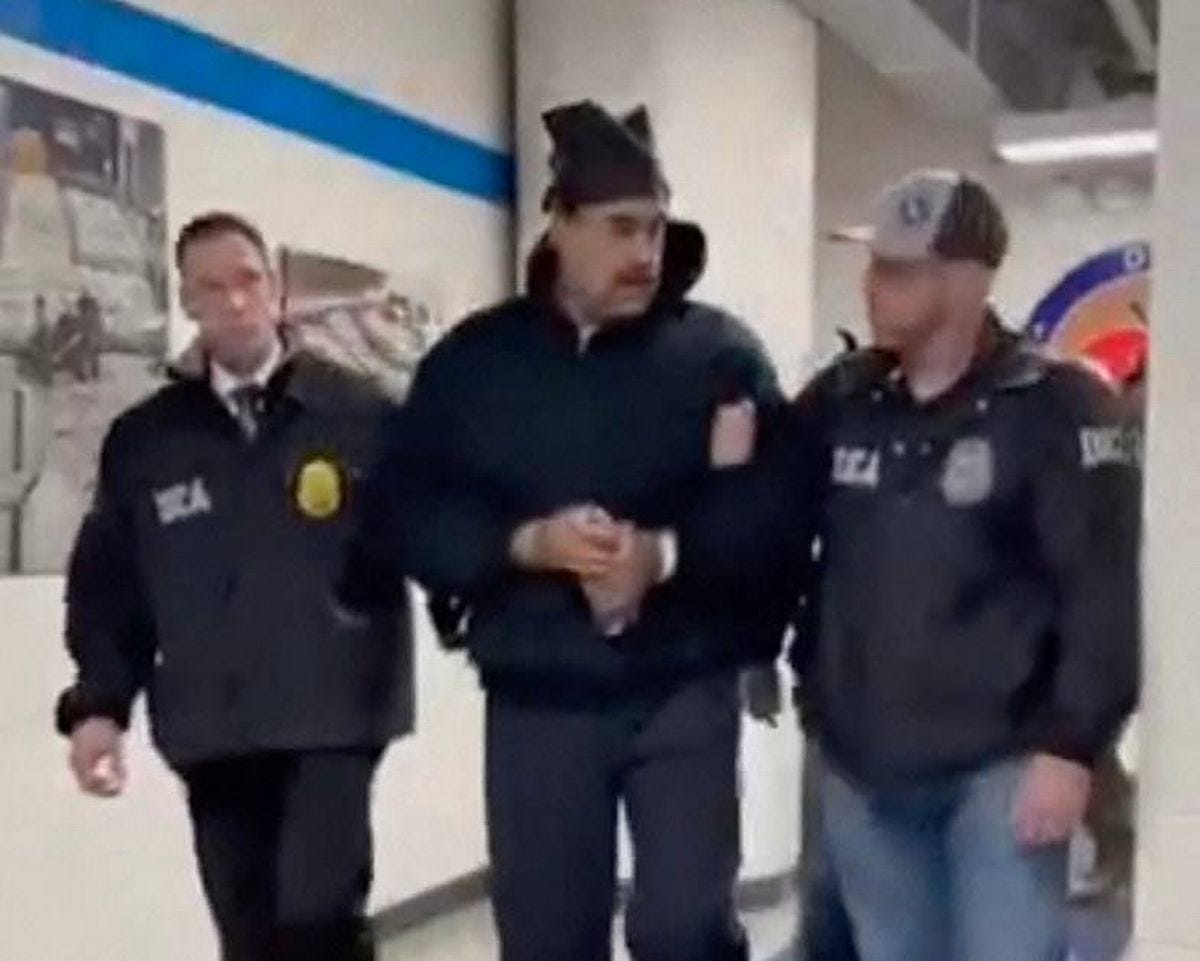
After the pre-dawn, made-for-video abduction of Nicolás Maduro and his wife, Cilia Flores, state media and Trump-friendly influencer feeds slid into triumph mode. If the United States can simply pluck a sitting head of state — election thief or not — out of his fortress and fly him to Manhattan in a Nike tech fleece, then the old rules of sovereignty aren’t bent. They’re gone.
So who’s next?
President Trump has rattled the sabre at Mexico, floating military action there under the familiar banner of “going after the cartels.”
That may be a tougher sell than the White House expected. If invading Venezuela and turning it into a spectacle was supposed to juice Trump’s poll numbers, it didn’t work. Mexico could pose the same problem — only louder, closer, and harder to spin.
Trump has also been belligerent about Colombia, Greenland, Iran, even Canada, but those threats land even worse politically. And for the first time in a while, some usually reliable supporters in Congress and on social media have shown signs of pushing back.
But there is one country that might be easier to market.
On Sunday, Secretary of State Marco Rubio appeared on Meet the Press and delivered the warning everyone expected. Asked whether Cuba was the next domino, Rubio didn’t dodge.
“I think they’re in a lot of trouble, yes,” he said — calling the Cuban government a “huge problem” and the main force propping up Maduro.
The message barely bothered to hide between the lines: if we got away with it in Venezuela, why stop there?
The “Trump Corollary” and the Florida vote
Action against Havana has long been the holy grail for a powerful wing of the Republican Party. For Rubio and the South Florida base, toppling the Castros — or whoever inherited the machinery — isn’t just policy. It’s a multi-generation feud.
For Donald Trump, the motive looks different.
Heading into 2026, the administration is bleeding. Trump’s approval rating has sunk to a record low of 38 percent. Americans are choking on a cost-of-living crisis. And renewed scrutiny of the Epstein files — fueled by newly released photos and a botched investigation — has even parts of the MAGA base uneasy.
A high-stakes “liberation” of Cuba would be a perfect distraction. It’s a ninety-mile-away adrenaline shot that would dominate the news cycle, bury the Epstein coverage, and frame every critic as a “socialist sympathizer.”
It would also give cable news something else to talk about besides Trump’s cognitive tests, which seem to happen with suspicious frequency.
The grand bargain: a deal with Moscow?
The most cynical theory circulating in Washington right now is a classic spheres-of-influence swap.
Russia’s response to Maduro’s capture has been oddly muted. Yes, Moscow issued the usual statement about “violations of sovereignty.” But there’s been no mobilization. No naval theatrics. No serious retaliation.
The quiet talk is that a deal was struck: the United States eases off in Ukraine — effectively conceding the Donbas and a frozen conflict — and Russia gives Washington free rein in the Western Hemisphere.
If that’s true, we’ve slid backward into a nineteenth-century world. The “Trump Corollary” to the Monroe Doctrine tells the globe that the Caribbean and South America are once again Washington’s backyard. Russia is happy to trade Venezuela if it locks down its own “near abroad” in Europe.
The plan — or the absence of one
For all the bravado, the administration appears to have no real roadmap for Venezuela itself.
Trump has said the U.S. will “run the country” until a “proper transition” happens — though Rubio has already walked that back — and has been explicit about “taking back our oil.”
The vision is simple: control the world’s largest proven crude reserves and hand them to U.S. oil companies.
The reality is messier.
• The cost: Analysts estimate it would take at least one hundred billion dollars to repair decades of neglect and deliberate decay in Venezuela’s oil infrastructure.
• The timeline: Not months. It will take a decade just to approach the old production level of four million barrels a day.
Trump says the oil companies will pay. They won’t. No CEO is going to pour billions into a country where the acting president is denouncing the U.S. as kidnappers and pro-Maduro militias still control the streets.
We’ve decapitated the regime, but we haven’t built a state. We’ve seized the oil, but we can’t pump it.
And as Rubio’s gaze shifts toward Havana, the question gets sharper:
Are we “liberating” the hemisphere — or lighting a series of fires we have no idea how to put out?


I'm definitely going with "lighting a bunch of fires" 🔥. And hoping and praying I'm wrong. (I don't think I'm wrong.)