

If you spend enough time reading history, a strange realization starts to creep in.
Human beings are very good at recording the past. We write books about it. We build museums. We make documentaries and podcasts and university courses explaining exactly what went wrong and why.
And then we go out and make the same mistakes all over again.
This pattern repeats so often that it raises an uncomfortable question. If the lessons of history are so clear — why do we keep ignoring them?
And here’s what really gets me. This isn’t a new observation. People have been complaining about it for thousands of years.
Around 400 BCE, a Greek general named Thucydides sat down to write a history of the Peloponnesian War — the conflict between Athens and Sparta that tore the Greek world apart. He wasn’t writing it just to document what happened. He wrote it, he said, as “a possession for all time,” so that future generations could understand what happened and not have to learn it again, the hard way.
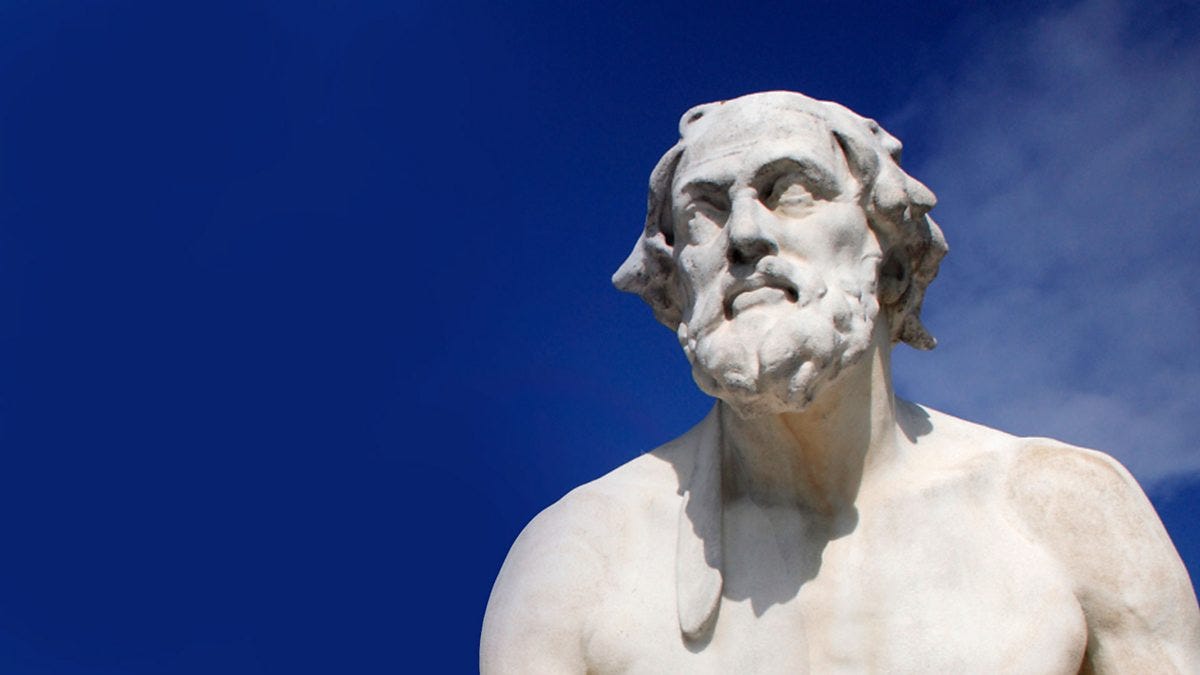
His assumption — baked right into the opening pages — was that human nature doesn’t really change. The same ambitions, the same miscalculations, the same dangerous overconfidence would keep producing the same kinds of disasters. He thought that if people just understood what had happened before, they could at least see it coming.
He was right about human nature. He was wrong about what we’d do with the information.
Even in his own book, the second half of the Peloponnesian War repeated the first, with new actors making much the same mistakes for the same reasons. The very people who should have known better — who lived through the early disasters — couldn’t stop themselves from repeating them. Thucydides watched it happen in real time.
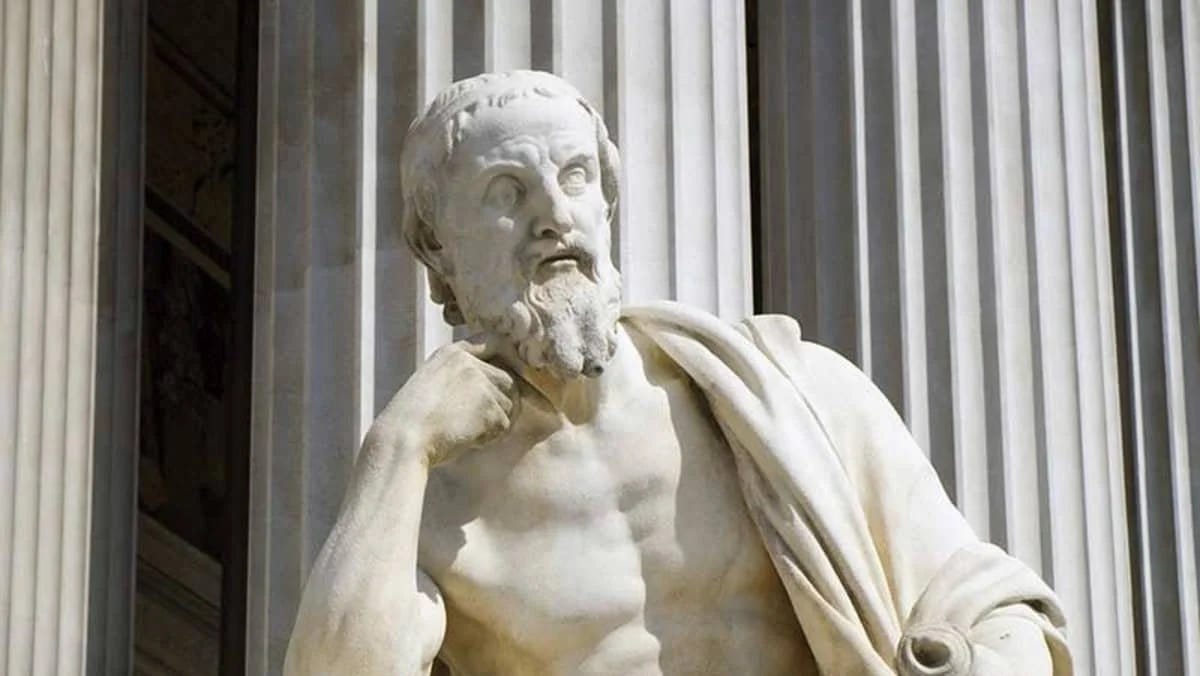
About a century later, the historian Polybius was watching Rome expand across the Mediterranean and thinking similar thoughts. He believed that governments moved through predictable cycles — strength led to complacency, complacency to corruption, corruption to collapse, and then the whole thing started over. He wrote history specifically to teach political lessons, convinced that anyone who studied the past carefully enough could see what was coming.
The cycle kept spinning anyway.
Part of the answer is a lack of education. We’re seeing that in the U.S. right now. But here’s the thing: educated societies have made the same mistakes, over and over again.
So it’s not that people are stupid.
It’s that the forces driving political decisions tend to be much stronger than the lessons history is trying to teach.
The first force is short-term thinking.
Political leaders get rewarded for solving the crisis in front of them — not the one arriving ten or twenty years from now. Elections, media cycles, and public pressure all run on the clock of the present moment. The incentive is always: act fast, show strength, win today.
And as attention spans get shorter, the repetition gets faster.
History, by contrast, speaks slowly. It warns about patterns that unfold across decades. A small decision here, a consequence you won’t feel for years.
Our attention span is a Michael Bay movie. History is a Kubrick film.
So when a leader is standing in front of cameras facing a crisis that needs an answer right now, the distant warnings of history just don’t have the same pull.
The second force is generational amnesia.
People who live through disasters rarely forget them. Those who survived the Great Depression were cautious with money for the rest of their lives. My dad grew up in those years — and even if he’d had a million dollars in the bank, he’d still gripe about paying extra for the large fries.

People who fought in World War II understood the cost of global conflict in a way later generations could only imagine. A lot of those generals became the strongest advocates for peace. They knew what they were talking about.
But as time passes, the memory fades. A new generation grows up that didn’t live through it. To them, it’s abstract — a chapter in a textbook, a movie, a story their grandparents told.
The emotional weight disappears. What once felt like a warning starts to feel like a distant historical episode. Something sepia-tinged.
And once that happens, the same risks start to look acceptable again.
The Iraq War is a good example of this. In 2003, the United States invaded a country with no real plan for what would come after the fighting. Historians, military veterans, Middle East experts — many of them warned publicly that this looked a lot like Vietnam. One Middle East scholar, Sandra Mackey, wrote before the invasion: “The United States cannot wade unaware into Iraq as it once waded into Vietnam. The ghosts of Vietnam hover around Iraq.”
The administration’s answer was essentially: this time is different. Different technology. Different enemy. Different circumstances.
The war in Iraq was meant to demonstrate definitively that the United States had learned the lessons of Vietnam. What became clear is that something closer to the opposite was true.
And if you feel like the current conflict with Iran is repeating the history of the Iraq war, which echoed the Vietnam War, then you are indeed paying attention. Congratulations.
The third force is the nature of power itself.
People who rise to positions of power tend to believe they can succeed where others failed. And that belief isn’t entirely irrational — confidence, ambition, and a willingness to take risks are often exactly what pushed them into leadership in the first place.
But those same traits can create a dangerous illusion.
Leaders may study history. They may understand the mistakes others made. And still believe that their own judgment, their own circumstances, or their own brilliance will produce a different outcome.
History says one thing. Human confidence says another.
Confidence usually wins.
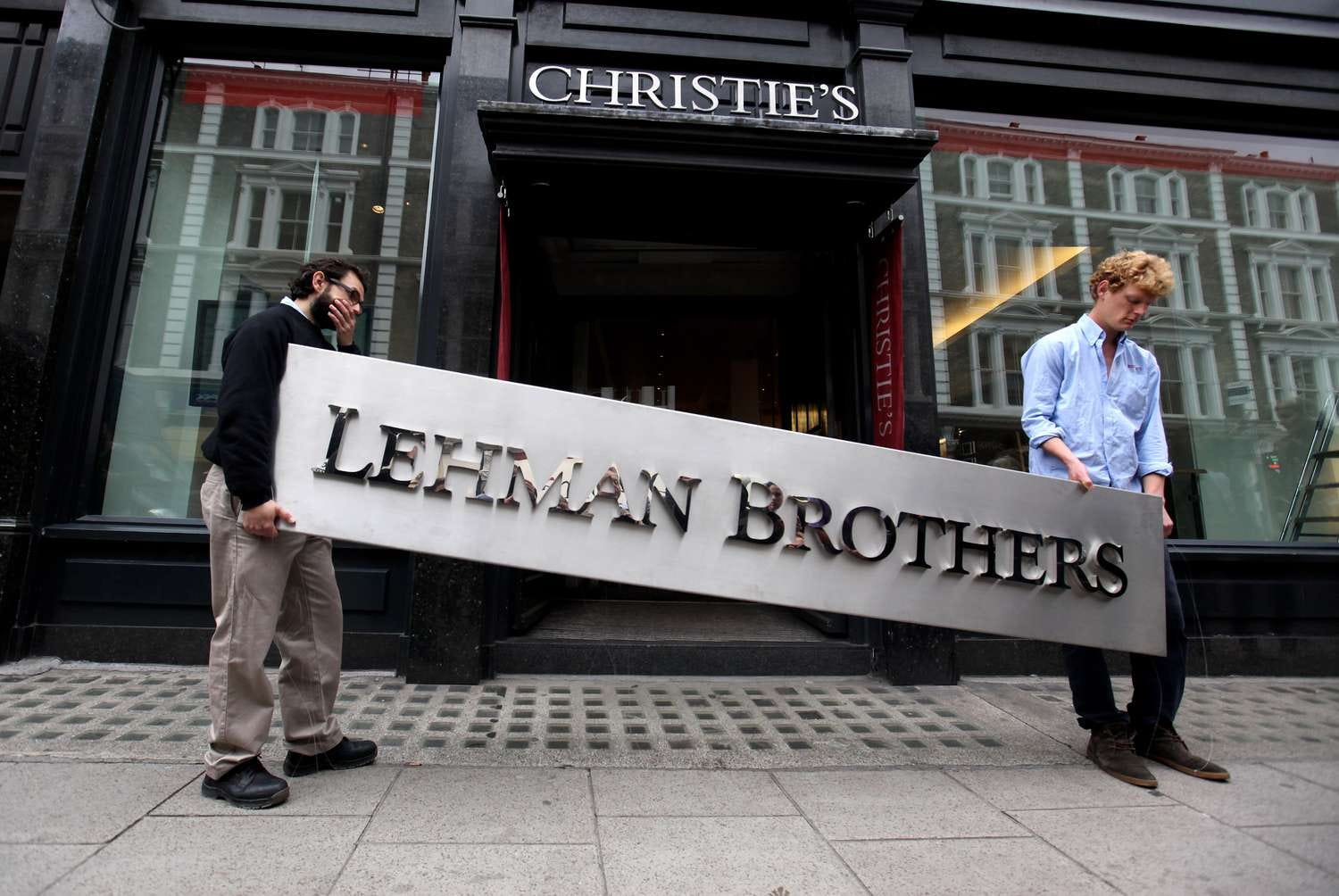
The 2008 financial crisis is another version of this story. Economists and housing advocates had been raising alarms for years. Four years before Lehman Brothers collapsed, a housing attorney named Ruhi Maker warned Federal Reserve officials directly that the nation’s housing bubble could cause “enormous economic damage” — even naming Lehman Brothers specifically as a risk. She wasn’t alone. Other consumer advocates and academics described themselves as “canaries in a coal mine.” They said the warning was out there. Nobody listened. The miners were sent in anyway.
The financial sector had convinced itself that this time, the instruments were too sophisticated for the old rules to apply. New models. New products. New era.
It wasn’t. Speculative bubbles collapse. They always have. The only thing that was new was the confidence that this one wouldn’t.
There’s also the power of a good story.
Human beings don’t naturally think in data and probability. We think in narratives. And a story about strength, destiny, justice, or national honor can feel a lot more compelling than a careful historical analysis.
If a decision fits the story people want to believe, the warnings of history become easy to dismiss. They start to sound pessimistic. Defeatist. Out of touch.
The story takes over.
And then there’s the last one, which might be the most powerful of all.
History never repeats itself in exactly the same way. The technology changes. The leaders change. The circumstances change. And every generation can point to some difference that seems to prove the old warnings no longer apply.
The weapons are different. The economy is different. The world is different.
So the conclusion feels almost irresistible: this time will be different.
Sometimes it is.
But often it isn’t.
Historians have a phrase for this. They say history doesn’t repeat itself — but it rhymes. The details change. The structure stays familiar.
A crisis escalates. Leaders convince themselves they can control it. Opponents react in ways nobody anticipated. What started as something manageable grows into something worse.
And by the time people recognize the pattern, they’re already deep inside it.
Thucydides saw this happen. Polybius saw it. Historians in every century since have seen it and written about it. The observation itself is 2,500 years old.
Which, when you think about it, is either darkly funny or deeply unsettling.
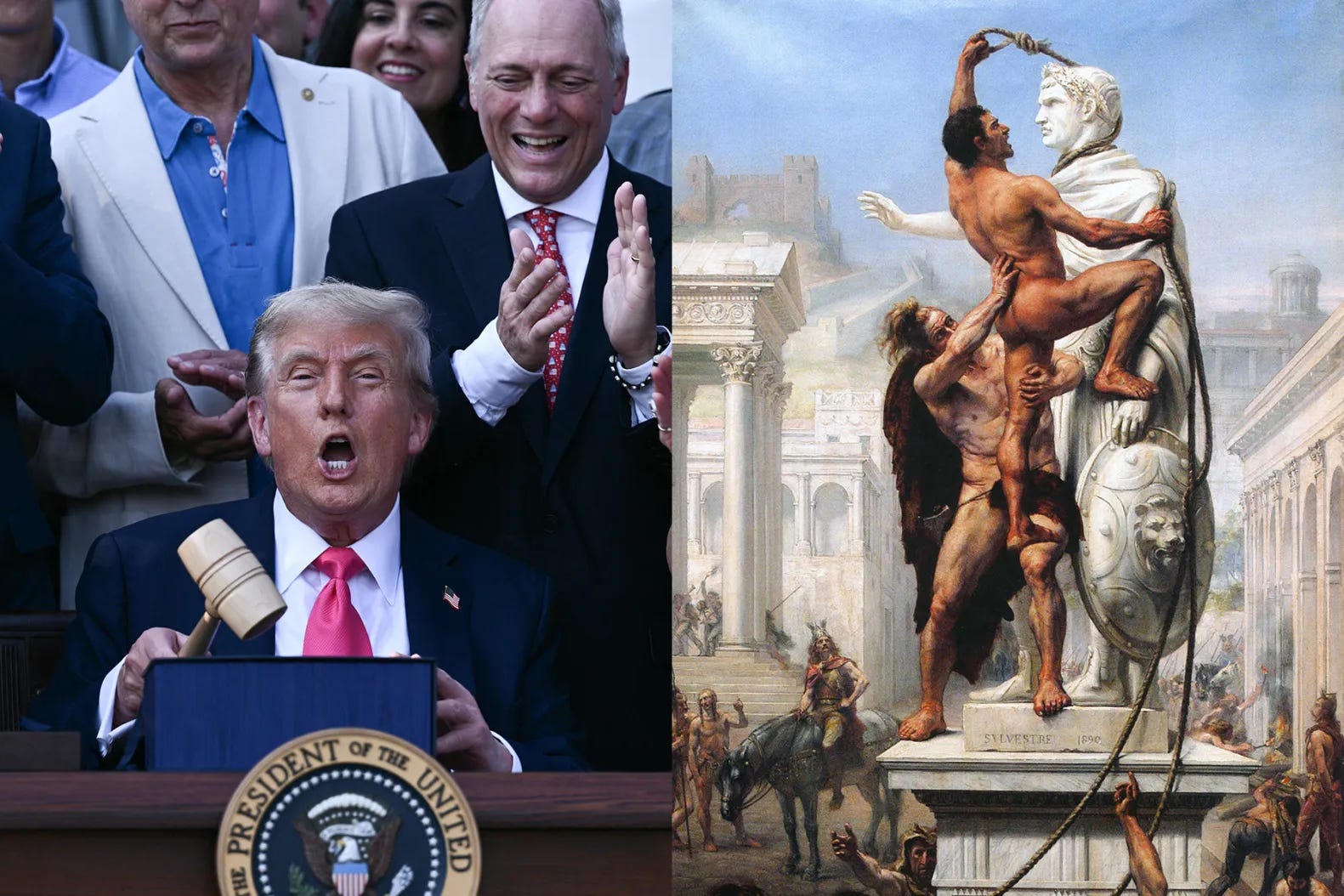
The uncomfortable truth is that history’s lessons aren’t hidden. They’re widely known. Entire libraries are filled with careful studies explaining how political disasters unfolded and how they might have been avoided.
The problem isn’t a lack of knowledge.
The problem is that the forces pushing societies toward bad decisions — fear, ambition, pride, political pressure, the pull of a compelling story, and sometimes just the flat-out incompetence (or apparent insanity) of the people in charge — are usually stronger than the quiet voice of historical experience.
History offers warnings.
Human nature offers momentum.
And momentum has a way of carrying people forward — even when they can see the cliff ahead.
The strangest part? We remember the past pretty well.
We just don’t always let it change what we do next.
What do you think? Are we repeating history in Iran? Leave your thoughts and comments below.
"Our attention span is a Michael Bay movie. History is a Kubrick film."
Rob, this is an expression of truth I will not forget.
Thank you for yet another illuminating piece.