

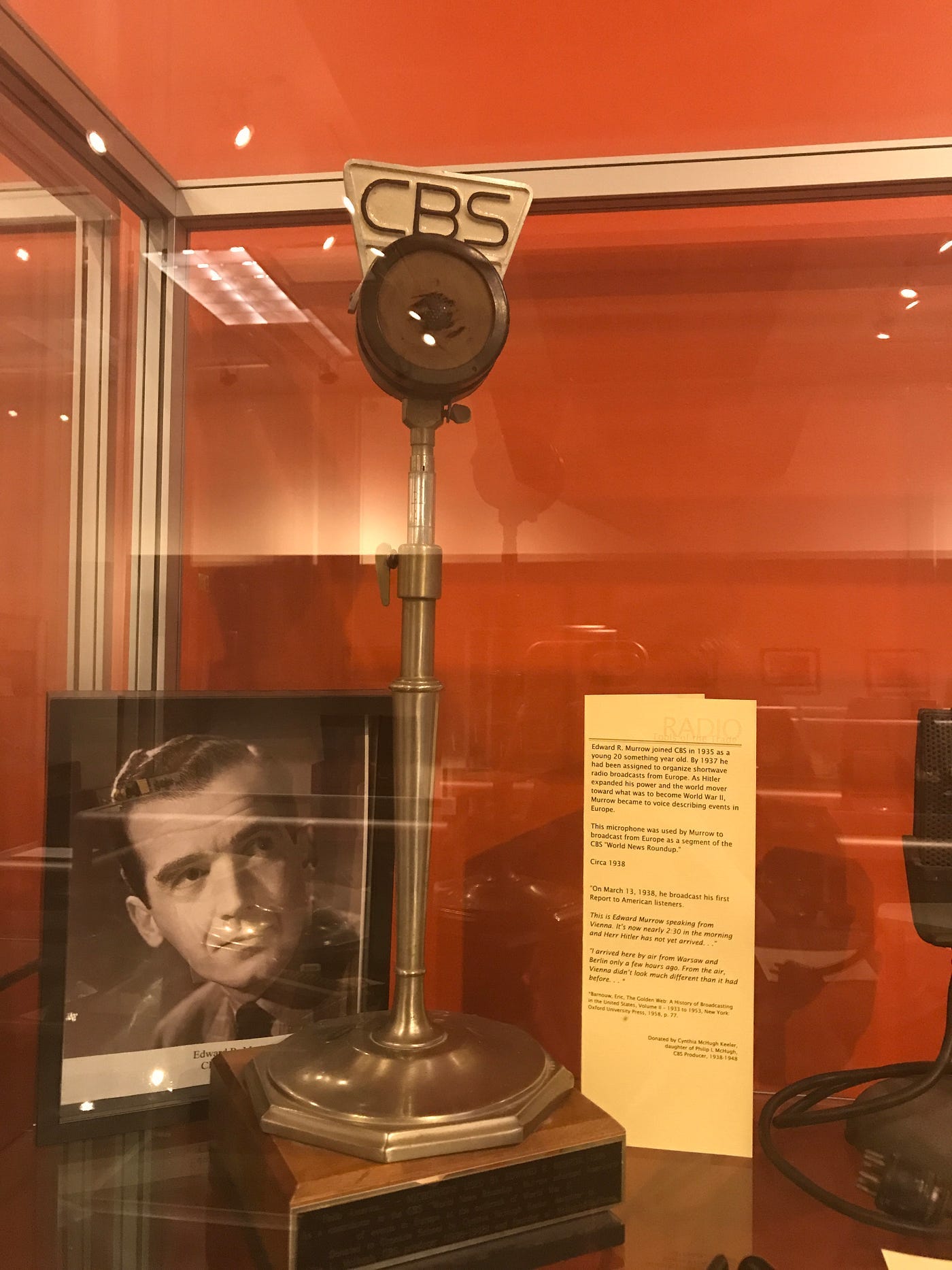
In a meeting with some radio and TV colleagues yesterday, something came up that stuck with me.
People don’t trust the media like they used to.
That’s not new. We all know that. The numbers have been heading in that direction for years. Confidence in television news is down. I see it as a result of a decades-long political assault by people who worked the ref, but then went into overdrive in the Trump era.
Insults. Encouraging physical assaults. And now, the federal government is using its power to threaten licenses unless the outlets toe the party line. And sadly, some media institutions are now in the hands of some of the leaders of that assault, and even the ones who aren’t are being cowed into docility.
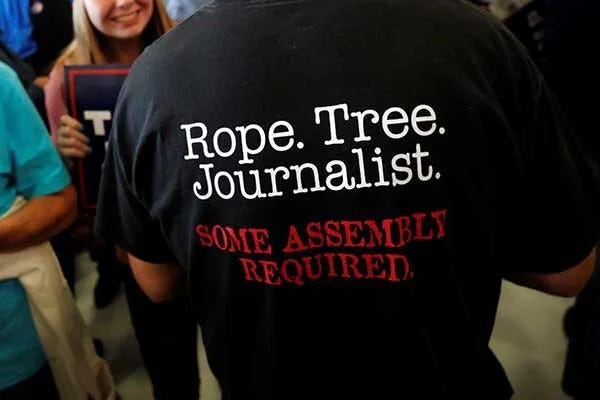
Trust in digital outlets is fragmented. Social media has turned information into a battleground where everything feels contested, suspect, or manipulated. Everyone, right, left, wherever, can choose their own silos where the opposing view, if one is even offered, is caricatured and straw-manned to death.
But there’s one place where the erosion hasn’t gone as far.
Radio.
Among the major news platforms, broadcast radio — especially news radio — still holds onto a level of trust that the others have largely lost. It’s not universal, and it’s not what it used to be. But it’s there. Listeners still turn it on in the car, in the kitchen, on the job, and believe that what they’re hearing is, at least, an honest attempt to tell them what’s happening.
It also makes what just happened to CBS News Radio more significant than it might look at first glance.
CBS News Radio is shutting down. Nearly a century of national reporting infrastructure — gone. Seven hundred affiliated stations losing a pipeline to vetted, sourced, professional reporting from Washington and around the world.
That doesn’t shut down those stations. They’ll still be on the air tomorrow. The mics will still be hot. The newscasts will still run. But something underneath them has changed.
If you wanted to weaken one of the last broadly trusted sources of news in the country, you wouldn’t necessarily have to eliminate it outright.
You’d just have to make it harder to function.
You’d take away pieces of the infrastructure that support it. The national reporting backbone. The shared resources. The institutional memory. You’d leave the shell intact — the stations, the formats, the familiar voices — but you’d thin out what’s feeding them.
Not all at once. Just enough that over time, the quality shifts. The depth narrows. The connection to the larger world gets a little weaker. Quietly.
There are other forces at work here, of course. The economics of media are brutal. Advertising has fractured. Audiences have splintered. Corporate owners have taken on massive debt and cut wherever they can. Streaming and digital platforms reward a different kind of content — faster, louder, more reactive, less resource-intensive.
All of that is real.
But it’s also true that the most trusted forms of journalism are often the least aligned with those incentives. They’re slower. More deliberate. More expensive. Harder to scale. Harder to monetize.
And easier to neglect.
There was a time when broadcast networks understood the news was vitally important in a democracy. So the news divisions weren’t as profit-driven as the entertainment side. They were willing to take some loss because that was for the public good, the trade-off for being licensed to use the public airwaves.
But slowly and surely, that changed. Now, the news is just another product line for the media company. Not a service — a commodity.
There are people in this country openly arguing that the media needs to be brought into alignment. That it should be less adversarial, more supportive, more in step with those in power. You don’t have to look very far to hear those arguments.
And you can see how that pressure plays out. Major broadcast groups like Nexstar and Tegna have received rapid regulatory approval for expansion, even as their leadership signals a willingness to operate in ways that are more accommodating to those in power. Whether that’s explicit alignment or simply reading the room, the direction is clear.
If that’s the goal — whether explicitly or just as a byproduct of other decisions — radio would be an obvious place to start.
Not because it’s the biggest platform. But because it’s one of the last ones people still trust.
ABC’s radio network is still there. Other sources still exist. This isn’t the end of national radio news.
But the field is smaller today than it was yesterday. One less pillar. One less shared resource. One less layer of support holding up hundreds of local newsrooms across the country.
That’s how these things change.
Not with a single decisive moment. Not with a clear line where everything is one way on one side and something else on the other. It happens incrementally.
A network goes away. A bureau closes. A beat disappears. A position isn’t replaced. A service that used to be there just… isn’t anymore.
And the system adjusts.
Listeners still get news. Stations still fill time. The surface looks mostly the same. Until, at some point, it doesn’t.
I keep thinking about that conversation yesterday. About the idea that even after everything — the fragmentation, the distrust, the noise — there’s still this one medium that people, more often than not, believe.
And how that medium just lost part of what made it work.
Trust doesn’t vanish overnight.
It erodes.
And so does the infrastructure that supports it.
I’d love to know what you think, whether you’ve worked as a journalist or just journalist-adjacent. Leave a comment below. Share the article with your friends. The wider the reach, the more you help support my work. Thank you!
I hear you Rob. Thank you.
The problem is that Trump and Carr think they can just threaten the licenses of stations that don’t curry favor to those in the administration because what is reported and hurts their feelings or agenda. FUCK THAT SHIT. Radio and TV stations are there to serve the public good at large. To inform and speak the truth. To hold officials to the fire. Shuttering CBS News Radio may be a good business decision but Bari Weiss is bowing a president who does not believe in the First Amendment. Broadcasters: stay the hell out there and your very best. Signed, a retired 41 veteran of TV broadcast engineering who made sure that air was never silenced or darkened.