

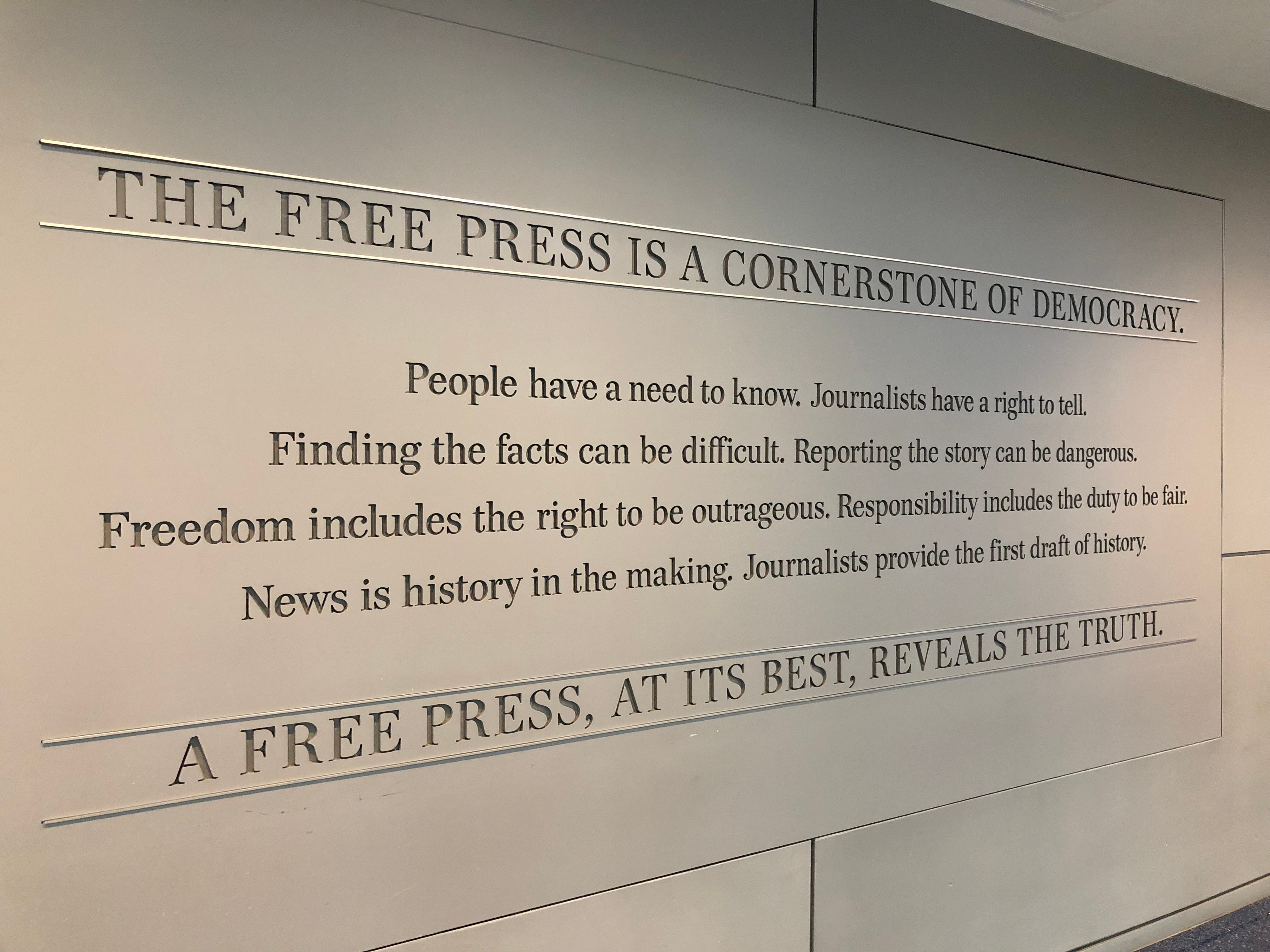
There’s a growing sense right now that the free press in America is under siege.
Journalists, media critics, and even casual observers are talking about it. The idea that something fundamental is breaking. That the system is being bent, maybe beyond repair. Yes, I’m one of those talking about it. I’ve spent half my broadcasting career in news, and I care about it because it was more than a job. It was a vital service in defense of democracy. Every journalist who cares feels that way.
But the cracks in the pavement aren’t the whole picture.
What’s actually happening is messier than that. Less dramatic in some ways. More complicated in others.
Let’s dive in.
Where the pressure is real
Start with the obvious.
The Federal Communications Commission, under Donald Trump, has been a lot more aggressive toward media companies and broadcasters.
You see it in licensing concerns. In legal threats. In the tone coming from the top. While a few outlets are fighting back, many more have decided their corporate interests outweigh the First Amendment. They’re playing nice, hoping to keep Trump happy.
Newsrooms don’t need direct orders to feel it. Managers make decisions based on fear, executives feel the pressure coming down from corporate, and corporate feels it from Washington. Stories that might have been pursued a year ago get a second look or are quietly dropped.
What does it look like when an outlet gives in and bends the knee?
It looks a little like CBS Evening News. It looks a little like the pall hanging over everyone at 60 Minutes, waiting to see how much Bari Weiss reshapes it.
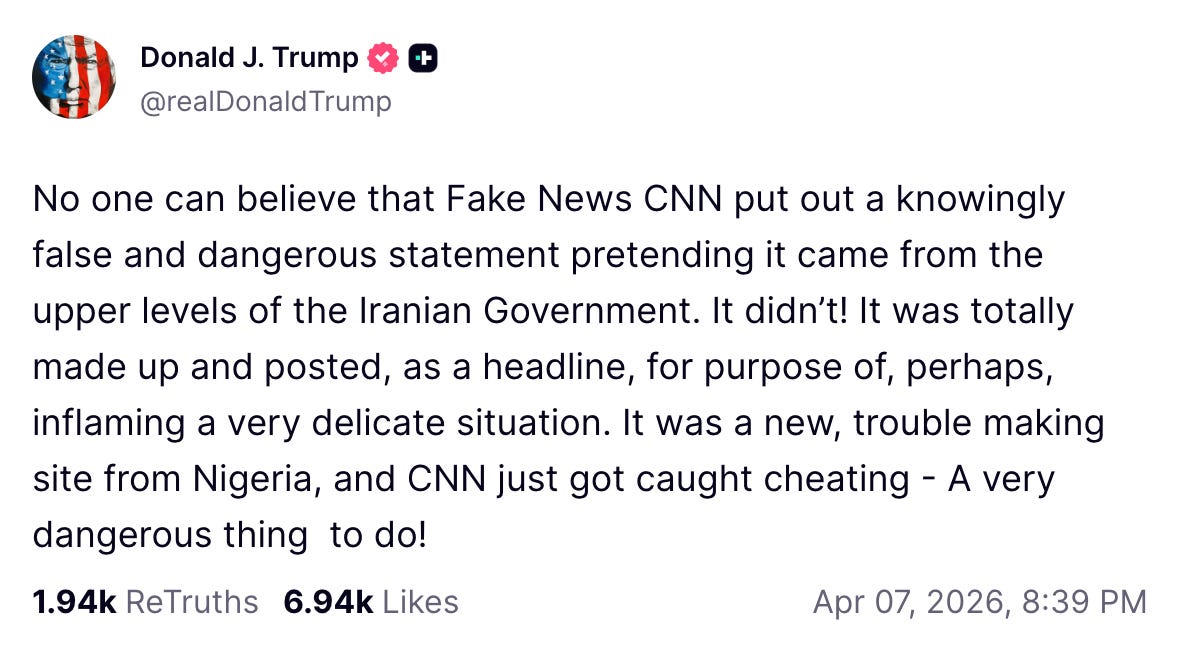
Tuesday evening, Trump went on Truth Social to blast CNN for reporting a statement from Iran’s Supreme National Security Council about a ceasefire with the U.S. He called it a “FRAUD” and demanded the network withdraw the report and apologize.
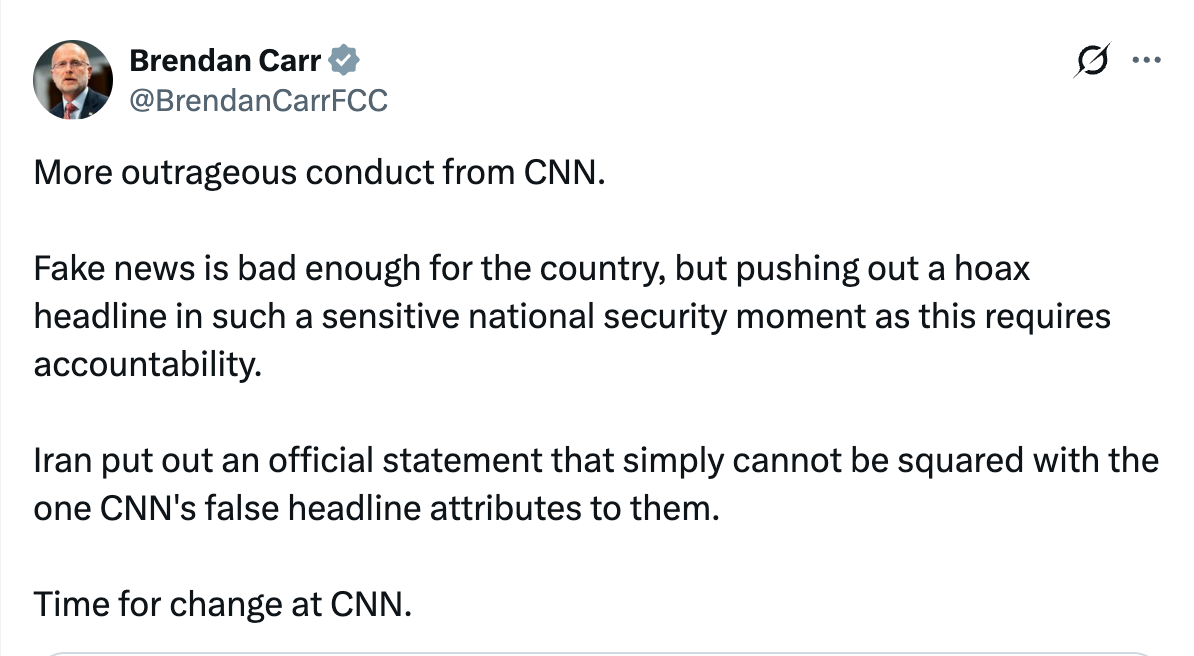
His FCC chairman, Brendan Carr, piled on — reposting it and saying it’s “time for change at CNN.” Never mind that the FCC has no authority over CNN. That didn’t stop him from accusing the network of pushing a “hoax headline” and “fake news.”
Where the press is pushing back — and winning
CNN didn’t back down.
A spokesperson told Oliver Darcy’s Status that the reporting came from known Iranian officials and was confirmed by multiple state media outlets.
Public broadcasting advocates have also scored legal wins that preserve funding and protections.
And Voice of America — which is supposed to operate independently despite being government-funded — won in court as well, reinforcing that it can’t simply be turned into a political tool.
At least for now, Colbert, Kimmel, Saturday Night Live — they’re still doing what they do best. Holding power up to ridicule when it deserves it. Not letting a single example of political hypocrisy slip by without putting clown makeup on it for laughs.
CNN, MS NOW, and others are still reporting stories Trump doesn’t like. He rages. He threatens. They keep going. They’re helping to show that sometimes, the administration is just a bully, armed more with threats than bullets.
Those are positive signs that the free press is still alive, but only thanks to round-the-clock medical care. The pressure isn’t going away. Appeals are coming. Higher courts are coming. A Supreme Court with a conservative majority is waiting in the background.
What happens then? We don’t know.
And that’s not exactly comforting if you still believe in an independent press willing to challenge power.
The fire may be dimming. But it’s still burning. Here and there.
A real-time example: Nexstar and Tegna
If you want to see how this plays out in real time, look at Nexstar Media Group and Tegna Inc.
The deal would create the largest local TV station group in the country. A massive consolidation of local media — the kind of thing that directly shapes what people see and hear in their own communities. Two companies that are making money by being cheerleaders and mouthpieces.
The federal government approved it. Quickly. In a way that raised eyebrows.
States stepped in and said, not so fast. Then a judge hit pause — warning that the deal likely violates antitrust law and could reduce competition while weakening local news.
The real story: uneven ground
It’s tempting to try to sum all this up in one clean conclusion. A lot of people are bouncing between extremes right now — and getting a little seasick. The press is under attack. The system is holding. Everything is fine. Everything is broken.
None of those quite fit. What’s really happening is uneven. And a lot of it depends on where you sit in the system.
I do think this much is true: The outlets that hold the line will keep their credibility. The ones that don’t? We’ll remember.
If you work in media, you can probably feel it already. We’re in the twilight zone between hope and dread — and depending on the day, it tilts one way or the other.
I’m going to keep writing about where this is headed — and what it means for the people inside it.
I also talk about democracy with my friend Jack Messenger. Disciples of Democracy is available wherever you get your podcasts. We’ll have a new episode soon.
Thanks for the updates! Keep up the fine work - it is vital for our democracy that we all are paying attention.
Our (Americans’) Free Press and first amendment are softening because of the cracks that have been pounded in there by trump (lower case, yes).
Daily idiotic vitriol is filling those cracks and softening democracy and soon if we don’t do something about it, it will deteriorate.
Do you want that? Do you really want that? This is a matter of saving our country by voting him and all his lackeys out!