

On May 17th, the 58th season of 60 Minutes ends. And it may be the end of 60 Minutes as we know it.
Inside CBS News, the expectation — based on multiple reports — is that once the season is over, the guardrails come off. The changes that were held back can finally begin. And those changes turn the most successful, most durable, most trusted brand in television news upside down.
60 Minutes is not a struggling show. It still draws an audience most of television would envy, and it has survived presidents, wars, lawsuits, and the slow collapse of the medium that made it famous. It has done that for one reason: credibility.
But credibility is slow. It’s expensive. It creates friction inside a system that now values speed, scale, and keeping corporate ownership comfortable. And that comfort depends on the temperament of the current presidential administration, which is, at best, thin-skinned when it comes to media coverage.
Credibility requires editors who say no, reporters who push back, and time that modern media companies believe they don’t have. So a different idea takes hold: maybe the problem isn’t the system around the show. Maybe the problem is the show itself.
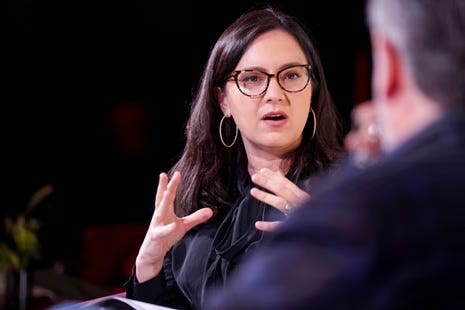
Since taking control at CBS News, Bari Weiss has been clear about her diagnosis: the audience is fractured, trust is down, and the old broadcast model is shrinking. All of which is true. But the solution, in her view, isn’t to double down on reporting. It’s to reposition it — she says, to broaden it, rebalance it, soften its edges, and avoid the perception of bias, even if that means changing the product itself.
But “avoiding the perception of bias” looks like something else: making it more palatable to the right.
In practice, that has meant a shift in contributors, internal fights over editorial direction, changes to flagship programs, layoffs, and the shutdown of CBS News Radio — a service that had been running in one form or another for nearly a century. That move alone tells you what’s valued and what isn’t. Legacy, history, and even performance don’t protect you anymore.
In my time in broadcast news, I never witnessed direct political pressure to skew anything one way or the other. But I heard from colleagues who were told not to push too hard — not to ask the question that might make a guest uncomfortable — because access might disappear. In at least one case, that advice was ignored. The interview was confrontational. The guest was angry, vowed to never return. But then they came back. Because credibility cuts both ways. They needed it too.
If the argument were simply about fixing what’s broken, that would be one thing. But the numbers tell a different story. CBS Evening News remains stuck in third place, its audience trends flat at best and declining at worst. Meanwhile, 60 Minutes continues to dominate its slot. So why is a “repair” crew needed for 60 but not for Evening News?
And it’s not happening in isolation. At the Washington Post, under Jeff Bezos, there have been staff cuts, a narrower editorial lane, and a noticeable shift in tone — not collapse, but contraction and caution. At the New York Times, the posture is different: still aggressive, still willing to fight the government in court, still treating reporting as the core product rather than a liability. Two paths are emerging — one that bends to pressure and one that absorbs it. That split is the real story.
And the pressure is real. The return of Donald Trump to the presidency has changed the risk calculation across the industry. Access can be cut off. Licenses can be threatened. Mergers can be slowed. Owners themselves can become targets. If you’re running a media company — especially one tied to a larger corporate structure — you see that landscape and you adjust, sometimes subtly, sometimes not.
And too often that adjustment includes a little bending of the knee.
Which brings this back to 60 Minutes. The show is more than a broadcast. It’s a signal — that somewhere inside a massive, profit-driven corporation, there is still space for reporting to lead, for stories to take time, and for interviews to get uncomfortable. Change that, even gradually, and you don’t just alter a program. You change what the audience believes journalism is allowed to be.
Canceling 60 Minutes would be too obvious, too loud, too easy to resist. What’s more likely to happen is something quieter: a shift in tone, a different mix of stories, fewer risks, more calibration. Softer edges, less confrontation of administration spokespeople. The show remains, but the point of it begins to fade.
And if that happens, it won’t stabilize the audience — it will fracture it. The viewers who valued the reporting will leave. The viewers who distrust mainstream media won’t suddenly embrace it. You don’t win them back by changing the tone; you confirm what they already believe about you.
That’s something CNN may be about to learn the hard way. Stay tuned.
This summer could bring the most significant changes to 60 Minutes in decades — not driven by scandal or failure, but by management.
60 Minutes survived everything that tried to break it from the outside. What it may not survive is something else entirely: people on the inside who believe the problem isn’t pressure on journalism.
It’s journalism itself.
This isn’t just about one show. It’s about what happens when the last pieces of institutional journalism start to bend — or break.
If you want to understand where this is going before it fully happens, that’s what I’m doing here. Archer’s Line is built on experience inside the industry — not guesses, not takes, but pattern recognition from someone who’s lived it.
If that’s worth following, subscribe. Because the next phase of this story is already starting.
I remember as a kid when you heard the clock ticking you knew the parents were gonna be right in front of the TV watching 60 Minutes
And for me, it meant that I had to make sure my homework was done. It was the pinnacle of true investigative journalism. Ratings are one thing, yes, ratings go down… But the erosion of what 60 Minutes is about and who supports it at Black Rock shows what’s happening to all good journalism because of corporate. (And it’s alliance with the administration.) we’re starting late