

UPDATE: Scott Pelley responded to his firing. His statement is below.
Perhaps we shouldn’t be surprised.
After all, Scott Pelley had effectively dared them to do it.
The veteran correspondent accused CBS News Editor-in-Chief Bari Weiss of “murdering” 60 Minutes during a contentious staff meeting. He openly challenged new executive producer Nick Bilton’s qualifications. According to Oliver Darcy’s reporting, Pelley even prepared a resignation letter, apparently expecting that his confrontation with management would leave little room for compromise.
But even knowing all of that, one detail stands out.
Scott Pelley wasn’t shown the door after a career spanning more than three decades at CBS News with a face-to-face conversation. According to Status, he was fired by email Tuesday night by a man who had been running the program for only a matter of days.
Oliver Darcy reports that around 4:45 pm, Pelley was summoned to the main CBS News building across the street from the 60 Minutes offices for a meeting with network brass. In the room were Weiss, Bilton, and CBS News President Tom Cibrowski. A human resources representative joined by phone.
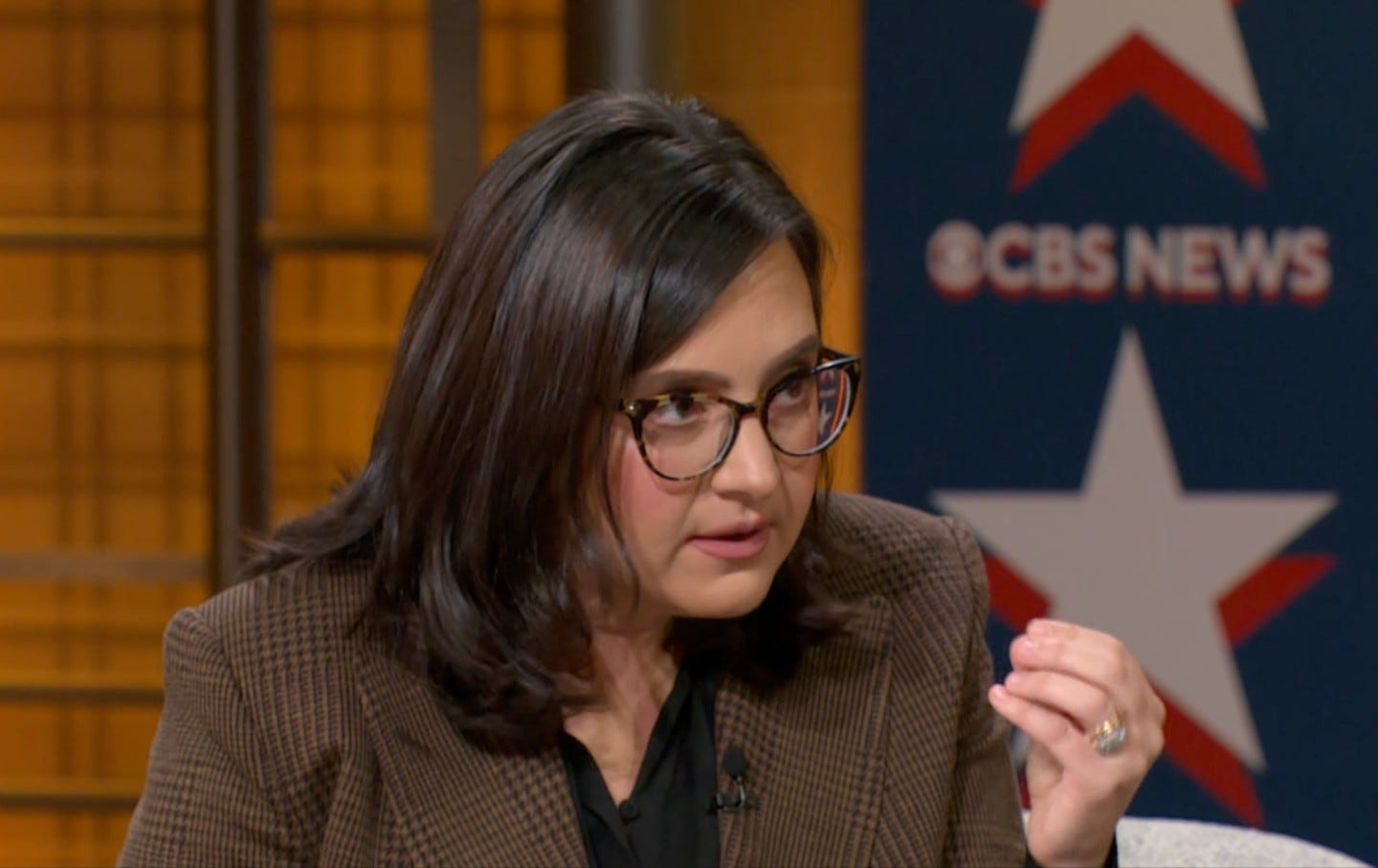
The meeting, which lasted less than half an hour, was contentious. When Pelley returned to 60 Minutes headquarters, he told colleagues that he pressed leadership about the recent firings, but they didn’t want to talk about it.
A person close to CBS News leadership told Status that there had been a real effort to find a way for Pelley to stay on the show, but that management believed Pelley was not interested in working with them on that front. (Note: Pelley has vehemently denied there was any effort to keep him.)
And so, the decision was made to terminate Pelley. Bilton delivered the news to him by email, which was obtained by Status.
Bilton wrote, “I started this job excited to collaborate and to benefit from the wisdom and experience of the ‘60 Minutes’ veterans, with you among them. For that reason, one of the first things I did in my new role was call you to talk and invite you to dinner. It is a profound disappointment that you rejected that overture and chose ambush instead.”
Maybe management felt it had no choice. But whatever the justification, the larger question is whether 60 Minutes survives.
According to Darcy’s reporting, staff members are openly talking about the possibility of more departures. Bill Whitaker’s future is uncertain. Lesley Stahl’s contract has expired. Inside the program, there is reportedly growing concern about whether enough reporting and production infrastructure will remain in place to get the next season up and running.
It’s possible all of them may be gone by the time this article goes live.
The troubling possibility is that the destruction of 60 Minutes may not be an unintended consequence.
Perhaps Bari Weiss and Nick Bilton genuinely believe they are rebuilding the program. Perhaps they think they’re modernizing it.
From the outside, though, it looks like they’re dismantling it.
And that leads to an even bigger question.
What comes after?
Donald Trump won’t be around forever. Political movements built around individual personalities rarely survive indefinitely. Eventually, the political climate changes.
When that day comes, what happens to institutions that spent years accommodating the demands of a thin-skinned president?
Do corporations suddenly rediscover principles they abandoned?
Do they install new executives and announce a fresh commitment to editorial independence?
Do they ask audiences to trust them again?
Because trust doesn’t work that way.
Once people conclude that principles are negotiable, they stop believing those principles ever existed.
That’s the danger facing CBS News. And not just CBS News.
It’s every media company, every corporation, every institution that adjusts its values according to whoever happens to hold power at the moment.
When the political winds change, audiences notice. Employees notice. Viewers notice.
And they remember.
Long after executives move on, long after the current political era has passed, audiences remember who stood for something and who simply stood where it was safest.
If 60 Minutes survives this crisis, that may be the hardest thing for it to overcome.
But honestly, I don’t think it survives.
A television institution that endured wars, scandals, recessions, and changing technologies has lost correspondents, producers, editors, and much of the trust that made it valuable in the first place.
This feels fatal.
Scott Pelley’s message to the staff of CBS News:
There has never been anything in America like 60 Minutes.
The Sunday tradition is the most successful program of any kind in history. For more than a decade, its innovative growth on every major online platform has extended its reach to countless millions around the world. This spring, at the end of our 58thseason, 60 Minutes grew rapidly with an unheard-of 9% jump in viewers on CBS.
“60” has been the number-one program in America for decades because our beloved audience finds integrity, quality, and humanity in our stories. When stewardship of the program passed to my colleagues and me, our responsibility was to expand energetically into a new age of media technology while preserving the values our audience expects. Now, the new owner of our network is casting this legend aside, apparently to curry a moment of favor with the Trump administration.
The waste is heartbreaking.
Last month, 60 Minutes lost its DNA when our entire senior leadership and two of our best on-air correspondents were cruelly fired without cause. Good people were silenced because they stood up for our audience. They stood for fairness against the forces of political bias; they stood for professionalism against chaos.
For my part, new management has instructed me to inject falsehoods and bias into a politically sensitive story. I’ve been told to include assertions that are unverified. To date, in every case, I have managed to ignore these instructions or refuse them. Recently, politicians have been invited to choose correspondents for interviews on the broadcast. Giving politicians control over 60 Minutes interviews is not how this is done. Finally, incompetence and unprofessionalism in the new management have wreaked havoc. In a case involving one of my stories, the entire program came within 19 minutes of not getting on the air at all.
At 60 Minutes, we have fought harder than anyone knows to save the program that became an American icon. We owed that to our millions of viewers. I am deeply moved by the thousands of wishes we have received to “keep up the good fight.” Most of the men and women of CBS News are still in that fight. But now the collapse of values at the top has become untenable. The leadership of 60 Minutes is no longer recognizable. The principles I hold dear are gone, and so I must leave as well.
I depart after 37 years at CBS with one emotion—a heart brimming with gratitude for the men and women of CBS News who encouraged and enriched my work, very often at the risk of their own lives. I pray for a day when those people and their ideals are honored again—a day when sanity, competence, and courage return.
Scott Pelley
Something abandoned so readily was never a principle to begin with. Not for these network executives. 60 Minutes has already perished. It's possible an empty title will survive but the rest is already gone.
Thank you Rob.
p.s. my mom worked for "Employers Insurance of Wausau"--at one time one of the best known and recognized sponsor of the program.
What an enormous loss to us all. I hope our journalistic trust can survive this somehow. I fear the same for our trust in democratic institutions. We must try to restore all. It is a tall order but existential for a civil society and progress.